U.S. News
Trump Gives Posthumous Pardon to Baseball Hit King Pete Rose
The pardon wipes away the tax convictions of the sport's all-time hits leader, who died in 2024 still barred from the Hall of Fame.
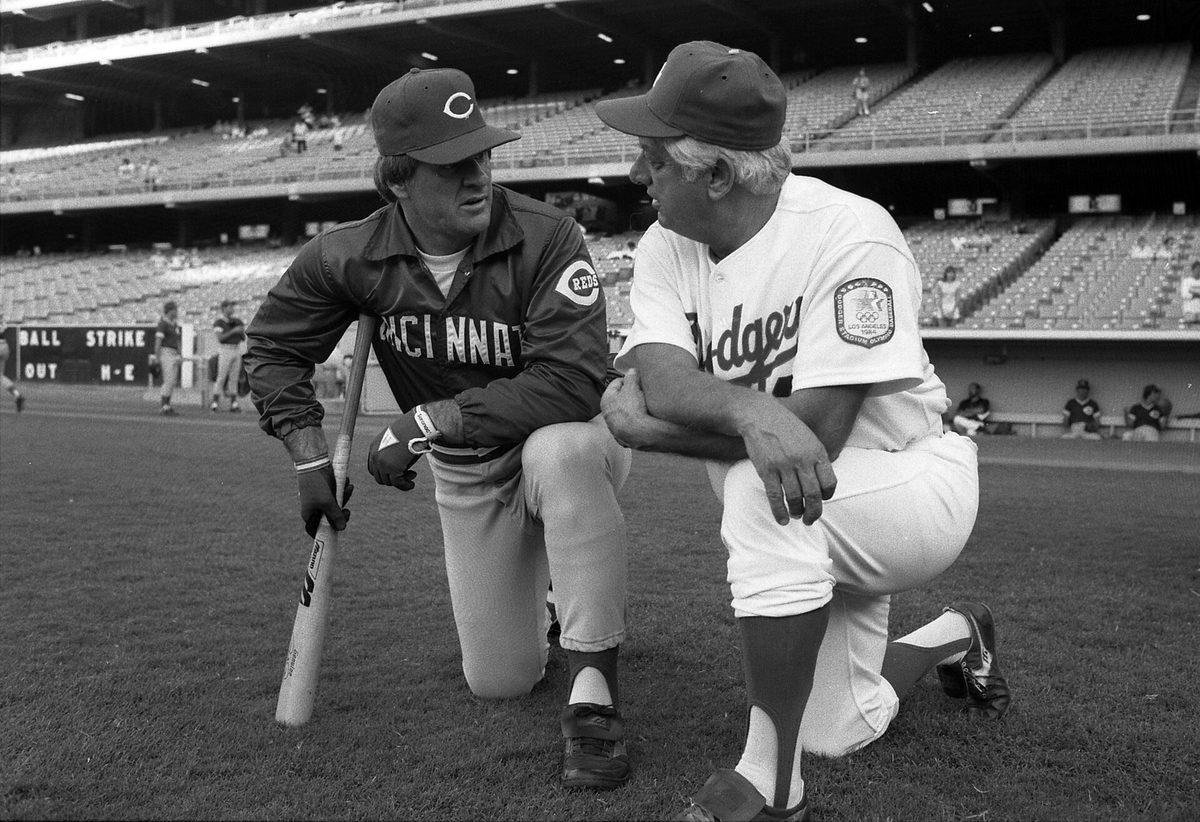
President Donald Trump announced on Thursday that he had posthumously pardoned Pete Rose, Major League Baseball's all-time hits leader, in a social media post sent from Air Force One as he flew home from a trip to Asia. “I have just given a Complete and Total Pardon to the Late, Great Pete Rose, a true Baseball SUPERSTAR & LEGEND, whose record of 4,256 Hits ... will never be broken,” Trump wrote on Truth Social, in the latest step of his long campaign to rehabilitate the banned star's reputation.
Rose died on September 30, 2024, at the age of 83, more than two years before the pardon and a year after baseball reinstated him. His career had been defined by two numbers that pulled in opposite directions: 4,256 hits, more than any player in the history of the sport, and a lifetime ban from baseball, imposed in 1989 for gambling on games while he was manager of the Cincinnati Reds. The pardon addresses the first half of that story, the criminal case. It does not by itself put him in the Hall of Fame.
The criminal case dated to 1990, when Rose pleaded guilty to two felony counts of filing false federal income tax returns, admitting he had failed to report income from memorabilia sales and gambling winnings. He was sentenced to five months in prison, paid a $50,000 fine and completed 1,000 hours of community service working as a gym teacher's assistant in Cincinnati. Trump had said for more than a year that he felt Rose was treated unfairly for gambling on games, and he first raised the possibility of a pardon at an October campaign rally in Texas alongside former pitcher Roger Clemens.
Rose's ban from baseball outlived the prison sentence by decades. He agreed to a permanent ban in 1989, and for years he denied betting on baseball before admitting it, having lied about the gambling for 15 years. The ban kept him out of the National Baseball Hall of Fame even as his playing record, built over a career that ran until 1986, made him one of the most accomplished players ever to take the field.
That ban finally lifted after his death. Commissioner Rob Manfred posthumously removed Rose from the ineligible list in May 2025, admitting that Trump had pushed for the change in his eligibility status after the two met at the White House in April. Manfred also changed the rule so that lifetime bans end when a permanently ineligible player dies, a change that affected Rose, Shoeless Joe Jackson and more than a dozen others.
Rose is now eligible for Hall of Fame consideration, but the pardon does not settle it. His next opportunity will not come until December 2027, when the Classic Baseball Era Committee votes, and he would need 12 of the 16 voters on the committee to vote him into Cooperstown, with induction to follow in July 2028. As one report put it plainly on Thursday, the pardon itself means nothing for the Hall of Fame: that decision belongs to the committee, not the president.
Trump has pressed the case in his own style for months. On October 7 he said, “Today you're allowed to gamble on games. How about that? He always bet on his own team. He's a highly competitive guy. He was Charlie Hustle.” He has said both Clemens and Rose deserved to be in the Hall of Fame, and on Thursday he again listed Rose's accomplishments, noting that he was a three-time World Series champion, played in 16 All-Star games and finished with a .303 batting average.
The playing record itself was never in dispute. Rose was the 1963 National League Rookie of the Year, the Most Valuable Player in 1973 and the World Series Most Valuable Player in 1975. He was selected to 17 All-Star teams and won three batting titles. Nicknamed “Charlie Hustle” for the way he ran out every ground ball, he built the hit total over 24 seasons, most of them with the Cincinnati Reds, and the record has stood untouched since he retired.
The pardon closes the criminal chapter of a story that has shadowed baseball for more than 35 years. What it does not close is the argument over Rose's place in the sport's history, an argument that now moves to a 16-person committee that will not vote for more than a year. Until December 2027, Rose remains the game's hits king, pardoned by a president, and still waiting on Cooperstown.
Why it matters: This pardon matters less for what it does legally, Rose has been dead for two years, than for what it signals about how baseball's longest-running moral argument is ending. Trump has now used both presidential pressure and the pardon power to rehabilitate Rose, and the Hall of Fame committee will vote in December 2027 with that pressure in the background. The case also captures a cultural shift: gambling on baseball, the act that got Rose banned for life, is now legal and advertised everywhere, which is exactly the point Trump made when he announced the pardon.
Reporting: Reuters · USA Today
Spot an error? Orbit News corrects articles promptly and notes the correction in the article. See our Editorial Policy, or flag an error by messaging us on Facebook, X, or Instagram.
Related from Orbit News
Senate Passes Sweeping Energy Permitting Bill in 62-33 Vote
U.S. News · Nov 20, 2026
White House Fires National Cyber Director Sean Cairncross After Week of Tech Outages
U.S. News · Nov 20, 2026