U.S. News
Texas Execution of Reinaldo Dennes Takes Over an Hour as Staff Struggle to Find a Vein
Reinaldo Dennes, 70, cried out in pain during a 63-minute lethal injection in Huntsville, weeks after Tennessee's failed execution of Christa Pike put the method under fresh scrutiny.
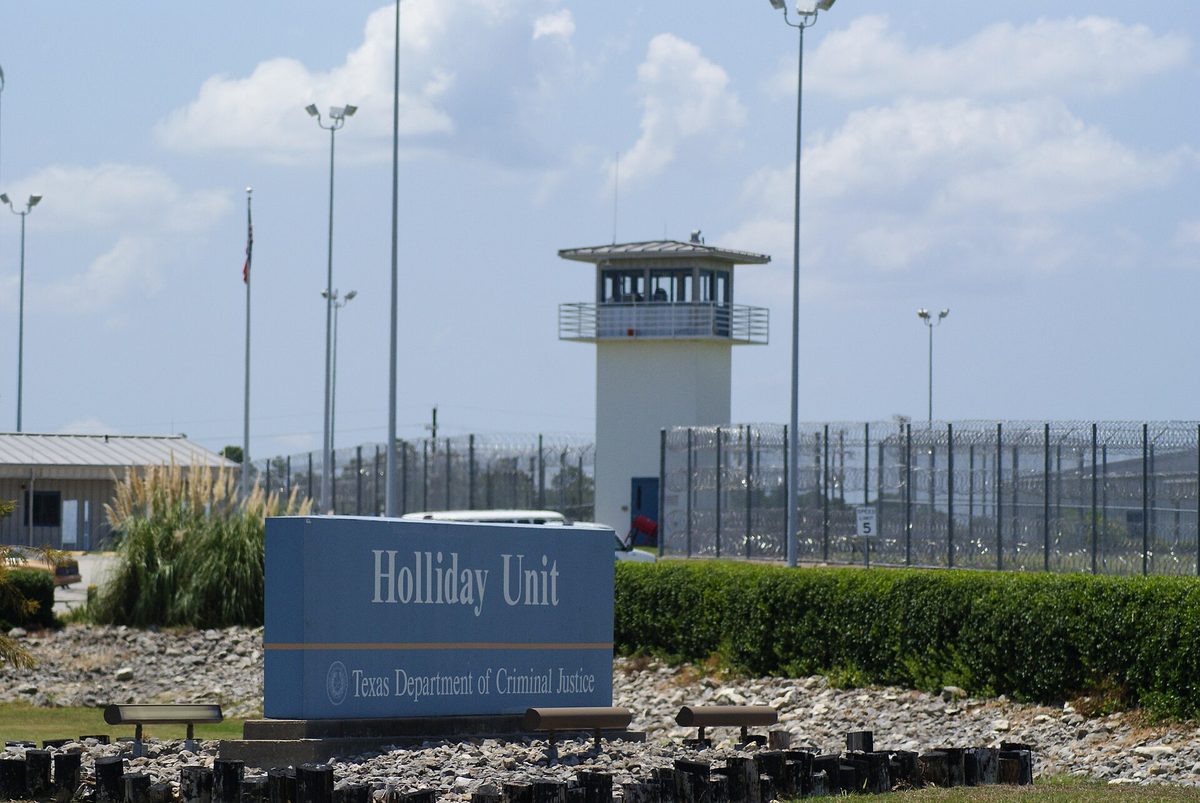
Texas executed Reinaldo Dennes on Thursday in a procedure that took over an hour, as prison staffers struggled to find a suitable vein for the two intravenous needles carrying the lethal dose of the sedative pentobarbital. The procedure was completed at 7:07 p.m., 63 minutes after he was strapped to the gurney, and Dennes was pronounced dead at 7:08 p.m. at the state penitentiary in Huntsville.
The execution team made a number of unsuccessful attempts to find a suitable vein before managing to insert the needles in Dennes's left foot and on the left side of his neck. Prison spokesperson Amanda Hernandez acknowledged the difficulty but said she did not know how many attempts were unsuccessful, and said the sites ultimately used were in accordance with the state's procedures. The alternate sites have been used in previous executions, although the need to use them is relatively rare.
Once the procedure began, Dennes moaned repeatedly about pain, groaned several times and asked God to take him away from it. “The pain! Go! Go!” he exclaimed almost immediately, and later shouted, “My right leg is killing me!” describing the sensation as a cramp. He said twice, “It's not working like it's supposed to,” and pleaded, “Don't let me suffer like this.” After three loud groans he began making snoring sounds, eight of them, that grew progressively quieter, before breathing quietly about a dozen more times.
The Rev. Jeff Hood, who has witnessed more than a dozen executions nationwide as a spiritual adviser and was in the death chamber, said it was “by far the worst one” he had seen and that it “did not go to plan.” He described Dennes shifting violently on the gurney, back and forth, and screaming out about his leg. Prison officials said all procedures were followed appropriately, and Hernandez suggested Dennes may have been exaggerating the pain, saying he began complaining before the drugs began to flow and reported pain in places where there was no IV. Asked if he was faking, she replied, “I think, yeah, there were allegations. ... There was nothing abnormal on our part.”
Dennes, 70, was executed for the 1996 murder of Janos Szucs, a 44-year-old Houston diamond dealer, in a jewelry heist that netted $3.6 million in diamonds. Dennes was a jewelry designer who worked in the same high-security Houston building as Szucs, a successful wholesale dealer. According to court records, he paid a toolmaker to make a silencer for his gun and enlisted his lover, 23-year-old cleaning woman Estrella Martinez, who let Dennes and his older brother into the building on the evening of January 24, 1996, distracting the security guard while they went after Szucs and the building's videotapes.
The guard, David Copeland, walked in on the robbery and was shot twice, in the chest and then in the back after he fell. He survived his wounds and identified Dennes as his assailant. Szucs's body was found later in his seventh-floor office, shot multiple times, his safe empty. Missing were $3.6 million in diamonds, some $200,000 in cash and a five-carat diamond pinky ring he always wore. The diamonds were never recovered. A year after Dennes was convicted, his brother, Jose Albert Dennes, pleaded guilty to murder in the case and was sentenced to 45 years in prison. He was released on parole in 2019.
Before the procedure began, Dennes gave a brief final statement in which he said he wanted his loved ones to know he had been “extremely blessed” over the past 30 years “knowing the love of the father,” and hoped they would come to know “this great gift and great grace of God the father.” Then he told the warden, “Go.” Szucs's widow, Nicole Szucs, told reporters the killing was “very cold-blooded and malicious,” saying Dennes had set her husband up with a story about a big dealer coming to town. Janice Copeland, the guard's widow, said Thursday, “Finally after 30 years, justice has been served.”
Dennes was the second person put to death in the country on Thursday. About two hours earlier, Florida carried out its 20th execution of the year, a new state record, executing Thomas Mitchell Overton, 71, for the 1991 murders of Mike MacIvor and his wife Missy, who was eight months pregnant, during a home invasion in Tavernier in the Florida Keys. Overton was pronounced dead at 6:19 p.m., maintaining his innocence to the end. He and Dennes were the 38th and 39th inmates executed in the United States in 2026, and Thursday marked the seventh time this year that two or more states have executed inmates on the same day.
The two executions, of men both in their 70s, cast a renewed spotlight on the aging of the American death row population. Dennes's execution was the ninth in Texas this year, the most the state has carried out since 2019, and Texas remains the state that has executed the most inmates in modern American history, 605 in all, far ahead of Florida at 145. Texas set the single-year record in 2000, when it put 40 people to death, and there were 85 executions across the United States that year.
The execution also followed renewed scrutiny of capital punishment after Tennessee's failed execution in September of Christa Pike, who survived two doses of pentobarbital that her lawyers say probably did not enter her bloodstream correctly and instead pooled in her arms, leaving them burned and blistered. Texas uses the same drug, and Dennes's was the third execution in the state using pentobarbital since Pike survived hers. Tennessee Governor Bill Lee has ordered an investigation into what went wrong, called off the state's only remaining execution this year and announced the resignation of Department of Correction Commissioner Frank Strada, while leaving open the possibility of a second attempt to execute Pike.
Why it matters: This execution matters because it is the second time in less than two months that a lethal injection using pentobarbital has gone badly wrong in public view, and it lands in the middle of a national argument about whether the method itself is constitutional. Texas insists its procedures were followed and questions whether Dennes exaggerated his pain, but witnesses described an hour of visible suffering, and the same drug failed outright in Tennessee in September. How courts and governors respond to these two cases will shape whether states keep using pentobarbital, change drugs, or face new legal challenges to the death penalty itself.
Spot an error? Orbit News corrects articles promptly and notes the correction in the article. See our Editorial Policy, or flag an error by messaging us on Facebook, X, or Instagram.