Politics
Senate Republicans Re-Elect John Thune as Leader Despite Midterm Losses
Thune ran unopposed and won by acclamation after the conference voted 31-15 to hold the election now rather than delay it.
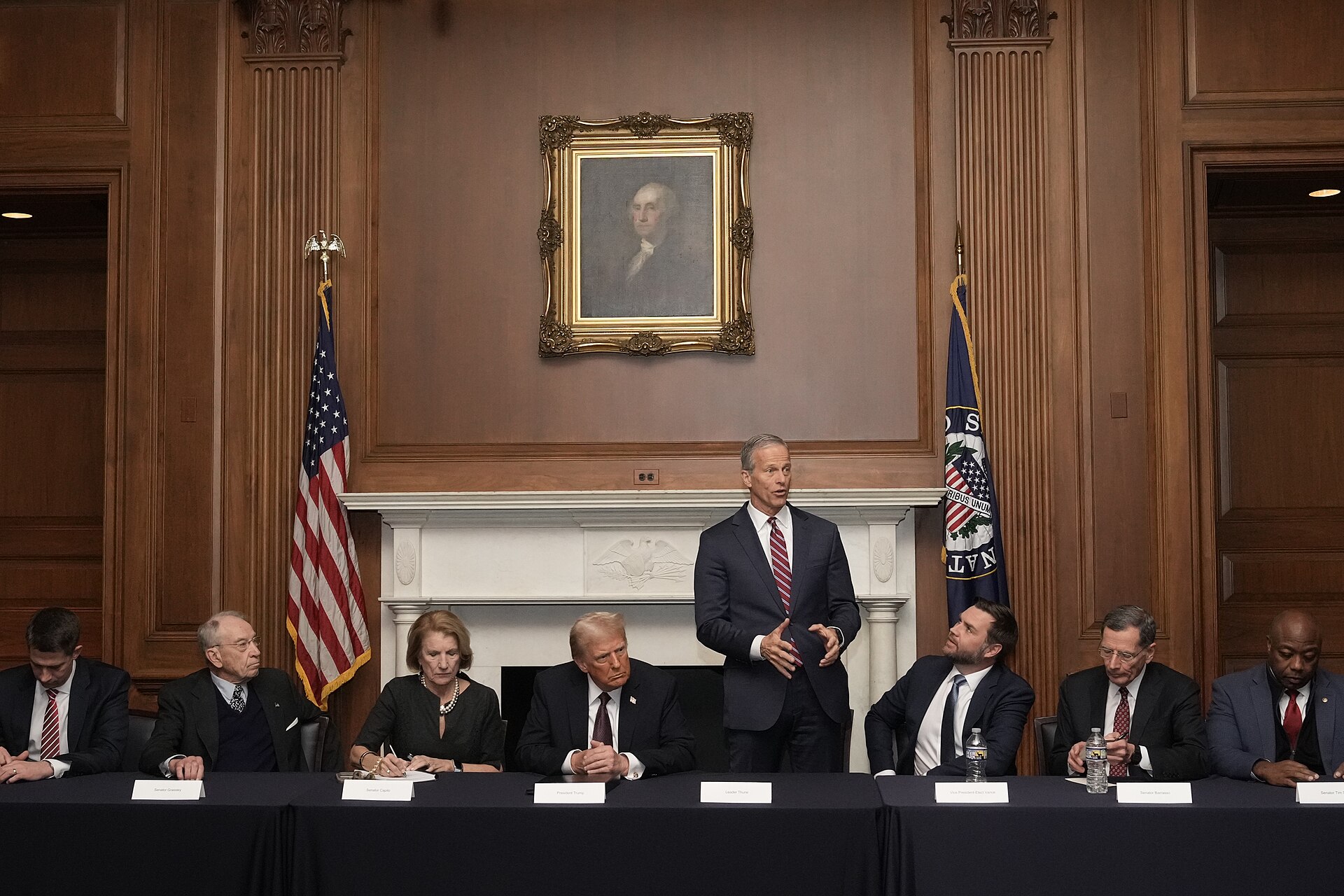
Senate Republicans re-elected Senator John Thune of South Dakota as their leader on Tuesday, keeping him at the head of the conference for a second two-year term even though the party lost its majority in last week's midterm elections. Thune drew no opposition and was elected by acclamation, with no ballots cast against him, after a tense day of closed-door meetings in which some senators vented their frustrations over the party's losses.
The vote came after a fight over whether to hold it at all. A group of seven Senate Republicans had moved to delay the leadership election, arguing that the party needed more time to reassess after a disastrous election night. Before choosing a leader, the conference voted 31 to 15 to press ahead rather than postpone, and Senator Ron Johnson walked out after losing that vote, according to the New York Post.
The rest of the leadership team was returned to its posts along with Thune. Senator John Barrasso of Wyoming was re-elected as whip, Senator Tom Cotton of Arkansas stays as conference chair, Senator Shelley Moore Capito of West Virginia keeps the policy committee chair, Senator James Lankford of Oklahoma remains vice chair of the conference, and Senator Bernie Moreno of Ohio will chair the National Republican Senatorial Committee.
Thune, 65, took over as leader in early 2025 after replacing Senator Mitch McConnell of Kentucky, and he was the Senate majority leader until the midterms. When the new Congress convenes on January 3, he will instead lead a Republican minority of no more than 46 senators, with Democrats holding at least 54 seats and two races in Mississippi and Alaska still uncalled.
The losses were broad and deep. Democrats flipped Republican-held Senate seats in Iowa, Kansas, Maine, North Carolina, Ohio, South Carolina and Texas, a wipeout that cost the party control of the chamber and turned typically safe red seats into Democratic pickups. It was the first gathering of Senate Republicans since that defeat, and senators held three separate meetings on Tuesday before reconvening in the afternoon to re-elect Thune.
Thune pushed back on the idea of a delay, questioning what it would achieve, and made his case to colleagues by laying out his vision for the minority and promising to make the most of the time Republicans have left in the majority. After the vote he said he appreciated the opportunity to have an open, honest and transparent conversation with his colleagues and was honored to have their continued trust and support to lead the Senate Republican Conference in the 120th Congress.
He also pledged to extend the lame-duck session that spans November and December, giving Republicans more time to confirm nominees and approve legislation before handing power to Democrats in early January. With a December 11 government funding deadline looming and a pile of unfinished business, the extended session is one of the last levers of power the outgoing majority still holds.
Thune will still carry considerable influence as minority leader, because Senate rules require 60 senators to advance most legislation. That filibuster threshold means Democrats, even with 54 to 56 seats, will need Republican votes to pass much of their agenda, giving Thune a veto over the new majority's plans if he can hold his conference together.
The contrast with the House could hardly be sharper. On the same day Thune was quietly re-elected by acclamation, House Republicans chose the firebrand Jim Jordan over the institutionalist Steve Scalise, a split that reflects two different answers to the same question: how should a defeated party behave in the minority. The Senate chose continuity; the House chose confrontation.
Senate Democrats, meanwhile, face their own leadership questions. Their caucus is expected to hold its leadership elections in early December, and a growing number of incoming Democratic senators have declined to commit to backing Chuck Schumer as majority leader. Whoever leads each party into January, the next Senate will be shaped by the same arithmetic that defined Tuesday's votes: a narrow Democratic majority, a Republican minority with the filibuster, and two years of divided government ahead.
Reporting: USA Today
Spot an error? Orbit News corrects articles promptly and notes the correction in the article. See our Editorial Policy, or flag an error by messaging us on Facebook, X, or Instagram.