Technology
Tesla Is Winding Down Cybertruck Production, and Musk Says It Will Have to Refund a Lot of Deposits
The polarizing steel pickup will stop rolling off the line at Gigafactory Texas around mid-2027 so Tesla can build more Cybercabs. Musk insists the truck was not unprofitable — just not worth the factory space.
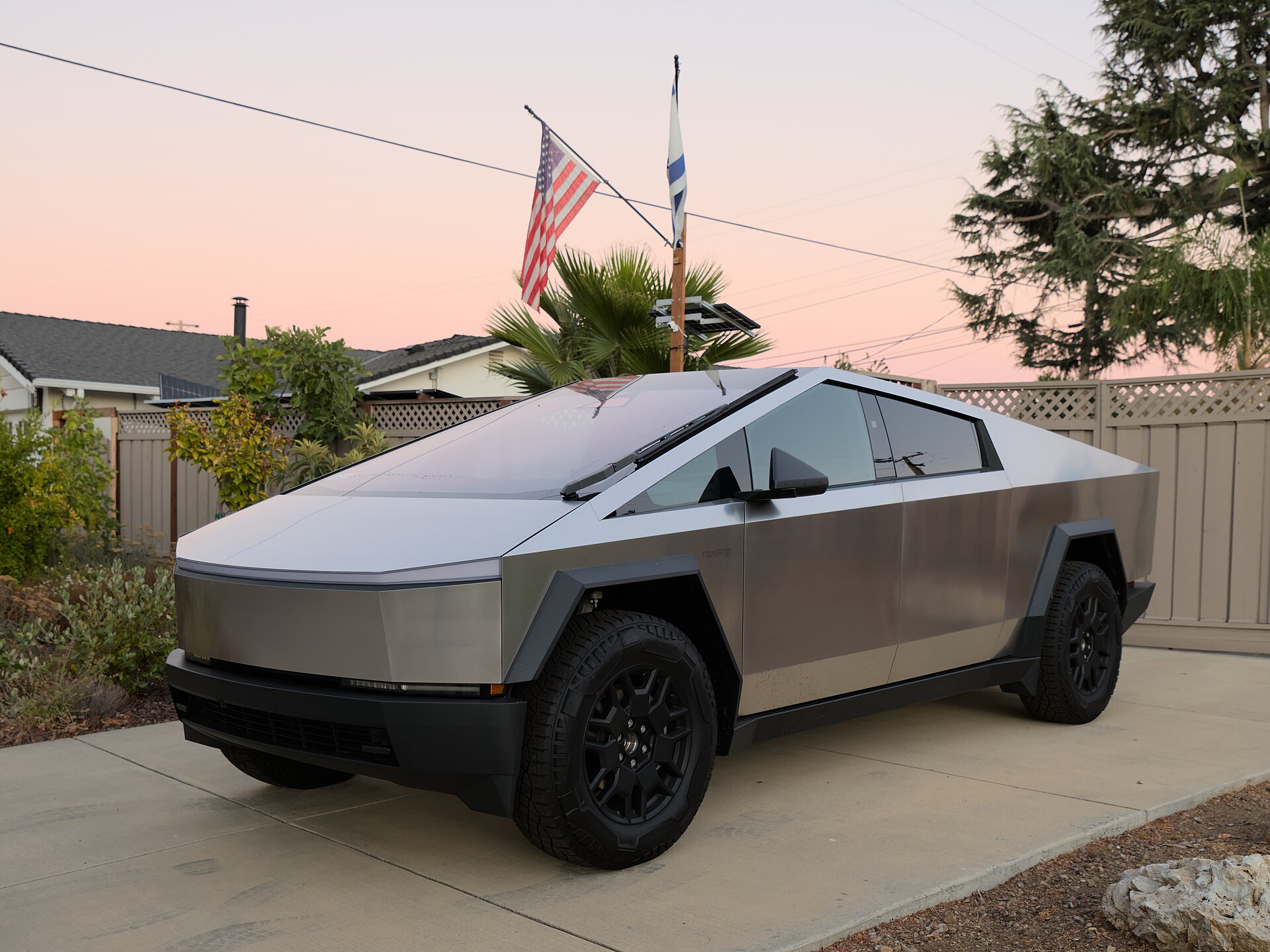
Tesla will wind down production of the Cybertruck at its Gigafactory Texas around the middle of next year, chief executive Elon Musk said on Friday, ending the run of one of the most polarizing vehicles in the auto industry after less than four years on sale. On Monday, Musk added that Tesla will try to build as many of the trucks as possible before production stops — and that the company will 'have to return deposits for a lot of people.'
Musk announced the decision in a post on X on November 6. 'Tesla will be winding down production of the Cybertruck at Gigafactory Texas around the middle of next year to make room for increased Cybercab production,' he wrote. The Cybercab is the two-seat robotaxi with no steering wheel or pedals that Tesla unveiled in 2024 and has made central to its autonomous-vehicle ambitions.
Musk has spent the days since defending the decision, arguing that the Cybertruck was not unprofitable and that ending production was a question of factory priorities. In a post on Monday, he said the 'opportunity cost of the complexity of Cybertruck is vastly outweighed by the value of incremental Cybercab production.' He also claimed the order rate for the truck far exceeds its production, a claim that sits awkwardly with the sales figures.
Those figures tell a story of a vehicle that never found a mass audience. Tesla does not report Cybertruck sales separately, but according to automotive data platform Kelley Blue Book, the company sold only 20,237 Cybertrucks in the United States last year, down 48 percent from 38,965 in 2024. Cox Automotive data shows sales have fallen a further 28 percent so far in 2026, with 11,586 sold in the first three months of the year against 16,097 in the same period last year.
Industry experts estimate that about 71,000 Cybertrucks have been sold in total since the first deliveries began in November 2023. That is a fraction of the volumes Tesla once talked about: the production line at Gigafactory Texas was built with installed capacity of more than 125,000 units a year, and the factory outside Austin is the only known Tesla plant equipped to manufacture the truck's specialized stainless-steel body.
The retreat has been building for months. On October 23, Tesla cancelled its plans to produce the Cybertruck for Australia and New Zealand, telling customers that 'after careful consideration, plans to produce Cybertruck for Australia and New Zealand have been discontinued.' Cybertruck lead engineer Wes Morrill appeared to confirm the end of the road, posting on X that 'Cybertruck was an incredible technology development platform and lives on through Cybercab,' and adding that Tesla will maintain spare parts and service support.
It is not yet clear whether Cybertruck production will move to another factory or stop completely. Musk has said only that production at Gigafactory Texas will wind down, and Tesla did not immediately respond to requests for comment from Reuters, CNBC or Fortune. The first production Cybercab came off the line at the same Texas factory in February 2026, and the space freed by the truck's departure is earmarked for building more of them.
The Cybertruck was one of Musk's signature projects, unveiled with a shattered-window demonstration in Los Angeles in 2019 and delivered to customers starting in late 2023. Its angular, stainless-steel body made it instantly recognizable and deeply divisive, and it was once touted as a rival to America's legacy pickup trucks. Instead, it became a niche vehicle with high production complexity and a small buyer base.
The wind-down also closes a bruising week for Musk, whose record political spending of nearly half a billion dollars yielded little in Tuesday's midterm elections, with the vast majority of the Republican candidates he backed losing their races. For Tesla, the question now is whether the Cybercab — a vehicle that has yet to prove itself commercially — can justify the factory space being taken from the truck.
For would-be buyers, the practical message is that the window is closing. Production is due to wind down around mid-2027, new inventory will eventually dry up, and Musk himself has warned that many reservation holders will get their deposits back rather than a truck. The Cybertruck will remain on the road for years, with parts and service promised, but as a new vehicle, its days are numbered.
Reporting: TechCrunch
Spot an error? Orbit News corrects articles promptly and notes the correction in the article. See our Editorial Policy, or flag an error by messaging us on Facebook, X, or Instagram.
Related from Orbit News
Apple's New CEO Is Pressing Its Software Chief to Speed Up AI — Starting With a Smarter Siri
Technology · Nov 9, 2026
Anthropic Reportedly Spent $3.4 Billion on Gas Generators to Power Its AI Data Centers
Technology · Nov 9, 2026