World
Millions Strike Across Spain in First General Strike in 14 Years Over Housing
Millions of Spanish workers walked out on Wednesday in the country's first general strike in 14 years, protesting soaring rents and falling living standards 18 days before a snap election.
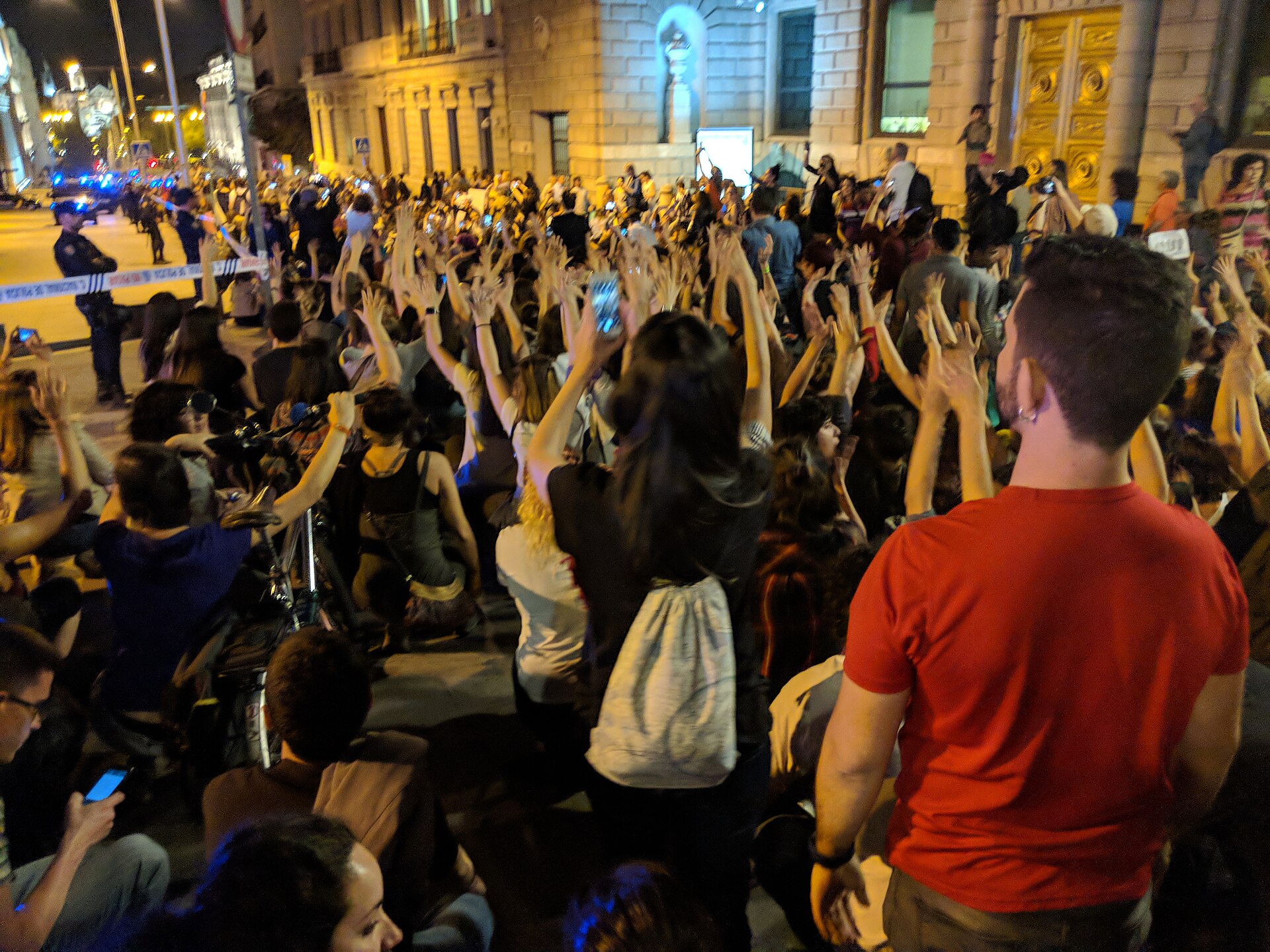
Four million Spanish workers took part in a general strike on Wednesday, November 11, unions said, enduring stormy weather to set up picket lines in a protest against the country's housing affordability crisis less than three weeks before a snap general election. It is the first general strike since workers downed tools in 2012 against austerity measures during the euro zone debt crisis. The walkout, under the slogan 'Salaries. Housing. Prices.', was the first general strike in Spain in 14 years, and the first whose principal push was born from unrest over housing.
The strike was backed by Spain's two largest unions, UGT and CCOO, representing more than a million workers, as well as tenants' associations angry about rising rents and evictions. The walkout shut down businesses and public transportation across the country, and culminated in huge marches of tens of thousands of workers and average citizens in downtown Barcelona and Madrid, along with gatherings in other cities.
The anger reached a boiling point following the eviction of an 87-year-old woman from her home in Madrid last month. The subsequent death of Maricarmen, as the woman became known, solidified her as a symbol of Spaniards who cannot dream of owning a home. Housing activists used the uproar over her eviction to call for the strike, and soon won union backing. 'The uproar that started over 40 days ago with the eviction of Maricarmen hasn't stopped growing and has now flooded the streets of our cities,' Alicia del Río, spokesperson for the Tenants Union, said in Madrid.
Spain has a deficit of about 750,000 homes, which is set to grow to more than a million by 2028, according to the central bank. With fewer people able to afford a home, renting has increased sharply, putting pressure on that market. The average rental price of €1,176 ($1,315) is equivalent to about 98.7% of a young person's average monthly salary in Spain, according to the Youth Council of Spain. 'I'm 36 years old and I still can't move out on my own,' said Madrid resident Jesus Gonzalez, who works in a hospital IT department and supports the strike. 'Rents just keep going up, house prices just keep going up, and it's simply impossible.'
Turnout was strongest in the industrial heartlands. According to UGT and CCOO, participation reached 90% at ports and in the automotive sector, with 'total stoppages' reported at factories including Volkswagen's in Navarre and SEAT's in Barcelona. The unions reported significant stoppages of 90% in the automotive and port sectors, 85% in the meat industry, 82% in waste collection and 75% in the energy sector. Electricity demand dropped by as much as 15.5% between 10 a.m. and 11 a.m., according to Spain's grid operator Red Electrica.
Unions hailed the strike as a success, while Spain's business owners' groups said it had fallen flat, though both sides agreed that worker participation was higher in heavy industry and transportation and lagged in retail and restaurants. 'The strike has exceeded the labor unions' expectations,' said Unai Sordo, secretary-general of CCOO, one of the two unions calling the strike for a nation of 22 million registered workers. 'It has been a success in terms of turnout.' Miguel Ángel García, spokesperson for the regional Madrid government, called the strike a 'complete and authentic failure,' saying just 9% of public sector employees in the region participated.
There were clashes in places. On Madrid's Gran Via, protesters cheered as stores including Primark, H&M and Pull & Bear drew their shutters amid a heavy riot police presence. 'We're going to close the Mango store,' the protesters chanted as they jangled sets of house keys above their heads. Police used pepper spray against protesters in some places, and tires were set on fire at roadblocks in Barcelona. Police had reported 40 arrests by midday from 476 incidents linked to the general strike, including blockades of offices and industrial estates and burning of rubbish containers. Unions said they would file a criminal complaint over what they described as a 'disproportionate' response during a police operation involving tear gas and batons that left 20 protesters injured.
The strike unfolded 18 days before the national elections scheduled for November 29. Prime Minister Pedro Sánchez hopes to harness voter resentment over housing in the election to shift the political narrative away from corruption cases involving his inner circle and a deadly train crash last month. His Socialist Party still trails in opinion polls. Sánchez posted a video on X this week lauding past social policy achievements like the 40-hour work week and national health insurance, warning that right-wing parties would underfund social services if they took over.
The economic impact is likely to be modest but real. With more people able to work remotely and services carrying more weight in Spain's economy, the impact of the strike is likely to be less pronounced than in previous years, according to Miguel Cardoso, chief economist at BBVA Research. He estimated the strike could shave 0.1% to 0.2% off Spain's annual gross domestic product. Barcelona's metro said no trains would run outside peak commuting hours, while Madrid's metro said peak-hour usage was down 42% compared with the same period last week, and about 5% of flights for Wednesday were canceled at airports across Spain, according to the airport operator AENA.
Why it matters: The strike matters less for what it stopped for a day than for what it says about Spain's election: housing has displaced every other issue, and neither side can claim the day. The unions can point to millions on strike and packed streets; employers can point to shops that opened, offices that worked from home and a GDP hit measured in tenths of a percent. What neither side can dispute is the arithmetic driving the anger, rents that swallow almost an entire young person's pay packet and a housing shortfall approaching a million homes. Whoever wins on November 29 will inherit that arithmetic, and the strike was the country's way of saying the next government will be judged on it.
Spot an error? Orbit News corrects articles promptly and notes the correction in the article. See our Editorial Policy, or flag an error by messaging us on Facebook, X, or Instagram.