Business
Oil Slides Again as Trump Plays Down New Iran Strikes, Extending Its Worst Week Since 2020
Brent slid toward $95 a barrel on Monday after Trump said fresh strikes were 'highly unlikely' while talks progress, extending a 16 percent weekly rout.
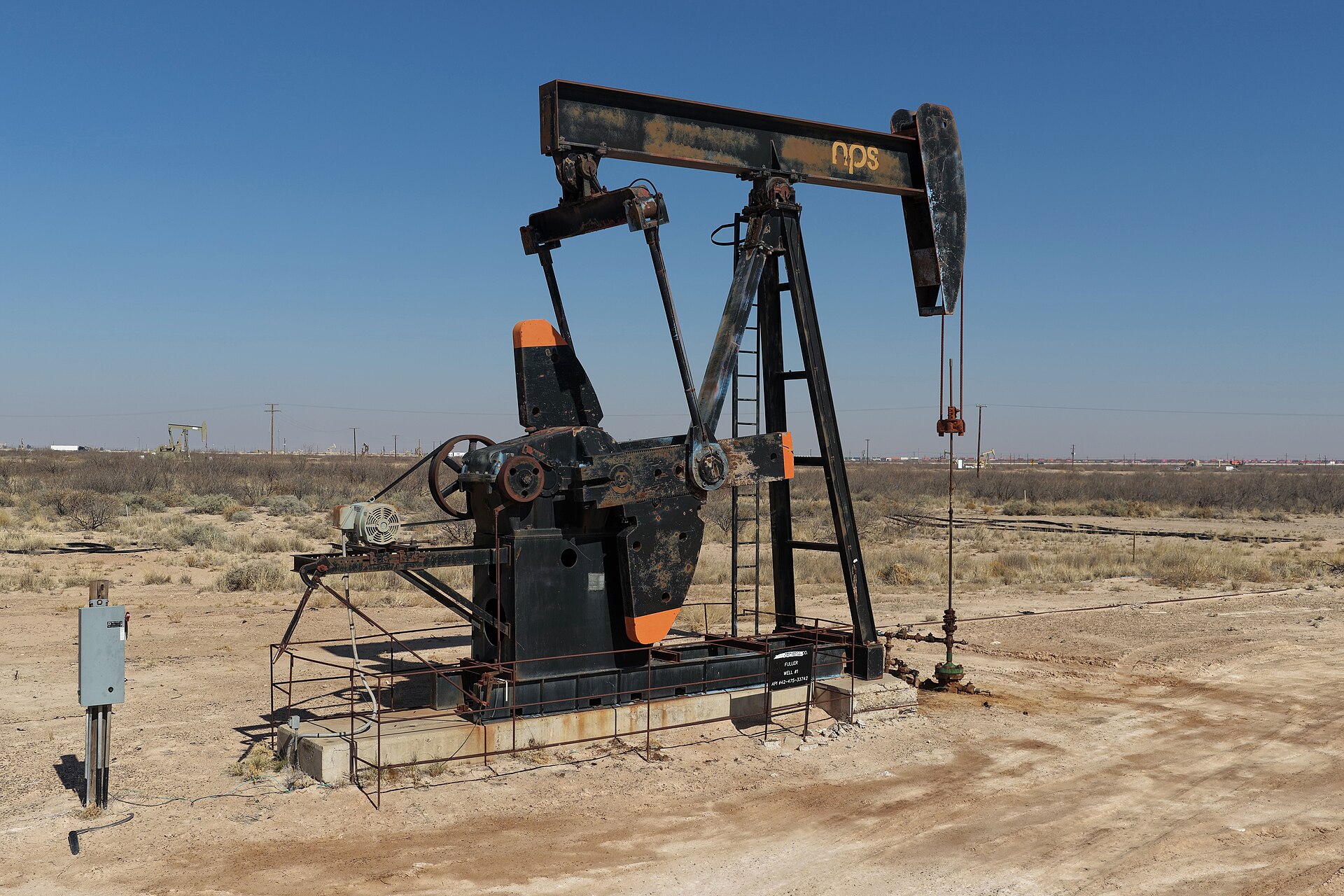
Oil prices fell again on Monday, extending last week's steepest weekly drop since the start of the Covid-19 pandemic, after President Donald Trump said he was unlikely to order new strikes on Iran as long as talks to end the conflict make progress.
Brent crude, the global benchmark, fell 1.5 percent to $96.91 a barrel by 0629 GMT, while U.S. West Texas Intermediate fell 1 percent to $89.85 a barrel. The decline deepened during the day, with Brent sliding toward $95 and WTI toward $88. Brent had already settled at $98.32 on Friday, after shedding 16 percent last week, and WTI closed Friday at $90.83.
Trump said on Sunday that it was 'highly unlikely' he would order extensive new strikes on Iran while talks on Tehran's nuclear program and the reopening of the Strait of Hormuz make progress. He told CNN that fresh attacks were unlikely as long as negotiations continued, and that it depended on Iran signing a 'very strong agreement.' He added that Iran is 'withering away financially' and that the United States 'could finish them off,' keeping the threat of force in the message.
The market's turn reflects how quickly the mood has shifted. Brent fell 16 percent last week, its steepest weekly fall since the start of the Covid pandemic, as traders priced in hopes of de-escalation after the U.S. midterm elections, in which Democrats secured control of Congress. The so-called 'blue wave' has helped ease investor concerns over a potential escalation in tensions with Iran.
But the situation on the water remains dangerous. Iran's Revolutionary Guards said three oil tankers exploded and caught fire in the Strait of Hormuz on Sunday after, in their account, breaching Iranian rules and using unauthorized routes. U.S. forces disabled the cargo ship M/V Huda in the Gulf of Oman on Saturday, November 7, after its crew ignored repeated warnings and tried multiple times to breach the naval blockade of Iran — the fifth merchant vessel the United States says it has disabled since its blockade enforcement escalated in July.
The Houthis, the Iran-aligned group in Yemen, claimed responsibility for an attack on Saudi Aramco's offices in Riyadh on Sunday that left windows blown out but caused no reported casualties. A drone attack also set fire to a refinery in Russia overnight. Iran has warned that it would respond by striking U.S. and Israeli targets if attacked.
There were also signs of diplomacy. Iraq reached an understanding with the United States on Sunday to facilitate crude oil exports through the Strait of Hormuz using a shipping lane near Oman, Foreign Minister Fuad Hussein said in an interview with Al Jazeera. The strait carries a substantial share of global oil shipments, and shipping through it has nearly stopped: IMF PortWatch recorded a single vessel passing through on November 1, against a normal 85 a day.
Fundamentals are also weighing on prices. JPMorgan said in a Friday report that recovering Middle Eastern flows, rising production elsewhere and weak demand have pushed global supply above consumption — a surplus of 1.1 million barrels a day in September, widening to 1.4 million barrels a day in October. Analysts put near-term support for Brent at about $93 a barrel without a diplomatic breakthrough, and said sustained de-escalation could push prices toward $90 to $95, while renewed attacks on regional infrastructure could quickly reverse sentiment.
An unconfirmed report added to the volatility. Israel Hayom reported that Iran had apparently dropped its demand to control the Strait of Hormuz and collect transit fees from vessels, but Bloomberg said it could not verify the report, and it should be treated as unconfirmed until the United States, Iran or Qatari mediators say so. For now, the market is trading the talks — and the talks have not yet produced a deal.
Reporting: Business Day
Spot an error? Orbit News corrects articles promptly and notes the correction in the article. See our Editorial Policy, or flag an error by messaging us on Facebook, X, or Instagram.
Related from Orbit News
Constellation Energy Crushes Earnings Estimates and Raises Its Outlook Again
Business · Nov 9, 2026
NRG Energy Triples Its Profit and Sells $4 Billion of Gas Plants to LS Power
Business · Nov 9, 2026