Business
Nebius Bets $40 Billion on a 2027 Data Center Buildout It Plans to Pay For With Customer Cash
The AI cloud company told investors it will spend $40 billion to $45 billion building data centers next year, funded mostly by customer prepayments, even as delays at its biggest customer's site push revenue into 2027.
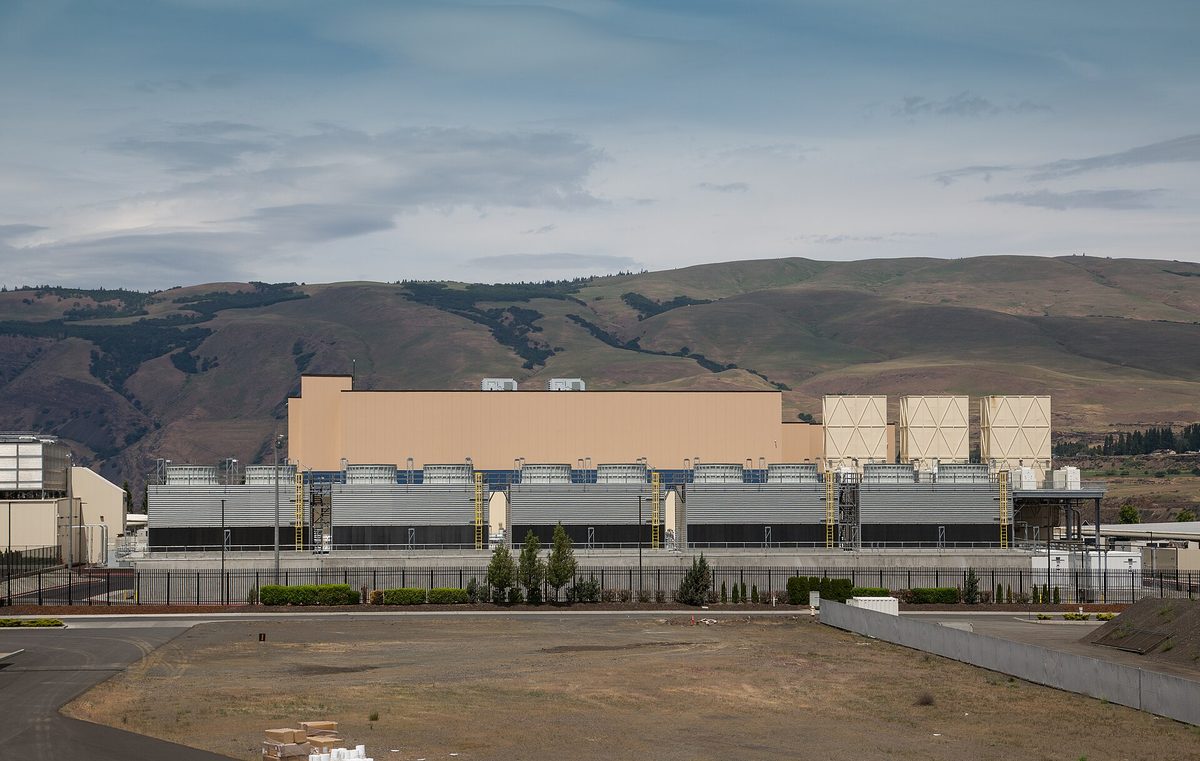
Nebius laid out $40 billion in planned spending for 2027 on its third-quarter earnings call on Thursday, far more than Wall Street had expected. The neocloud company plans to fund the buildout by relying on customer prepayments and loans backed by customer contracts, essentially using the future value of its data centers to finance their construction, a strategy that works only if the projects arrive on time.
The quarter behind the plan was strong on its face. Nebius reported third-quarter revenue of $980.8 million, up 571 percent from $146.1 million a year earlier and above the $907.5 million analysts had expected. Roughly a third of the quarter's revenue was a one-time payment tied to a new partnership model. Revenue for the first nine months of 2026 reached $1,962.1 million, up 549 percent from $302.1 million in the same period last year.
Investors still sold the stock. Shares fell as much as 23 percent and ended the day down 17 percent, because the outlook moved the other way. Nebius cut its 2026 revenue forecast by $200 million to $3 billion, the low end of its earlier $3.0 billion to $3.4 billion range, citing delays to third-party data center capacity. It also raised its 2026 capital spending forecast to about $27 billion, from a range of $20 billion to $25 billion.
The financing plan is the heart of the story. Chief Financial Officer Maria Del Dado Alonso Sanchez said total prepayments plus asset-backed financing of investment-grade contracts are expected to cover up to 85 percent of the $40 billion to $45 billion 2027 capital spending, naming Microsoft and Meta as contracts that can be financed this way. Chief Revenue Officer Marc Boroditsky said new deals signed in the third quarter came with prepayments that more than cover the cost of building the capacity behind them, and the company ended the quarter with $7.4 billion in cash. The scale is stark: the 2027 spending plan is more than three times the $12 billion to $13 billion of revenue Nebius expects to collect that year, and this year's roughly $27 billion of spending is about nine times its 2026 revenue.
The weak link is a data center Nebius does not operate. Microsoft, one of its largest customers, is paying for AI computing capacity at a site in Vineland, New Jersey, under a contract worth up to $19.4 billion, and the site is now months behind schedule. Only just over half of the Microsoft capacity is now planned for delivery by the end of the year, with the rest coming in the second quarter of 2027. According to chief product and infrastructure officer Andrey Korolenko, the delay is because DataOne, the third-party operator of the site, decided to wind down temporary generation faster than expected as the site switches over to Bloom Energy fuel cells.
The Vineland site has a troubled history. In August, the investigative site Floodlight identified at least 45 natural gas generators in operation at the DataOne site, even though it had not received permits to operate gas generators, and New Jersey regulators fined the facility $1.1 million, finding that the use of the generators violated federal law. DataOne is also facing a noise-complaint lawsuit from nearby residents over a constant humming noise allegedly emitted by the data center.
The contract has teeth. According to Nebius's summary of its Microsoft agreement, Microsoft can terminate affected service after a grace period if dates are missed and no alternative capacity is offered, and the contract includes financial penalties for late delivery. The tranches were originally meant to be deployed in 2025 and 2026, so a second-quarter 2027 delivery date falls well beyond that window. Nebius said Microsoft has been part of the planning process, but did not say whether Microsoft has agreed to the new dates, and Microsoft has not publicly canceled anything.
The pressure extends beyond one site. Bloomberg has reported that Microsoft is cooling on neocloud deals that are not delivering on time, tightening oversight of projects run by third parties including Nebius, IREN and Nscale, and sending employees to the site in New Jersey. Microsoft noted in its own quarterly earnings report that its capital spending was lower than expected because of third-party delays, and Bloomberg also reported that it will not use an option to more than double its Nscale agreement for a Texas data center and recently stopped being an anchor customer for Nscale's planned Essex site after power delays. Rival CoreWeave, by contrast, raised its 2026 revenue guidance, citing a $132.5 billion backlog. "Building at this scale is hard, and delays are part of our industry right now," chief executive Arkady Volozh said on the earnings call. "We are not immune." Nebius says the data centers it is building itself are coming online on time or ahead of schedule and will supply most of its new capacity from 2027, and it forecast 2027 revenue of $12 billion to $13 billion, with a pre-tax break-even by the fourth quarter. The test now is whether Vineland catches up and the prepayments keep flowing, because if either slips, a $40 billion plan built on customer cash will need real capital instead.
Why it matters: Nebius is the most leveraged bet in the AI buildout, and this earnings call put its financing model on display. Neoclouds do not fund data centers the way the big cloud providers do; they borrow against the future value of the buildings, with customer prepayments and contract-backed loans doing the work that equity or cash flow would do elsewhere. That works only while capacity arrives on schedule, and the Microsoft delays show the weak link is not demand but third-party operators, power and permits. The market's verdict, a 17 percent share drop on a 571 percent revenue beat, says investors now price execution risk, not just growth. If the model strains at Nebius, it raises the same question for every neocloud chasing the same buildout.
Reporting: TechCrunch · Dealroom
Primary source: Nebius
Spot an error? Orbit News corrects articles promptly and notes the correction in the article. See our Editorial Policy, or flag an error by messaging us on Facebook, X, or Instagram.
Related from Orbit News

Jensen Huang Resigns as Nvidia Chief, Ending 33 Years at the Top of the AI Boom
Business · Nov 13, 2026
Anthropic IPO Orders Run Six Times the Shares on Offer, With Existing Backers First in Line
Business · Nov 13, 2026