Business
Jensen Huang Resigns as Nvidia Chief, Ending 33 Years at the Top of the AI Boom
The co-founder who built Nvidia into the world's most valuable company stepped down amid an affair scandal linked to a suspected Chinese spy, and shares fell sharply.
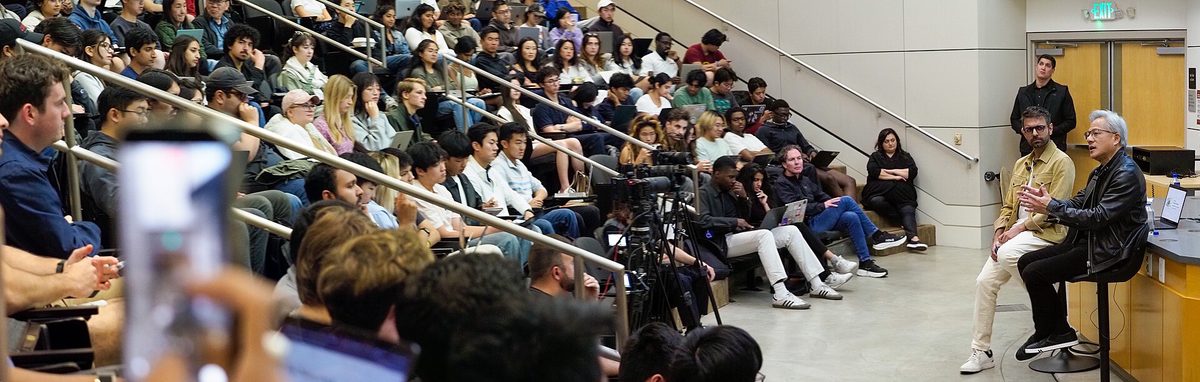
Jensen Huang resigned on Thursday as president, chief executive and a board member of Nvidia, ending a 33-year run at the company he co-founded in 1993 and turned into the engine of the artificial intelligence boom. The resignation came after reports that Huang had an affair with a former executive at a Singapore company whom U.S. intelligence suspects of spying for China, and that he had a second affair with a Nvidia vice president.
Nvidia's board moved quickly. Chief Financial Officer Colette Kress, 59, who has been the company's finance chief since 2013, was named interim chief executive while keeping her CFO duties, and the board said it was searching inside and outside the company for a permanent successor. Harvey C. Jones, a former Synopsys chief executive and longtime Nvidia director, was named the board's first-ever chair.
The board had opened an independent review of the allegations earlier in the month, retaining Joon H. Kim, the former acting U.S. attorney in Manhattan, and the law firm Wachtell Lipton to conduct it. By Thursday morning, Huang was gone. Huang, who owns 3.61 percent of Nvidia and is its fourth-largest shareholder, will leave the board entirely.
The scandal unfolded over more than a year. The New York Times first reported in October 2025 that Huang had a relationship with Alice Huang, a former executive at Megaspeed, a Singapore-based company that U.S. intelligence suspects of working on behalf of China. China has denied the spying allegations. The Times reported on Wednesday, November 11, that he had a second relationship, with Kimberly Powell, Nvidia's vice president of health care. Huang admitted the affair in a message to employees on November 8 and apologized, and he has hired the law firm Paul Weiss. The board said it had no reason to believe national security or Nvidia's secrets had been compromised, and the FBI is investigating the relationship.
Huang's resignation was not his first instinct. President Donald Trump had urged Huang to fight for his job in a phone call earlier in the week, according to reports. Trump told an interviewer at the White House on Thursday that Huang had called him and was worried about the toll of the scandal on his family, and said the resignation was warranted if Alice Huang was a spy. Huang has also agreed to testify before Congress before Thanksgiving.
The market's reaction was swift and brutal. Nvidia shares slumped as much as 14 percent in intraday trading on Thursday to their lowest in nearly 16 months, wiping as much as $600 billion off the company's market value at one point, before closing down 4.3 percent at $166.19. Shares of rivals AMD and Broadcom rose about 6 percent each on the same day, and Nvidia shares were down about 11 percent for the week through Thursday. Retail investors bought heavily into the drop, and shares were up about 2 percent in premarket trading on Friday.
The fall was remarkable because of how far Nvidia had risen under Huang. At one point this year the company's market value approached $6 trillion, the largest of any company in the world, and its shares had risen sevenfold from the start of the AI boom through early October. The company's chips power the data centers where the world's largest AI models are trained, and Huang's black leather jacket had become a symbol of the boom itself.
Kress is a known quantity to investors, but not a simple one. She joined Nvidia in 2013 from Microsoft, after earlier roles at Cisco and Texas Instruments. In the fiscal year she joined, Nvidia's revenue was $4.13 billion; in the fiscal year that ended in January 2026, it was $215.9 billion. She became a billionaire in 2025 and Forbes ranks her among America's richest self-made women, with a net worth of about $1.2 billion as of mid-2026. She also clashed with Huang over his riskiest financing bets, including a plan to finance a $250 billion data center for OpenAI in Ohio that was eventually pared back to about $120 billion.
The company is trying to keep the business running through the turmoil. Kress told employees in a memo that the board and executive staff recognize "an extraordinarily difficult period," and a company meeting is scheduled for November 18. The company said its third-quarter results for fiscal 2027 are still due on Tuesday, November 17, as scheduled. Names already floated as possible successors include Ian Buck, a Nvidia executive who helped build the CUDA software platform, AMD chief executive Lisa Su and Arm chief executive Rene Haas.
The political fallout is running in parallel. Senior White House officials are discussing whether Commerce Secretary Howard Lutnick should be pushed out over the chip-diversion dispute, according to Reuters, though the White House says Trump maintains complete confidence in him. The Nvidia story has now become two stories at once: a boardroom scandal that ended one of the most consequential chief executives in American business, and a Washington fight over how American chips ended up in China. Both are still unfolding.
Why it matters: This is the biggest leadership story in tech this year, and it is not really about one affair — it is about the company at the center of the AI boom losing the founder who built it, at the moment its chips are at the center of a national-security dispute with China. Nvidia's valuation swing on Thursday alone was larger than the entire value of most companies, and the succession question now hangs over the biggest stock in the world. The political half of the story — Lutnick and the chip-diversion fight — is covered in today's Politics section.
Reporting: BusinessWorld · Reuters
Spot an error? Orbit News corrects articles promptly and notes the correction in the article. See our Editorial Policy, or flag an error by messaging us on Facebook, X, or Instagram.
Related from Orbit News
Anthropic IPO Orders Run Six Times the Shares on Offer, With Existing Backers First in Line
Business · Nov 13, 2026
Producer Prices Rose 0.3% in October as Annual Inflation Hit a Four-Year High of 6.5%
Business · Nov 13, 2026