Business
Cisco Posts a Record Quarter as AI Networking Demand Lifts Revenue 24%
The networking giant reported its strongest revenue and earnings growth in more than 15 years and raised its full-year guidance, as hyperscalers buy more gear to connect AI data centers.
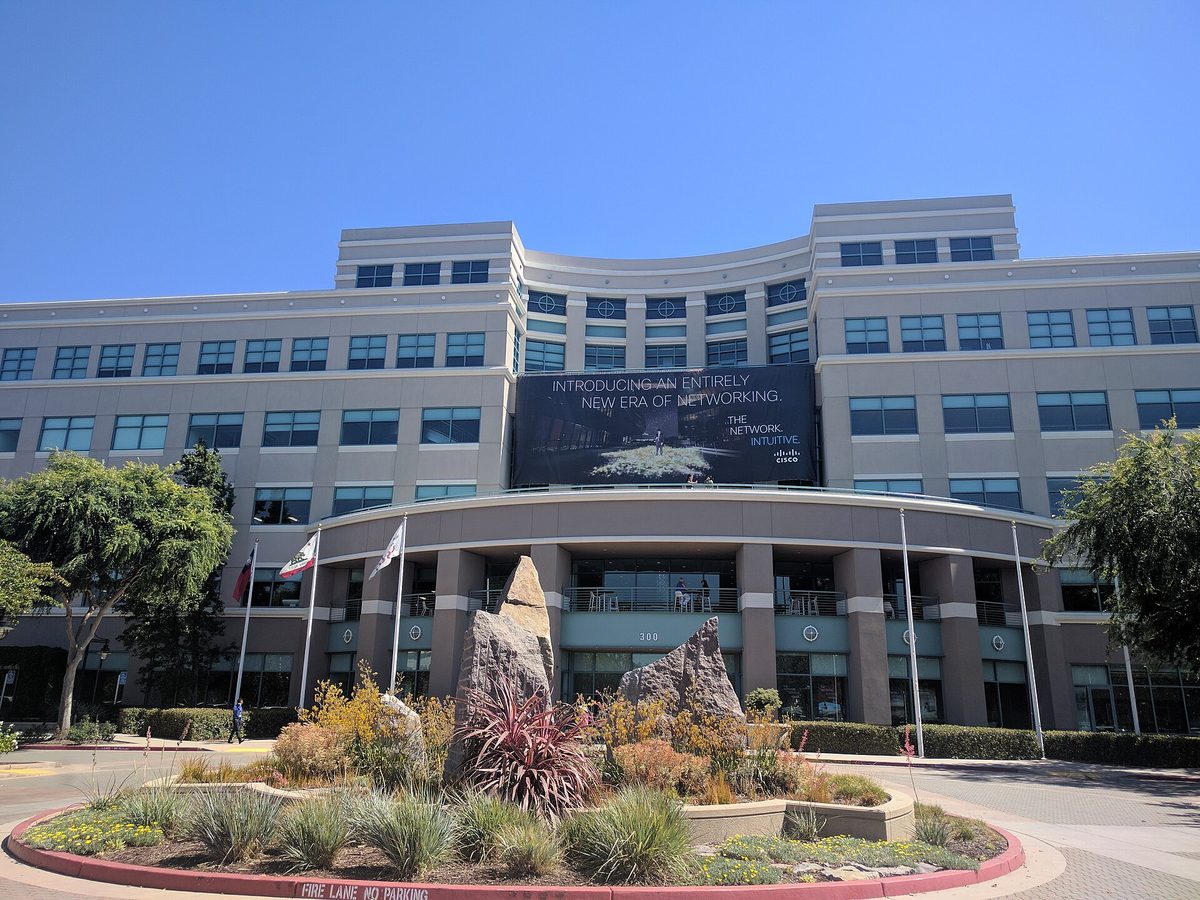
Cisco Systems reported record first-quarter results after the market closed on Thursday, with revenue up 24 percent from a year ago and adjusted earnings up 40 percent, as demand for the networking gear that connects artificial intelligence data centers surged. The company also raised its full-year guidance and said it now expects $9 billion in revenue from hyperscaler AI infrastructure this year.
Revenue for the fiscal first quarter, which ended October 24, 2026, was $18.52 billion, up from $14.88 billion a year ago — a 24 percent increase and an all-time quarterly high for the company. The figure beat the roughly $18.1 billion Wall Street had expected. Adjusted earnings per share were $1.40, against a consensus of $1.33, and up 40 percent from $1.00 a year ago.
The bottom line was even stronger on a GAAP basis. Net income was $4.6 billion, up 59 percent from $2.9 billion a year ago, and GAAP earnings per share were $1.14, up 58 percent from $0.72. Adjusted operating margin was a record 37.8 percent. Adjusted gross margin was 65.6 percent, down from 68.1 percent a year ago, as rising memory and component costs weighed on profitability — a reminder that the same AI boom driving Cisco's sales is also raising its costs.
The growth was driven by networking, Cisco's core business. Networking revenue was $11.13 billion, up 43 percent from a year ago, as hyperscalers and large enterprises bought more switches and routers to connect the AI data centers they are building. Product revenue overall was $14.7 billion, up 32 percent, while services revenue was $3.9 billion, up 1 percent.
The guidance was the part of the report that moved the stock. Cisco raised its fiscal 2027 revenue outlook to $74.8 billion to $75.8 billion, from $72.2 billion to $73.4 billion previously, and raised its adjusted earnings outlook to $5.47 to $5.53 per share, from $5.05 to $5.11. Both were above what Wall Street had expected — about $73.34 billion in revenue and $5.17 a share in earnings. For the current quarter, the company guided revenue to $18 billion to $18.2 billion and adjusted earnings to $1.34 to $1.36 a share, also ahead of the Street's forecast.
The AI numbers inside the guidance were striking. Cisco now expects $9 billion in revenue from hyperscaler AI infrastructure in fiscal 2027, raised from $7.5 billion, and more than double the $4 billion it recorded in fiscal 2026. The figure shows how quickly the AI buildout is becoming a core part of Cisco's business, rather than a side line. The company is a direct beneficiary of the spending by the same hyperscalers — Amazon, Microsoft, Google and Meta — that are buying Nvidia's chips.
Shares rose 1.7 percent in after-hours trading on Thursday, after gaining 1.2 percent in the regular session. The stock is up 32 percent this year, though it has been largely flat since mid-May, as investors waited for evidence that the AI networking boom would show up in Cisco's results. The quarter provided that evidence: the company's revenue and adjusted earnings growth were the strongest in more than 15 years, according to Zacks.
Chief Executive Chuck Robbins struck a confident tone on the earnings call. "We are in the very early stages of a multi-year networking supercycle," he said, arguing that the AI buildout will require years of investment in the networking infrastructure that connects data centers. The company also returned $3.7 billion to shareholders through dividends and buybacks in the quarter, and pays a quarterly dividend of $0.42 a share, or $1.68 a year.
The results landed on the same day as the biggest news in the AI world — Jensen Huang's resignation from Nvidia, the company whose chips power the data centers Cisco connects. The two stories are linked: Nvidia's chips need Cisco's switches and routers to work together in a data center, and the AI infrastructure boom lifts both companies. Cisco's quarter suggests the spending is continuing even as the sector's most prominent chief executive departs.
The question now is whether the supercycle Robbins describes can sustain the growth rates Cisco just reported. The company raised its guidance for the full year, and its hyperscaler AI revenue forecast more than doubled from last year. If the AI buildout continues at its current pace, Cisco's networking business — which had been seen as a mature, slow-growing franchise — could be at the start of a multi-year run. If the spending slows, the quarter just reported will look like a peak.
Why it matters: This is the other side of the AI story from the Nvidia resignation in today's Business section: while the chipmaker's boardroom was in turmoil, the company that wires the data centers together posted its best quarter in a generation. Cisco's 43 percent jump in networking revenue and its raised $9 billion hyperscaler AI forecast show the AI infrastructure boom is still accelerating, and they matter because Cisco's guidance is a forward-looking read on the spending that will decide whether the AI buildout continues or stalls.
Spot an error? Orbit News corrects articles promptly and notes the correction in the article. See our Editorial Policy, or flag an error by messaging us on Facebook, X, or Instagram.
Related from Orbit News

Jensen Huang Resigns as Nvidia Chief, Ending 33 Years at the Top of the AI Boom
Business · Nov 13, 2026
Anthropic IPO Orders Run Six Times the Shares on Offer, With Existing Backers First in Line
Business · Nov 13, 2026