Politics
Judge Blocks Trump From Closing Washington's East Potomac Golf Course
U.S. District Judge Ana Reyes issued a temporary restraining order on Saturday halting the planned 15-month closure of the historic public course, calling the administration's safety rationale 'pretextual.'
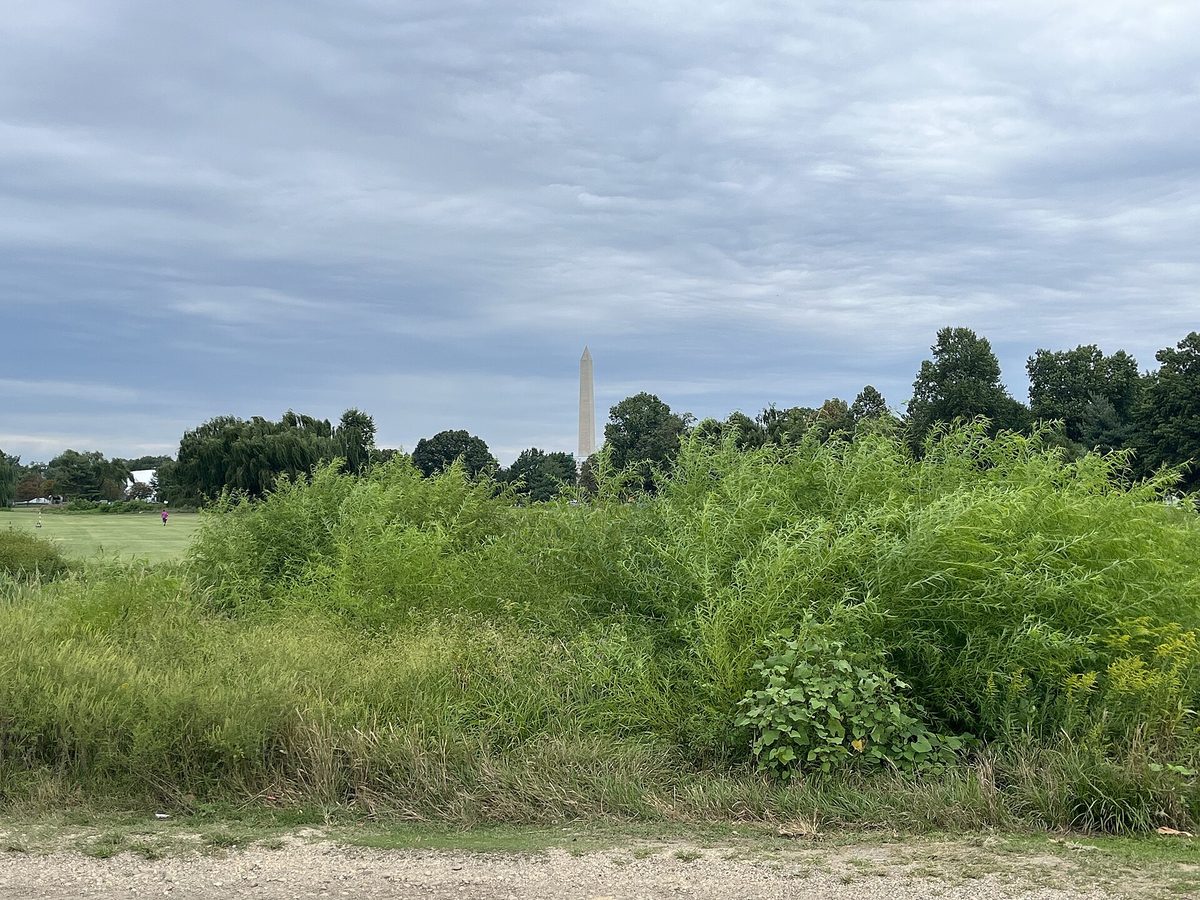
A federal judge halted President Donald Trump's plan to renovate a municipal golf course in Washington, D.C., on Saturday night, issuing a temporary order that requires the administration to keep the course open after Trump said it would be closed on Sunday for the overhaul. U.S. District Judge Ana C. Reyes issued the temporary restraining order hours before East Potomac Golf Links was due to close on Sunday, November 15, for 15 months of renovation into a championship course. The order keeps the park and the course open through November 28, 2026, or until the court issues a further order, and it does not require the government to actively manage or operate either one.
Reyes said the administration's push to revamp East Potomac Golf Links into the championship course Trump desires likely violated environmental law and ran afoul of procedural guardrails for executive branch actions. She said the Justice Department's arguments in the litigation, where it claimed that the November 15 closure was happening for safety reasons, were "pretextual." In a 30-page decision, she found that the government had likely violated at least two federal laws "to meet an arbitrary deadline." "The Government proposes to close a historic park, daily enjoyed by Washingtonians of all stripes, indefinitely," Reyes wrote, finding that the closure would "irreparably harm" the plaintiffs, individual golfers and preservationists.
The legal rationale of her ruling turned on the National Park Service's failures to take certain steps before the overhaul that she found to be required by law, such as providing notice to the public of the plan and soliciting their comment on it. "Notice-and-comment rulemaking is not impracticable merely because NPS wishes to accommodate President Trump and close the Park by November 15," she wrote. Trump's own public announcements weighed heavily in the decision: on October 26 he posted that "We are closing the East Potomac Golf Course Site as scheduled on November 15th in order to renovate and rebuild for Competitive (with other such projects!), Safety, Modernization, and Aesthetic reasons." Reyes wrote that the posts indicated the redevelopment plan was final and that the park service would close the park to implement it, and that both points favored granting the plaintiffs' motion.
The plan at the heart of the case would replace the course's three layouts, totaling 36 holes, with a single 18-hole championship course designed by golf architect Tom Fazio, which Trump has said could host the U.S. Open and the Ryder Cup while remaining open to the public. Trump, an avid golfer, first publicly proposed taking over and expanding the municipal course in May, and was soon after seen touring the grounds with Interior Secretary Doug Burgum and Fazio, a well-known designer who worked on several of Trump's private courses. The president initially said work would begin September 1, which accelerated the legal challenge. The lawsuit was brought in February by the DC Preservation League and two local golfers, who argue that the redevelopment would change the character of the accessible public course and make it unaffordable, something the president denies.
Saturday's ruling was the latest development in a months-long battle between Reyes and the Trump administration, one that has prompted Trump to attack the judge on social media and suggestions from Reyes that government attorneys may have misled her. In October, Reyes issued a stark order blocking tree removal and imposing new notice requirements after more than 400 trees were removed from the course with minimal notice. "More than just being upset and furious right now, I am just beyond disappointed with the government," Reyes said during that hearing. "The question goes to whether or not I have been lied to, whether I have been lied to in declarations about the plans, whether I have been lied to about the timing of things," she told Justice Department lawyers at the time. The Justice Department has unsuccessfully tried to remove her from the case, and she has announced plans to name Jessie Liu, a former U.S. attorney for the District of Columbia, to examine whether officials misled her.
Trump lashed out on social media on Saturday even before the order, contending that Reyes "doesn't want us to quickly and inexpensively fix up the Course which is, also, very dangerous." He continued to promote the project on Saturday and posted photos of what he has called "Trash Island." "When you walk down the corridors of Trash Island, you don't hear the sound of the running Potomac, all you hear is the sound of people screaming, 'FORE!'" he wrote, arguing that the fairways are far too close together. He also said people who live in the Washington area would get a 50 percent discount on "any and all Rates charged" and that the redevelopment would "evolve into something very special, something which the Judge will be able to take great pride in seeing!"
The Justice Department said in a statement after the ruling that it will "always vociferously defend the Trump Administration's agenda in court." A department spokesperson told CNN that "The Court has acknowledged that the National Park Service can limit access to its facilities where the public is at risk of harm" and that "Nothing in the Court's order precludes planning for the development of a world class golf course to continue." Catherine Carroll, a senior legal adviser at Democracy Forward, which is representing the plaintiffs, praised the ruling, saying a court had once again "intervened to prevent irreparable harm caused by the Trump-Vance administration's pursuit of another one of the president's vanity projects."
The golf course fight is one of several in which the administration has bristled at complying with court orders, and it is part of a wider set of projects Trump has championed to remake the nation's capital. Other projects, such as the president's efforts to rename the Kennedy Center, build a triumphal arch on the banks of the Potomac and construct a White House ballroom, are also facing legal challenges. A different judge recently ordered a 14-day delay on work for the arch, a decision that came shortly after a key planning commission stacked with Trump appointees approved plans for the project. The East Potomac case, over a 106-year-old public park about two miles from the White House, has become the most vivid example of the pattern: a ruling issued just hours before construction was expected to begin.
For now, the course stays open, but the order is temporary relief, not a final judgment. The restraining order runs through November 28 unless Reyes extends it, the government remains free to conduct repairs with any notice required by the existing preliminary injunction, and planning for the championship course can continue. The underlying lawsuit will decide whether the redevelopment itself can go ahead, and the ethics inquiry into whether officials misled the court is still to come. Golfers can play on Sunday. Whether they will be playing on a championship course in two years is still an open question.
Why it matters: A golf course may seem like small stakes next to the administration's other legal battles, but this case has become a telling test of how far a president can go in remaking the capital by executive will. Judge Reyes found the government's stated reasons pretextual and its process unlawful, the latest in a series of rulings issued hours before construction was due to begin on the president's showcase projects. The pattern matters: the arch, the ballroom and the Kennedy Center are all in court, and each last-minute order adds to a record of an administration struggling to comply with the procedures that govern public land. The ethics inquiry into whether government lawyers misled the court is the sharper edge here, and it is the part of this case most likely to outlast the argument about fairways.
Spot an error? Orbit News corrects articles promptly and notes the correction in the article. See our Editorial Policy, or flag an error by messaging us on Facebook, X, or Instagram.
Related from Orbit News

Trump, Xi and Putin to Hold First-Ever Three-Way Meeting in China Next Week
Politics · Nov 15, 2026
New York Democratic Socialists Urge Ocasio-Cortez to Run for President in 2028
Politics · Nov 15, 2026