World
Israel's New Parliament Is Sworn In as Eisenkot Races to Build a Government
Gadi Eisenkot, tasked by the president with forming the next government, struck a pact with opposition leaders over key parliamentary posts, while Benjamin Netanyahu urged them to join a unity government under his leadership.
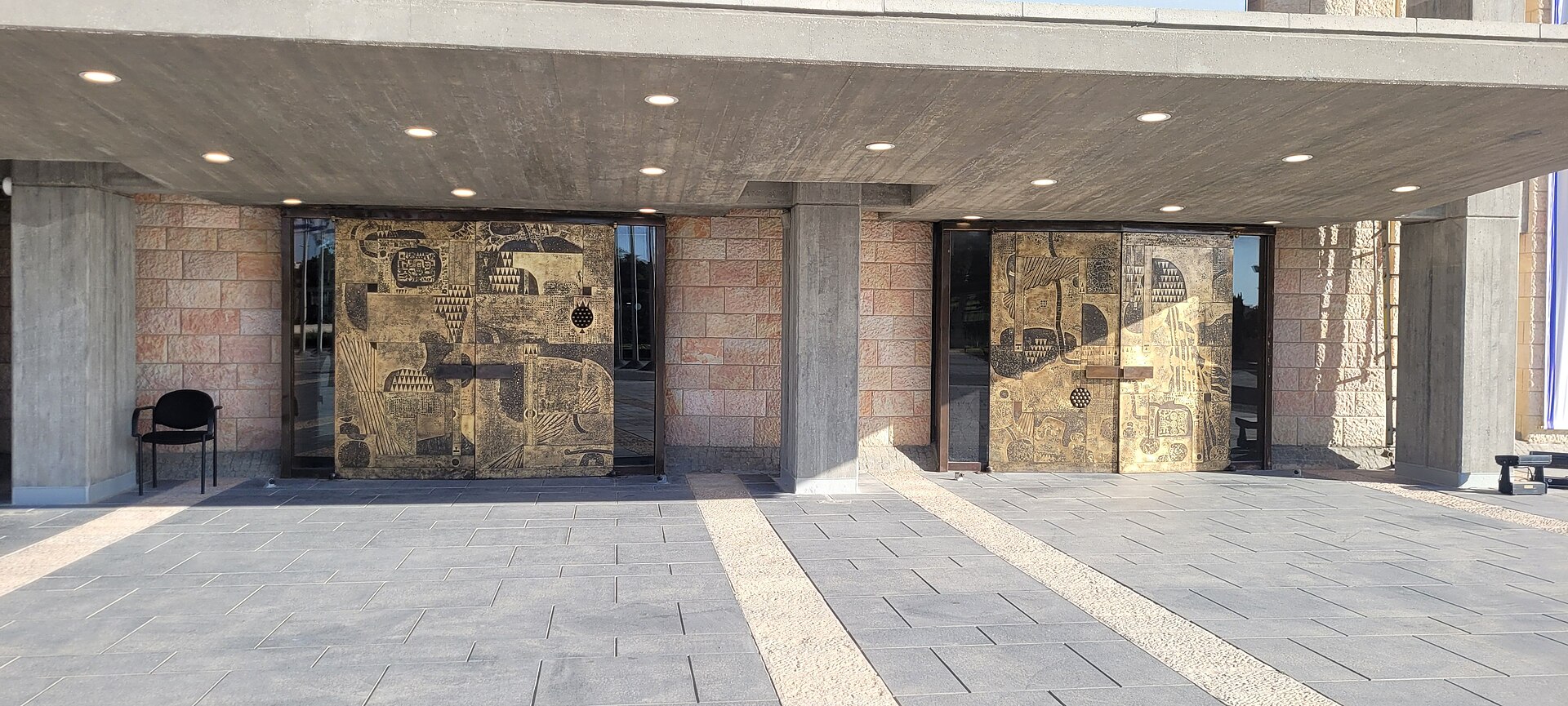
Israel's new parliament was sworn in on Tuesday, as opposition leader Gadi Eisenkot seeks to oust caretaker Prime Minister Benjamin Netanyahu and build a government of his own. President Isaac Herzog delivered a speech at 4:00 in the afternoon for the swearing-in of the 120-seat Knesset, in which neither Netanyahu's right-wing bloc nor Eisenkot's opposition holds a majority. The ceremony marked the start of a political process that could take days or months, and that will decide who governs a country still shaped by the war in Gaza and the divisions it exposed.
Herzog on Sunday formally tasked Eisenkot, the former military chief who leads the Yashar party, with forming the next government, nearly two weeks after the country held a national election on October 27. The decision followed consultations with the parties elected to parliament, in which 67 members of the Knesset recommended Eisenkot for prime minister, compared with 46 for Netanyahu. Seven members recommended neither. Eisenkot now has 28 days, until December 6, to assemble a coalition, with the president authorized to grant an additional extension of up to 14 days if required.
The arithmetic facing Eisenkot is daunting. In the October 27 election, Netanyahu's religious-nationalist camp won 53 seats and the broad opposition bloc led by Eisenkot won 48, leaving both short of the 61 seats needed for a majority in the 120-member parliament. No party outside his bloc has yet agreed to join a government he leads, and the invitations cut in directions that pull against each other: bringing in ultra-Orthodox parties requires concessions on military conscription for religious students, while other potential partners oppose exactly those concessions.
Eisenkot took an early step on Monday, reaching a formal agreement with four opposition leaders on key parliamentary appointments. Under the pact, announced on social media, the opposition bloc nominated former minister Matan Kahana, like Eisenkot a former senior military figure, as their candidate for Speaker of the Knesset. Former defence minister Avigdor Liberman is slated to head the influential Foreign Affairs and Defence Committee, and Roy Folkman was designated to lead the House Committee. The nominations are expected to be submitted to the Knesset plenum for approval next Wednesday.
The agreement was struck with Naftali Bennett, Yair Golan, Avigdor Lieberman and Yair Lapid, and the leaders expressed full confidence in their ability to form a stable government for a full four-year term. Eisenkot has publicly emphasized the necessity of forming a national emergency government, suggesting he is prepared to pursue unconventional political strategies to secure the required support. He has said any party or member of the Knesset prepared to accept four principles could join his proposed government, though the details of those principles remain a subject of negotiation.
Netanyahu, meanwhile, is fighting to hold on. On Monday, the caretaker prime minister called on opposition leaders to join him in forming a unified government comprising opposition and ultra-Orthodox parties, saying it was the need of the hour amid the country's major challenges. He said he was ready to immediately enter talks with any party willing to discuss his proposal. It was his second such appeal in three days, after he called on Saturday for unity, saying this is the time for unity and this is the will of the people.
The opposition hopes to use its newfound legislative power to move quickly on key priorities, including a commission to investigate the security failures under Netanyahu that allowed the October 7, 2023 attack by Hamas, the deadliest day in Israel's history. That inquiry, which Netanyahu has long resisted, has become a central demand of the opposition and a symbol of the accountability they say the election delivered. Whether Eisenkot can hold his fractious alliance together long enough to deliver it remains to be seen.
One early signal came from Avigdor Liberman, leader of Yisrael Beiteinu, who said he was willing to compromise on conscription legislation and to form a government with the ultra-Orthodox parties. Whether that arithmetic can be made to reach 61, and on what terms, is the negotiation now under way in Jerusalem. The process follows Israel's Basic Law: The Government. If Eisenkot cannot form a government in 28 days, the president may extend his time by up to 14 more days, to December 20, or hand the mandate to another member of the Knesset.
Netanyahu remains caretaker prime minister while the talks run, which means Israel's policy on Gaza, Lebanon and Iran stays in the hands of the government the election did not return, until someone proves they can replace it. The outcome of the election, widely seen as a referendum on Netanyahu, means there is a period of uncertainty over who will form the next government. For a country that has held repeated elections in recent years, the question is whether this one will finally produce a stable government, or whether Israel is headed for yet another round of political deadlock.
Reporting: The Hindu BusinessLine
Spot an error? Orbit News corrects articles promptly and notes the correction in the article. See our Editorial Policy, or flag an error by messaging us on Facebook, X, or Instagram.