Technology
Hackers Are Turning Europe's Supermarket Freezers Into Ovens
Attackers pushed fridges and freezers to 50 degrees Celsius at more than 115 stores in seven countries, and U.S. agencies now warn the world's cold chain is a target.
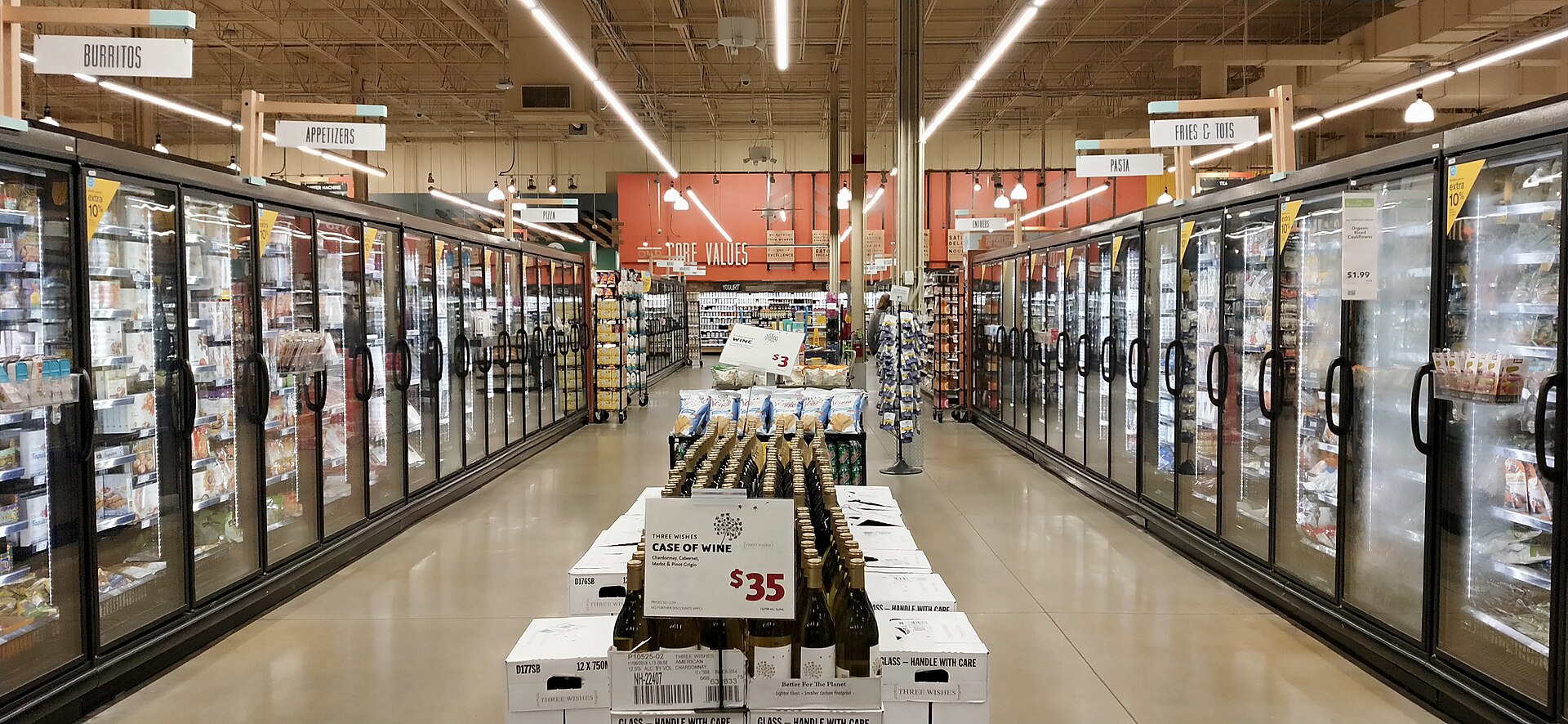
Hackers turned supermarket freezers into ovens across Europe last week, remotely pushing the temperature inside fridges and freezers as high as 50 degrees Celsius and forcing stores to throw away mountains of spoiled food. The attacks, which hit more than 115 stores in at least seven countries overnight into Monday, November 2, are the second wave of a campaign that first struck France three weeks earlier, and on November 5 the United States government warned that the world's cold chain is now a target.
The latest wave reached Belgium, Sweden, Estonia, Ireland, Finland, the Netherlands and Luxembourg. In Belgium, the Delhaize chain said an 'IT incident' hit refrigeration in several dozen stores, while Carrefour said a cyberattack affected 15 of its more than 700 outlets and Intermarché reported problems at 10 to 15 stores. In Sweden, the ICA Kvantum store in Sjöbo said its fridges and freezers had been set to 50 degrees Celsius, about 122 Fahrenheit, and staff were throwing out the affected goods. In Estonia, a freezer at a Selver supermarket was also set to 50 degrees. In Ireland, the Musgrave Group said a cyber incident affected refrigeration at 13 of its SuperValu stores, and chilled and frozen products were taken off sale as a precaution.
The damage at individual shops was severe. At a butcher shop in Hove, south of Antwerp, the owner told Reuters that his fridges had been turned up as high as 18 degrees Celsius and that about 15,000 euros worth of meat was ruined. In Sweden, the manager of an ICA store told local broadcaster TV4 that hundreds of thousands of kronor worth of food had to be thrown out. The attackers did not need to break into the stores at all. The refrigeration controllers that run a modern supermarket's fridges and freezers are small computers, and they can be reached over the internet so that contractors can monitor temperatures and fix faults remotely. In these attacks, someone logged in from outside and switched the units into defrost mode, which is meant to clear ice but instead made the equipment heat up, or simply raised the temperature setting.
The campaign began in France on the night of October 11 to 12, when refrigeration systems at hundreds of supermarkets were tampered with remotely. French outlets put the toll at 250 to 350 stores, while France's finance minister said around 700 of the country's 10,000 supermarkets were hit. At some stores the fridges ran at 50 degrees for six hours, food was discarded across the Intermarché, Coopérative U, Carrefour and Leclerc chains, and fires broke out at some stores. Prosecutors in Paris have opened an investigation. On November 2, the attacks reached France's blood service, with temperature and defrost thresholds tampered with at three regional sites of the Établissement français du sang through a contractor's remote monitoring software. Alarms caught the change, the blood products were moved, and none was damaged.
The attacks have also reached Britain. A London wholesale fruit and vegetable trader told the Guardian that he found his refrigeration units showing 150 degrees Celsius on the morning of November 2 and pulled the internet cable out of the control box. Britain's National Cyber Security Centre said it is supporting a small number of British organizations affected, and a meat suppliers' trade body said a few of its more than 300 members had fridges warmed up. The head of the NCSC, Richard Horne, has warned of a possible wider threat, while the agency's director of operations, Paul Chichester, said the attacks did not need artificial intelligence or sophisticated techniques, only known vulnerabilities that had never been fixed.
The equipment at the center of the attacks comes largely from Danfoss, a Danish maker of refrigeration controls, along with Copeland and Dixell systems. France's national cybersecurity agency, CERT-FR, has named Danfoss AK-SM and AK-SC controllers and Copeland and Dixell xweb units in its alert, and says the campaigns against these devices are probably still underway. Danfoss has said many of the affected units were older models it no longer supports, including the AK-SM 800, which reached end of life in 2021, and the AK-SC 355, withdrawn in 2016, or newer units running outdated firmware. In the Netherlands, a Danfoss spokesperson said the systems that were hit were not on a secure network and still used default passwords. Researchers at the security firm Claroty disclosed a login weakness in some of the controllers in 2025, catalogued as CVE-2025-41450, though neither French authorities nor Danfoss has tied that specific flaw to the attacks.
On November 5, the U.S. Cybersecurity and Infrastructure Security Agency, the FBI and three other American agencies warned that refrigeration controllers are being targeted globally, saying attackers may use authentication bypass, code injection and weak configurations to force units into continuous heating or defrost and to blind operators to the real temperature. The European Union's agriculture commissioner, Christophe Hansen, called the repeated attacks deeply concerning and described them as a deliberate attempt to disrupt the food supply chain. The security firm Forescout has identified more than 20 confirmed attacks against refrigeration systems since the start of the year, many of them linked to pro-Russian hacktivist groups, and said nearly 5,000 Danfoss systems were still exposed on the internet before the latest wave.
Nobody has claimed responsibility for the attacks, and no ransom has been demanded. Belgium's Centre for Cybersecurity said it was not known who was behind them and that it 'may never be determined.' Belgium's federal prosecutor has opened a criminal investigation, and Sweden's National Cybersecurity Centre said it was following the incidents and sharing information with other Nordic and European countries. The absence of a claim or a ransom demand has left investigators weighing whether the goal was disruption for its own sake, a test run for something larger, or an attempt to damage confidence in the food supply.
For the supermarkets and suppliers, the fix is unglamorous and expensive. CERT-FR's guidance is to take the controllers off the internet entirely, restore access only through a secure virtual private network, check defrost schedules, update firmware and change default passwords, and to replace end-of-life devices that no longer receive security fixes. A factory reset alone is not enough, the agency warns, because an unpatched device left on the internet will simply be compromised again. Some operators have already physically unplugged their fridges from the network, shop by shop, in the middle of the night. The attacks have exposed an uncomfortable truth about modern infrastructure: the machines that keep food cold are computers, and thousands of them were left facing the open internet with the digital equivalent of the door unlocked.
Reporting: Seoul Economic Daily
Spot an error? Orbit News corrects articles promptly and notes the correction in the article. See our Editorial Policy, or flag an error by messaging us on Facebook, X, or Instagram.
Related from Orbit News

Apple's New CEO Is Pressing Its Software Chief to Speed Up AI — Starting With a Smarter Siri
Technology · Nov 9, 2026
Tesla Is Winding Down Cybertruck Production, and Musk Says It Will Have to Refund a Lot of Deposits
Technology · Nov 9, 2026