Business
Fed Minutes Show October Hold Was a 'Close Call' as Officials Lean Toward a December Hike
Minutes of the Federal Reserve's October meeting, released Wednesday, show almost all policymakers expect further rate increases — and that some who backed holding rates steady viewed the decision as a close call.
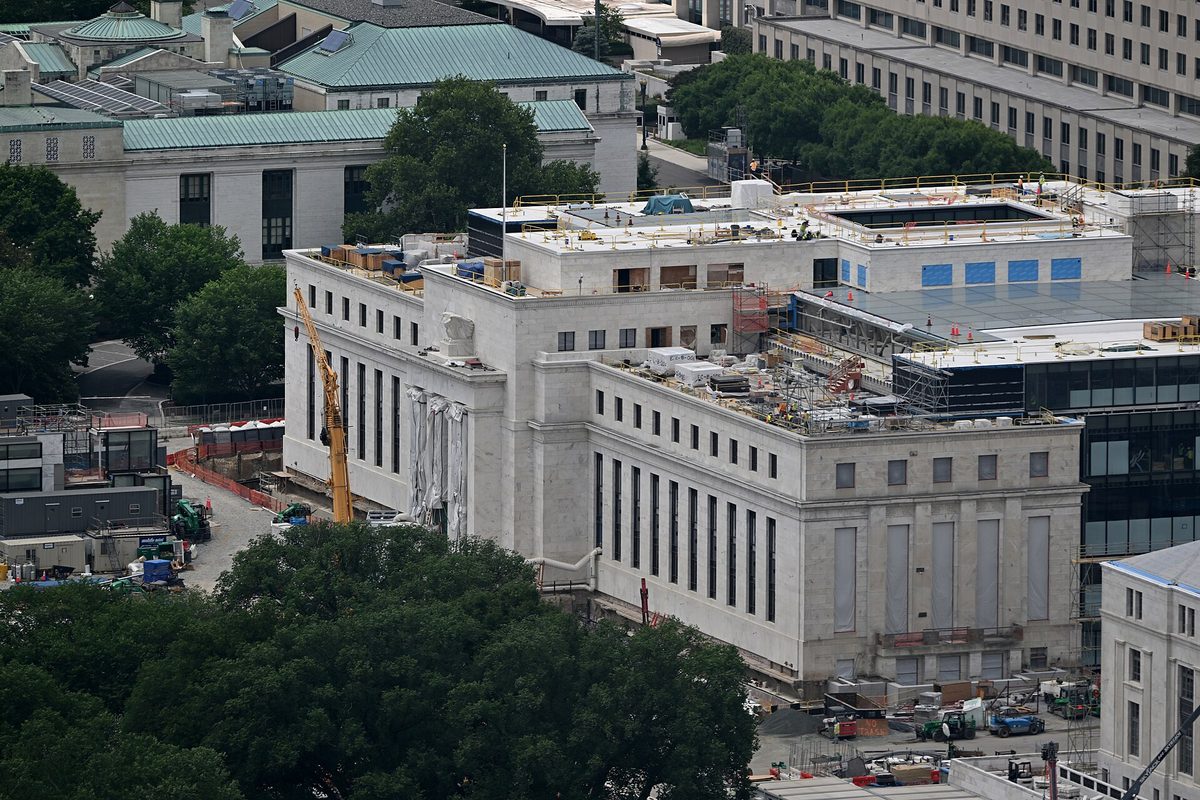
Federal Reserve officials saw a growing risk last month that they might need to intensify their efforts to control inflation, even as they agreed to keep interest rates steady for the moment, the minutes of their October 27-28 meeting showed on Wednesday. "Almost all" policymakers agreed that further rate hikes would be needed if the economy evolved as they expected, the minutes said, while a few said inflation could prove more persistent and require "a shift to a more restrictive policy stance" than currently expected.
The Federal Open Market Committee voted 10–2 in October to keep its benchmark rate at 3.75% to 4%. Fed Governor Lisa Cook and Cleveland Fed President Beth Hammack favored a quarter-point increase. But the minutes showed the decision was closer than the vote suggested: among those who supported keeping the policy rate steady, "a few ... indicated that they viewed the decision as a close call," and they joined a larger group in urging that the Fed be clear that "the decision to maintain the target range did not reflect a weakening" of the commitment to hit the central bank's 2% inflation target.
"A couple" of them went further and argued that the Fed might have to resort to a half-percentage-point increase "if incoming inflation data were unfavorable," a benchmark met in recent releases that showed prices rising faster than anticipated. Prices have been increasing at more than a 3% annual rate, and there has been little improvement in recent months.
The debate highlighted a growing sense at the Fed that inflation will not ease enough on its own for the target to be reached quickly enough. Among those supporting a rate-hike pause, the hope is that coming information will make clearer whether inflation can fall without tighter policy. Last month's meeting also set the stage for a potentially intense debate at the December 8-9 session over the need for a larger rate hike, or at least tougher language about the extent and pace of rate hikes to come.
Fed Governor Christopher Waller laid out the case for a larger move in comments to CNBC on Wednesday, the day the minutes were released. Waller has said a half-point increase should be considered, and evidence that other officials were already open to that scale of tightening in October could push the odds of a 50-basis-point move higher. "The minutes suggest broader support for an October hike than the 10–2 vote alone implied — and that was before payrolls and CPI both came in hot," Lewis Huang, an analyst at crypto exchange Bitget, told Cointelegraph.
Markets are now overwhelmingly expecting a December rate hike. CME FedWatch has put the odds of a December quarter-point hike at about 90% and a half-point increase at about 10% at the time of writing. "With a December hike already fully priced in, the focus shifts to the size of the move and the policy path beyond December," Huang said. Inflation has been stronger than expected since the Fed's last meeting, and investors anticipate that the central bank will deliver a quarter-percentage-point rate increase at its meeting next month.
The minutes also showed the Fed wrestling with the economic consequences of the artificial intelligence boom. Officials raised concerns about ongoing inflationary pressures due to the AI build-out, with participants noting that the demand for AI technology was pushing up the price of some consumer goods. Officials separately discussed the financial risks if the returns on AI investments failed to live up to investor expectations.
"Most participants observed that AI-related debt had grown rapidly and that much of this growth had taken place through complex and opaque financing structures," the minutes show. "A few participants remarked that AI-related exposures were becoming increasingly concentrated among a small number of firms." The October meeting also saw the beginnings of a more detailed discussion about the impact of artificial intelligence, including discussion of the risks of over-investment in the technology as well as the possible benefits it could bring in the form of rising productivity.
Bitcoin was trading around $62,300 after the minutes were released, as traders digested the hawkish tone. Fabian Dori, chief investment officer at Sygnum Bank, said markets are already pricing in a series of hikes into next year. "That likely keeps long-term yields and the dollar firm, and the question for Bitcoin is whether debasement concerns and advancing institutional adoption can outweigh it," Dori said.
The Trump administration has argued that elevated inflation is just temporary and the Fed should ignore it. The minutes show the Fed's policymakers have reached the opposite conclusion: that inflation is proving stickier than expected, that the October pause was a close call even among its supporters, and that the next move — at the December 8-9 meeting — is very likely to be up. The only live question is whether it is a quarter point or a half point.
Why it matters: The minutes matter because they show the October pause was not a pivot — it was a postponement that even its supporters found uncomfortable. When 'almost all' officials expect more hikes, a couple are openly discussing a half-point move, and the Fed's own hawks are making their case on television the same day, the December meeting becomes a question of size, not direction. That is a sharp turn from the rate-cutting era and it reframes everything else in the economy: mortgages, business borrowing, the stock market's AI rally and the dollar. The AI-debt discussion is the sleeper in these minutes — the Fed is now explicitly worried that the financing of the AI build-out itself could become a stability risk.
Reporting: Reuters · Cointelegraph
Spot an error? Orbit News corrects articles promptly and notes the correction in the article. See our Editorial Policy, or flag an error by messaging us on Facebook, X, or Instagram.
Related from Orbit News

Anthropic Debuts on Nasdaq After Record $81 Billion IPO Values AI Lab at $1.5 Trillion
Business · Nov 19, 2026
Walmart Tops Third-Quarter Estimates and Raises Its Outlook as Holiday Shopping Nears
Business · Nov 19, 2026