Technology
European Commission Hit by AI-Assisted Cyberattack as Investigators Point to the Artex Tool
Hackers disrupted the European Commission's staff HR and medical systems for more than ten days, and the EU's own cyber team says the attack highly likely involved Artex, an AI-powered hacking framework.
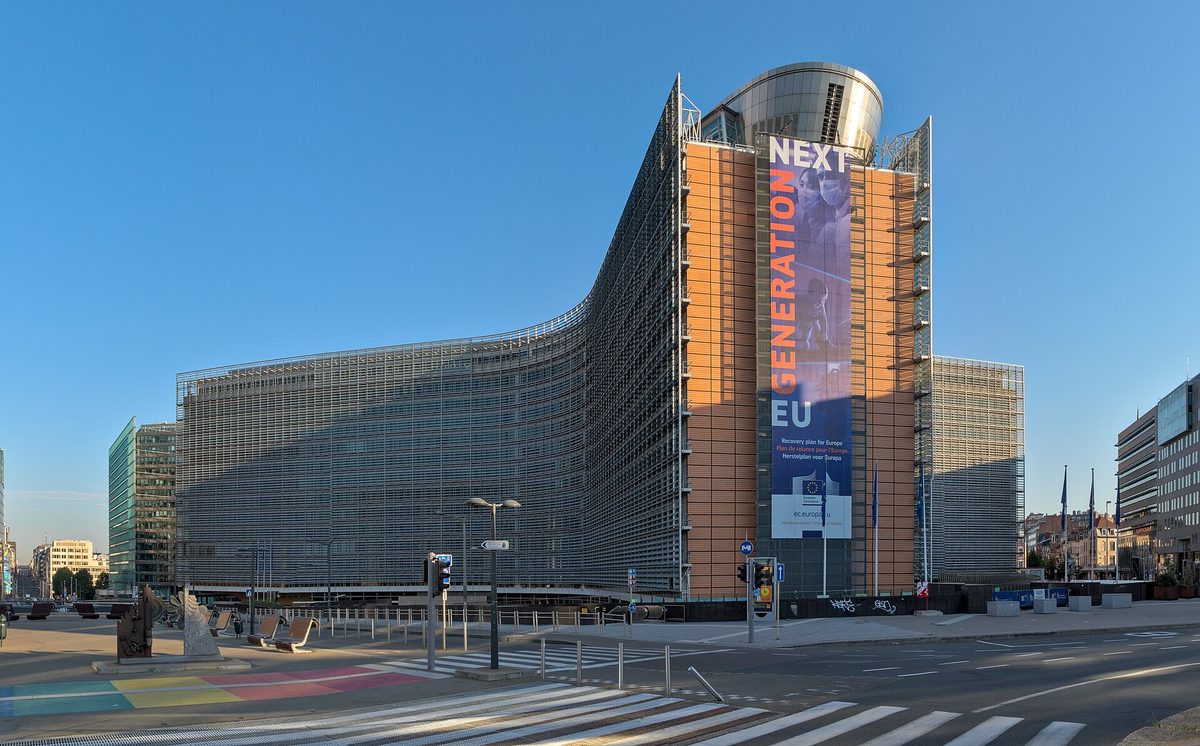
The European Commission has confirmed it was hit by an AI-assisted cyberattack that took internal systems offline for more than ten days, in one of the clearest cases yet of artificial intelligence being turned against a major government institution. Commission spokesperson Thomas Regnier confirmed the incident at a press briefing on Thursday, November 19, after the news was first reported by Politico.
The intrusion was detected on October 22 and confirmed as a cyberattack on October 26, according to the Commission. It targeted the Commission's Sysper human resources platform, which staff use to check payslips, submit timesheets and request leave, as well as MyPMO, the system that handles medical reimbursements. Translation services were also affected. The Commission took the affected applications down as a precaution, and most have since been restored, although Sysper crashed again on November 18 after access had been restored earlier in the week.
The attack is believed to have involved Artex, a publicly available AI-powered penetration testing framework. The European Union's Computer Emergency Response Team, CERT-EU, said it had observed similar instances of AI-driven activity against its constituency and that these activities highly likely involved the use of Artex. An EU official told Politico that some threat actors misuse tools like Artex and have targeted the Commission.
Regnier confirmed that the attack was AI-generated and involved a publicly available tool, but he did not name a perpetrator or say whether any data was accessed. He said the investigation was still ongoing and that the Commission had not detected any evidence of a data breach affecting Commission staff as a whole. The European Data Protection Supervisor has been notified, and Regnier said he was not aware of any ransomware demand being issued to the Commission.
Artex itself was built for legitimate security testing, but it has become a favored tool of criminals. At its core it is a large language model-powered agentic platform, written in Go with a Next.js front end, that automates offensive cyber tasks. An operator gives it an objective in plain language, and the software breaks it down into smaller tasks that AI agents carry out using real hacking tools. It was first released on GitHub in July 2026 by a user known as Autumn-27, reached between 1,500 and 2,000 users in ten weeks according to the FBI, and was pulled from its repository on October 8 after reports of misuse. Forks and a commercial version, Artex Pro, continue to circulate.
The speed of the tool is what alarms defenders. The FBI has said researchers found more than 1,600 Artex consoles exposed to the internet, and some intrusions orchestrated using Artex are believed to have moved from initial targeting to full privileged access in less than three hours. Microsoft has said the tool was being heavily used by a Chinese state-aligned threat actor tracked as Storm-0940 to obtain access to victims' cloud infrastructure, including Microsoft 365 environments, findings corroborated by Google's Threat Intelligence Group.
CERT-EU had warned about the tool before the Commission incident became public. In a technical note published on November 5, it said it had spotted what it believed to be Artex-assisted attacks against organizations under its watch, and in April it warned that autonomous offensive capabilities would progressively reach a wider range of actors. Artex, it said, was a concrete example of that shift materializing. The Commission's Corporate Management Board, its top internal crisis body, met urgently over the incident, and tech commissioner Henna Virkkunen briefed the full College of Commissioners on November 18.
The disruption reached deep into the working lives of the Commission's roughly 33,000 staff. According to Politico, some staff could not book time off or submit timesheets, although salaries landed as usual. Whether the attackers managed to look at payslips or other personal data is still not established, and that remains the biggest unanswered question. The Commission says it believes it has contained most of the attack, but the full extent of any damage remains unclear.
Security experts say the incident shows how AI is changing the economics of hacking. As Snehal Antani, chief executive of security firm Horizon3.ai, told The Register, what used to take a skilled operator days or weeks of chaining attacks together is now happening in hours, because frameworks like Artex let a single actor stand up fleets of agents that plan, probe, exploit and move laterally with almost no further human input after the initial goal is set. He warned that the proliferation of these tools could also make attribution harder, since state-backed hackers and ordinary cybercriminals increasingly draw from the same toolbox.
Why it matters: This is a turning point for AI security, because the victim is not a small company but the executive arm of the European Union, and the weapon was not a secret state program but a tool anyone could download. Artex was published as a legitimate testing framework in July and within months it was, by the FBI's count, in the hands of up to 2,000 users and linked to attacks that went from first probe to full access in under three hours. The Commission says it has found no evidence of a staff-wide data breach, but the fact that it cannot yet say whether personal data was taken shows how far behind defenders are. Expect every government and large company to treat AI-driven attack frameworks as a standing threat now, and expect the debate over whether open-source offensive tools should be published at all to sharpen considerably.
Reporting: Computer Weekly · The Register
Spot an error? Orbit News corrects articles promptly and notes the correction in the article. See our Editorial Policy, or flag an error by messaging us on Facebook, X, or Instagram.
Related from Orbit News
Google Brings Gemini Computer Use to the Mac, Letting Its AI Click and Type for You
Technology · Nov 20, 2026
Microsoft Confirms Its November Windows 11 Hotpatch Can Stop Office and Other Apps From Launching
Technology · Nov 20, 2026