World
Mexico Captures FBI Most-Wanted Cartel Boss 'El Chapo Isidro' as Gunfight Leaves 11 Dead
Mexican special forces captured Fausto Isidro Meza Flores, known as "El Chapo Isidro," in Guasave on Friday night, in an operation that killed four soldiers and seven alleged cartel gunmen.
Mexican military forces captured one of the FBI's most wanted fugitives on Friday night in a major operation in Sinaloa state that set off hours of gunfire, burning roadblocks and panic in the city of Guasave. Fausto Isidro Meza Flores, known as "El Chapo Isidro," was taken into custody along with two other leaders of his drug trafficking organization, and at least 11 people were killed in the fighting.
Mexico's Defense Ministry said Saturday that members of the army's special forces and other elite military groups captured the 44-year-old Meza Flores inside a house in Guasave, a city of about 290,000 people in northern Sinaloa, after a firefight broke out around 7 p.m. on Friday. Seven alleged cartel gunmen and four Mexican soldiers were killed in the operation, Security Secretary Omar García Harfuch said. A total of eight people were detained, including the group's second-in-command, Germán "N," alias "Serafín," and José "N," its alleged financial operator.
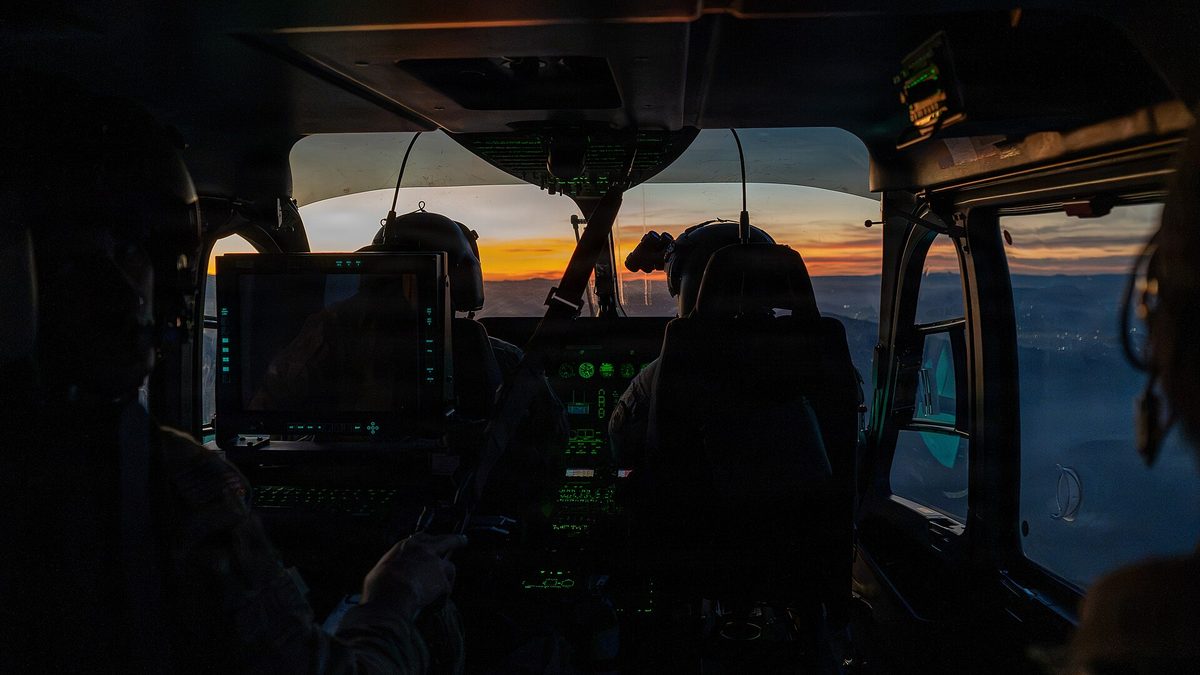
The operation was conducted by "elite military forces" using "stealth and surprise" to reach their target, the ministry said in a post on X, adding that Meza Flores was taken to Mexico City following his arrest. Because of the violence, the Mexican army and National Guard special forces were unable to extract him from Guasave until 4 a.m. on Saturday, a federal official said. Video shared by Mexico's Defense Ministry shows Meza Flores and two others being marched by heavily armed soldiers onto a military aircraft to appear before prosecutors in Mexico City. The defense ministry said authorities came under attack with gunfire and explosives, and militants set up roadblocks in several municipalities near the arrest site, with burning trucks blocking highways.
The violence spilled into everyday life in Guasave. Baseball fans at Kuroda Park stadium scrambled out of the stands as a barrage of gunfire rang out on Friday night, footage geolocated by CNN showed. "Get down, duck down, down, down!" one person shouted in the panic as people clambered over barriers and a baby was heard crying off-camera. Players from the Venados de Mazatlán and Algodoneros de Guasave teams fled the field mid-game, and the broadcast was suspended. "It's being suspended… there's a situation happening off the field," the announcers told viewers. "We wish first and foremost to ask God that everything is OK… there is a national security incident, it may be better for us to go to break now." The game, part of the 2026 Liga Mexicana, the country's premier summer professional baseball league, had begun at 9:30 p.m. EST. A local resident told CNN that private hospitals had been taken over by armed individuals and that businesses including convenience stores and gas stations were being set on fire. Sinaloa's state government urged Guasave residents to stay indoors and avoid traveling on the roads.
Meza Flores was one of the FBI's 10 most wanted fugitives, with a $5 million reward offered for information leading to his arrest. The U.S. State Department says he and his criminal organization smuggled vast amounts of heroin, methamphetamine, cocaine and marijuana into the United States over more than 20 years. He is "allegedly responsible for the possession, distribution, and importation of large quantities of heroin, methamphetamine, cocaine, fentanyl, and marijuana into the United States," according to an FBI wanted poster. A new U.S. indictment filed in September alleges he imported roughly 6,000 pounds of methamphetamine into the United States near the border town of Eagle Pass, Texas, in 2022, and adds charges including narcoterrorism and conspiracy to provide material support to a terrorist group. He was previously indicted in 2019 for drug trafficking violations and possession of a firearm, and in 2012 for drug trafficking charges.
Mexico's defense ministry said the operation was carried out with U.S. intelligence, and U.S. officials were quick to claim a share of the credit. U.S. Ambassador to Mexico Ronald Johnson said in a social media post that "strategic intelligence sharing between the United States and Mexico" was integral to the capture. "Terrorist cartels and criminals will be brought to justice," Johnson said. "And together we will make both our nations safer." U.S. Attorney General Todd Blanche said in a statement that "this successful operation is the result of a bilateral effort to eliminate terrorists in Mexico," extending condolences to the families of the soldiers killed. The Drug Enforcement Administration called the arrest a "significant blow" to a violent criminal organization and praised the intelligence sharing between the two countries.
Meza Flores climbed the cartel ranks to lead the Beltrán Leyva cartel and later became the leader of his own group, the Meza-Flores Transnational Criminal Organization, also known as Los Mazatlecos. He has been active in organized crime since the 1990s, first for the Juarez cartel and then for a Sinaloa Cartel affiliate, the Beltrán Leyva Organization. Although he shares the nickname "Chapo," meaning "Shorty," with Joaquín "El Chapo" Guzmán, he is not related to the former Sinaloa Cartel leader, who is now serving time in a U.S. prison. The U.S. government alleges Meza Flores has provided the Sinaloa Cartel with "personnel, services, goods, controlled substances, weapons, ammunition, and monetary instruments."
His arrest comes as Mexico has captured or killed a string of high-profile suspected drug traffickers under pressure from Washington. President Donald Trump has repeatedly threatened to take unilateral military action inside Mexico if President Claudia Sheinbaum's administration does not do more to crack down on the cartels. Mexican Security Minister Omar García Harfuch described the capture as an important step toward pacifying Sinaloa, a state ravaged by turf wars that have killed thousands. But experts warned that picking off cartel leaders could set off another wave of violence in a region already caught up in a power struggle between warring cartel factions. The Mexican government said it was maintaining its troop deployment throughout Sinaloa to open blocked roads and protect residents. Meza Flores is wanted in Mexico on charges of organized crime and drug trafficking, and is wanted for extradition to the United States as well. No extradition date has been announced.
Why it matters: The capture of "El Chapo Isidro" is the latest in a string of high-profile cartel takedowns, and it shows how far the U.S.-Mexico security relationship has moved toward open, joint operations against named targets. But the gunfire in Guasave, the fans fleeing a baseball stadium and the burning roadblocks are a reminder of the price of that strategy: every capo taken off the board risks a violent scramble for what he controlled, in a state where rival factions have already turned the streets into a war zone. Sheinbaum's government will present the arrest as proof it is acting; the test will be whether Sinaloa is calmer a month from now, or simply waiting for the next fight.
Spot an error? Orbit News corrects articles promptly and notes the correction in the article. See our Editorial Policy, or flag an error by messaging us on Facebook, X, or Instagram.
Related from Orbit News

BepiColombo Reaches Mercury After Eight-Year Journey, Only the Second Mission to Orbit the Planet
World · Nov 22, 2026
At Least 24 Dead as Boat Carrying Mourners to a Funeral Capsizes in Southern Nigeria
World · Nov 22, 2026