Politics
Australia Rejects U.S. Budget Office Warning That Submarine Deal Would Shrink America's Fleet
A Congressional Budget Office report says selling Virginia-class submarines to Australia would cut the U.S. attack fleet 'for many years' — but Australia's defence minister says the assessment is simply wrong.
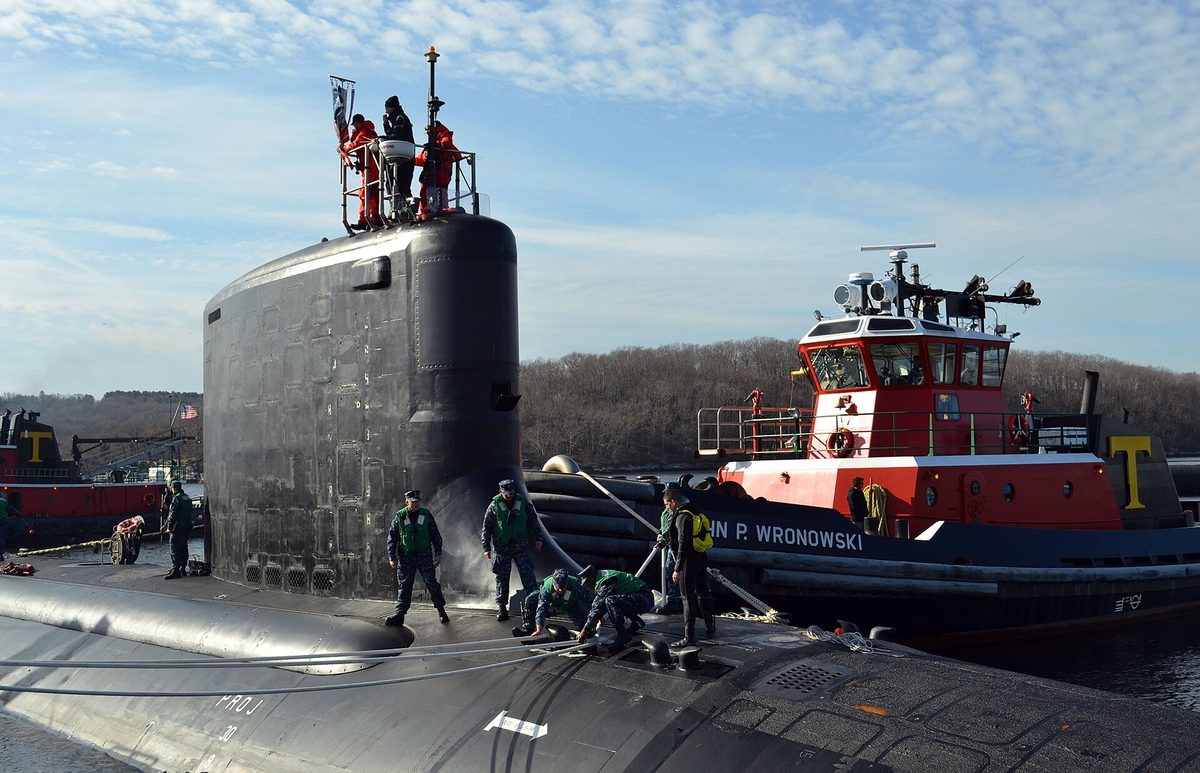
Australian Defence Minister Richard Marles on Sunday rejected a new report from the U.S. Congressional Budget Office that warned the AUKUS submarine deal would diminish the American attack submarine fleet for decades. 'They are wrong,' Marles said of the budget office, insisting that the pact is 'very much happening' and that submarine production in the United States is 'absolutely increasing.'
The Congressional Budget Office released its analysis on Friday, Nov. 20, as part of a broader review of the U.S. Navy's shipbuilding programs and how the fleet is projected to grow over the next 30 years. Its verdict on AUKUS was blunt: 'The sale of SSNs to Australia would reduce the number of attack submarines available to the Navy for many years.' The report said the sale could diminish the size of the Navy's attack submarine force through to 2060.
Under Pillar One of AUKUS, the trilateral security agreement between Australia, the United Kingdom and the United States, Washington has agreed to sell between three and five in-service Virginia-class nuclear-powered submarines to Australia, beginning in the early 2030s. The deal also involves putting U.S.-commanded Virginia-class submarines in Australia from next year, and having Britain and Australia build a new class of nuclear-powered submarine.
The budget office's concern is arithmetic. American shipyards are currently producing Virginia-class submarines at a rate of 1.13 a year, the report found. The Navy needs to build two a year to meet its own requirements, and 2.33 a year to have extra boats to transfer to Australia. The report also found that Virginia-class submarines are running 24 to 36 months late, and that building one now takes an average of 10 to 11 years, against five to six years in the 2000s.
'The U.S. submarine industrial base is currently struggling to meet the Navy's demand for submarines. Increasing production further to replace SSNs sold to Australia would increase the challenges that the Navy and the shipyards are facing,' the report said. It also noted that the Navy's 2027 shipbuilding plan barely mentions AUKUS at all, stating only in a footnote that the agreement's effect on the service's inventory of attack submarines 'has not been factored into the plan.'
The report went further, questioning whether the deal would even deliver what it promises in a war. It asked: 'Would China be less deterred if the United States reduced the number of its attack submarines to help Australia develop its own submarine force?' The analysis acknowledged that Australian submarines, based in the Western Pacific, could respond more quickly to a conflict over Taiwan or in the South China Sea. But it stressed that 'Australia would control its own submarines, and their participation in any particular conflict would not be guaranteed.'
That point has history behind it. In March 2023, Marles himself said Australia had made no promise to support the United States in a future conflict with China over Taiwan as part of the AUKUS agreement, and the Australian government has not explicitly addressed the issue since. Under the terms of the deal, the U.S. can refuse to transfer any submarines to Australia without penalty, and U.S. law says the president can transfer a submarine only if losing it will not degrade American undersea capabilities.
Marles was not worried about the report, he said in televised remarks on Sunday, because the production picture is improving. In October, he said Australia remained on track to acquire its first nuclear-powered submarines from the United States in the early 2030s. Canberra has committed A$368 billion — about $243 billion — over three decades to AUKUS, including billions of dollars of investment in British and American production bases.
The deal, signed in 2021 under President Joe Biden, has survived skepticism from allies and domestic critics alike. France was particularly slighted, since AUKUS undercut its own multibillion-dollar submarine deal with Australia. The pact almost seemed in jeopardy after President Donald Trump ordered a review early in his second term, but his administration reaffirmed support for it after the review concluded in October 2025. U.S. Under Secretary of War for Policy Elbridge Colby went so far as to call the review the 'best thing' that had ever happened to the deal.
China has called AUKUS dangerous and warned it could spur a regional arms race, and the pact is explicitly part of efforts to counter Beijing's growing influence in the Indo-Pacific. The Congressional Budget Office did not immediately respond to a request for comment on Marles's criticism. The dispute now leaves the two allies publicly at odds over the central question of the deal: whether America can build submarines fast enough to arm both itself and Australia, or whether one of them will have to wait.
Why it matters: The CBO report puts numbers to a worry that has shadowed AUKUS since it was signed: the United States is promising submarines it is not currently building fast enough to spare. Marles's flat rejection — 'they are wrong' — is politically necessary in Canberra, where AUKUS is the largest defence project in the country's history, but it does not answer the production math. The real test will be whether American shipyards can actually lift output from 1.13 boats a year toward the 2.33 the budget office says the deal requires, because the first transfers are less than a decade away.
Reporting: Washington Examiner · Reuters
Spot an error? Orbit News corrects articles promptly and notes the correction in the article. See our Editorial Policy, or flag an error by messaging us on Facebook, X, or Instagram.
Related from Orbit News
Van Hollen Calls Senate Leadership Race 'Wide Open' as Schumer Counts Votes Ahead of December 1 Showdown
Politics · Nov 22, 2026
Trump Says He Wants a 'Permanent' Deal to Keep Iran From a Nuclear Weapon as Talks Stall
Politics · Nov 22, 2026