Technology
Anthropic Mathematician Says He and AI Tool Claude Have Proved the Riemann Hypothesis
Levent Alpoge announced on Friday that he believes he has solved the most famous unsolved problem in mathematics with help from Claude. Independent software checks have verified the formal proof, but mathematicians say the human understanding of it is still to come.
A mathematician who works for artificial intelligence company Anthropic claims he has solved a Holy Grail of math problems with the help of the company's AI tool Claude. Levent Alpoge, a member of Anthropic's technical staff, made the announcement on Friday, November 20, by way of a four-page explanation posted on his website. He said that he believes by working with Claude, he has found a proof of the Riemann Hypothesis.
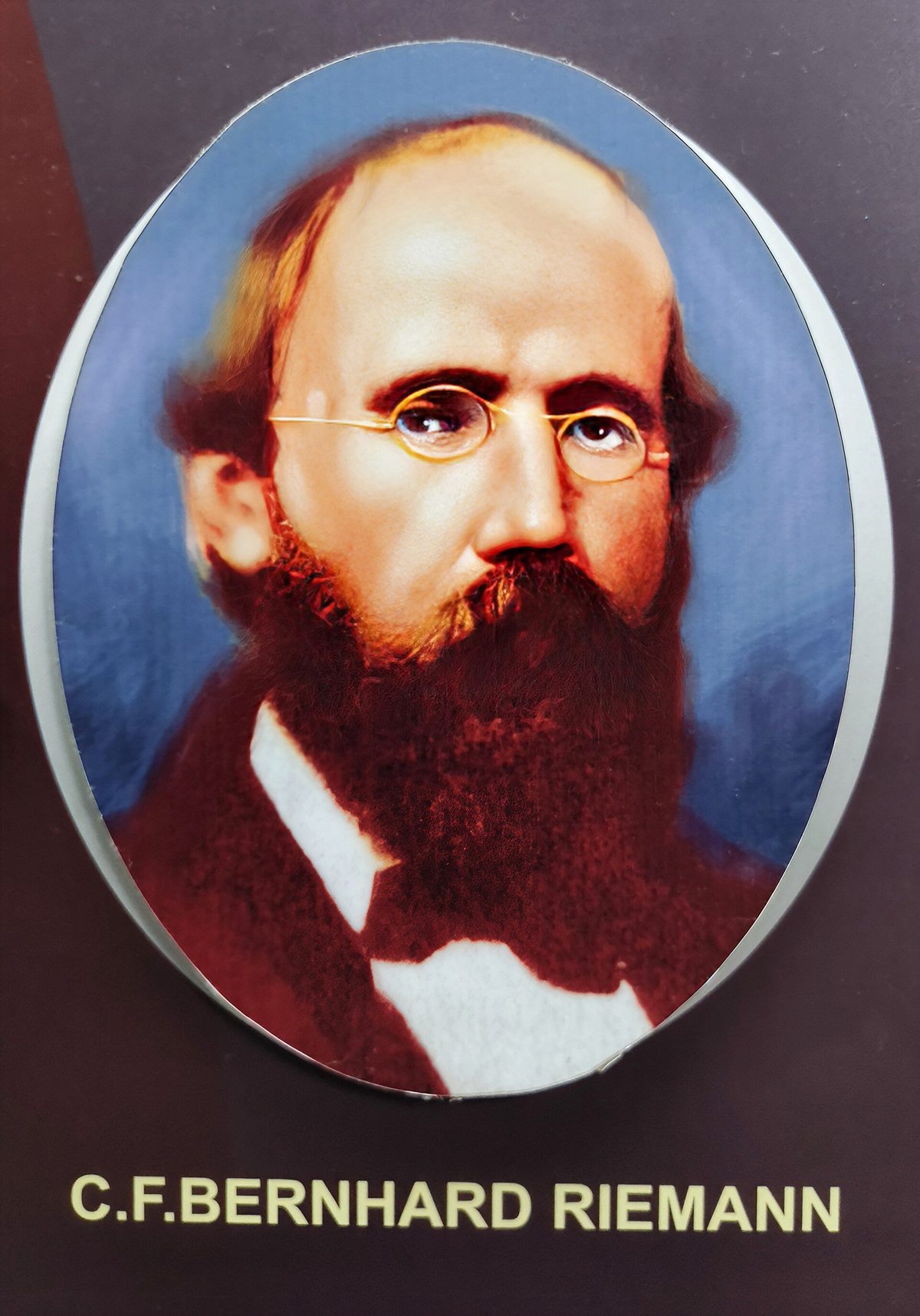
"I believe I have, working with Claude, discovered a proof of the Riemann Hypothesis," Alpoge wrote in the statement published on his website. The problem was first proposed in 1859 by German mathematician Bernhard Riemann and has challenged mathematicians for generations. It concerns the distribution of prime numbers, the numbers greater than one that can only be divided evenly by themselves and one, as they grow toward infinity.
Alpoge said he worked with Claude for approximately six weeks to develop the proof. He released the mathematical argument as computer code written in Lean, a programming language that allows mathematical arguments to be checked by computer. The proof runs to about 17 million lines of Lean code, and Alpoge said the full written argument would run to more than 250,000 pages. He also said the work establishes the Generalized Riemann Hypothesis, which extends the original problem to a broader family of mathematical functions.
The claim received significant support on Saturday, November 21, when the Lean Focused Research Organization and the Mathlib Initiative announced that they had independently verified Alpoge's proof using mathematical software. The organizations said they had "full confidence" in the proof's correctness, and that they had checked that Alpoge's code proved the correct mathematical statement and that multiple independent checking systems accepted the proof.
But the announcement does not mean mathematicians have finished examining or understanding the work. The Riemann Hypothesis remains listed as unsolved on the Clay Mathematics Institute's website. The institute selected the hypothesis in 2000 as one of seven Millennium Prize Problems and offers a reward of $1 million for a solution to each. Martin Bridson, the institute's president, called the announcement one of historic significance, but added that "the journey from today's announcement to a place of real understanding will be long and difficult."
Alpoge himself acknowledged the gap between a machine-checked proof and a human-understood one. He said he is "presenting the world with a complete argument before having mastered a massive neighbourhood around its mathematics," and that he plans to write the argument up properly. Alex Kontorovich, a distinguished professor and department chair of mathematics at Rutgers University, made the same point: the computer is "extraordinarily picky," he said, and "if you can satisfy the computer, there's a very, very good chance you're going to satisfy me too. But I have to do the work."
"Claude and I have had a great time together with such breadth in recent months, but this time Claude far outpaced me near the finish line," Alpoge wrote. "No, Claude flew, and danced, and sparkled near that finish line." The timing of the announcement drew attention: Alpoge said his discovery came late on a Sunday night, and he messaged Anthropic chief executive Dario Amodei to ask about "my ability to announce" as the company was about to make major news with its stock market debut. Anthropic began trading on the Nasdaq exchange on November 19 after pricing its initial public offering at $83 a share, raising a record $81 billion at a $1.5 trillion valuation.
The potential significance of the proof extends beyond the Riemann Hypothesis itself. Mathematician Hector Pasten of the Pontifical Catholic University of Chile told Scientific American that, if the proof is correct and its ideas are understood, it could connect different areas of mathematics that researchers have only partially linked. He compared the potential discovery to a Rosetta Stone, the ancient artifact that helped scholars decipher Egyptian hieroglyphics.
It is the second time in recent months that an AI company or someone linked to one claims to have cracked a famed unsolved math problem. In September, OpenAI said its technology was key in a similar breakthrough with Navier-Stokes, an equation that governs the flow of fluids. "Navier-Stokes fell and now the Riemann Hypothesis," Kontorovich said. "There's some kind of out-of-body experience where I'm looking at myself saying, 'Yes, the Riemann Hypothesis has been solved,' and kind of trying to comprehend what the hell these words are coming out of my mouth."
What happens now is scrutiny. Mathematicians will work through the ideas behind the proof, a process that could take months or years, and the Clay Mathematics Institute's assessment process will run its course before any prize is awarded. Alpoge has published the proof only on his own site so far, and the formal paper that mathematicians would normally read does not yet exist. The Lean checks establish that the code proves the intended theorem; whether the mathematical community accepts the proof as understood science is the next question, and it is one only humans can answer.
Why it matters: If this proof holds up, it is the most consequential result in pure mathematics in living memory, and it was produced by a human working with an AI system rather than by either alone. But the story is really about two different kinds of proof: the machine-checked kind, which the Lean community has now certified, and the human-understood kind, which does not exist yet. Alpoge himself says he has not mastered all of the mathematics involved. The next months will show whether AI can merely find proofs or can also help mathematicians understand them, and that distinction will decide whether this is a turning point or a curiosity.
Spot an error? Orbit News corrects articles promptly and notes the correction in the article. See our Editorial Policy, or flag an error by messaging us on Facebook, X, or Instagram.
Related from Orbit News
Apollo and Goldman Sachs Price $44 Billion in Notes to Fund SpaceX's Nvidia Vera Rubin Chips
Technology · Nov 22, 2026
U.N. Talks on AI Killer Robots End Without Binding Rules as Countries Agree to Two More Years of Discussion
Technology · Nov 22, 2026