Technology
AMD Closes $8.2 Billion World Labs Deal and Names Fei-Fei Li Chief Scientist
The chipmaker completed its second-largest acquisition ever as it pushes into world models, the AI systems that learn from 3D environments.
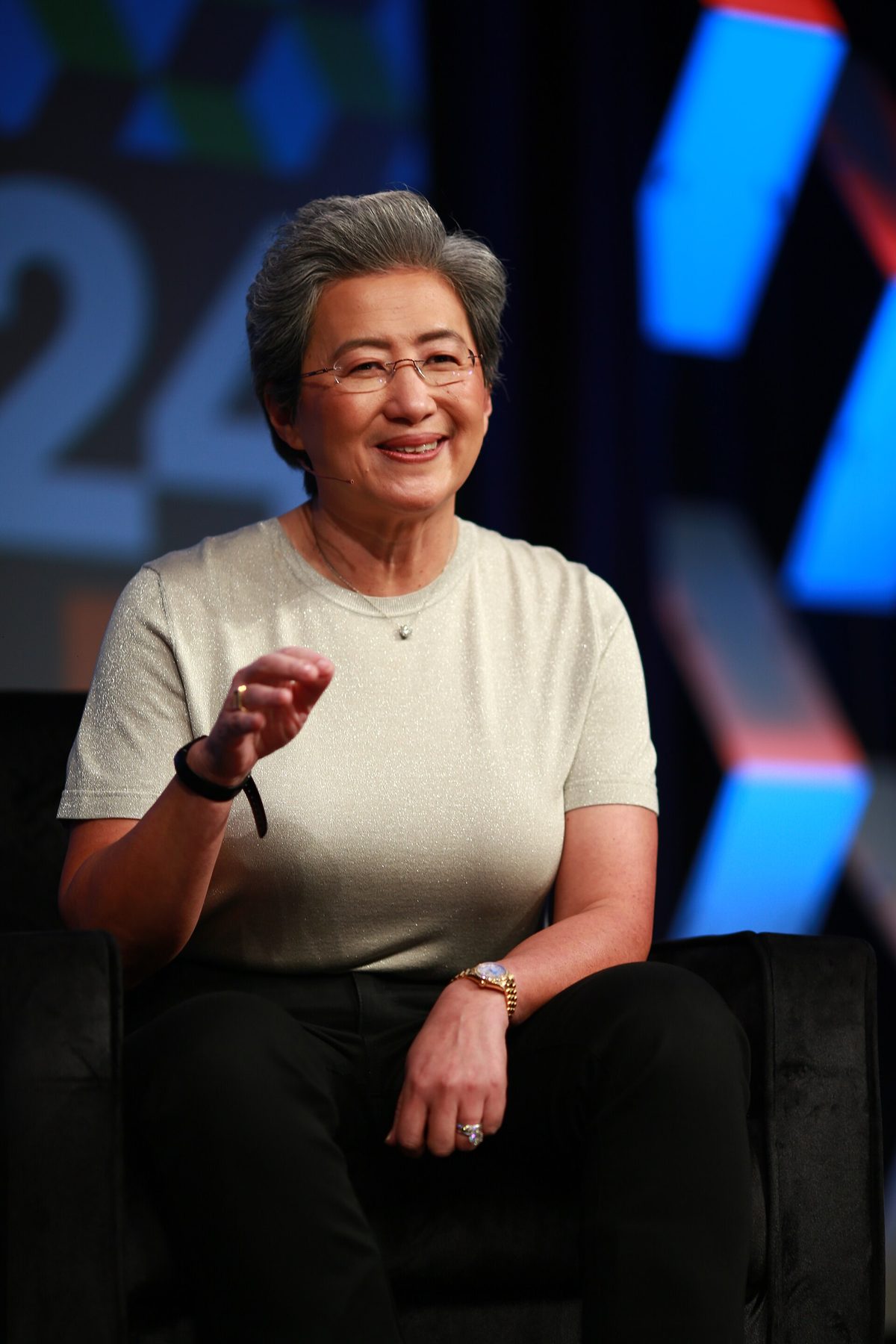
AMD has completed its acquisition of World Labs, closing an all-stock deal originally valued at about $8.2 billion and bringing one of the most prominent figures in artificial intelligence into its senior leadership. The chipmaker announced on Monday, November 16, that the deal had closed, with World Labs co-founder Fei-Fei Li joining AMD as executive vice president and chief scientist, reporting directly to chair and chief executive Lisa Su.
The deal actually closed on November 13, according to a Form 8-K/A filed by AMD on November 16, which disclosed that the company issued 14,978,322 shares of common stock to former World Labs stockholders. The definitive agreement was signed on September 26, 2026, and announced on September 28, and the companies had expected the transaction to close by the end of the year. It arrived well ahead of that schedule, a sign of how quickly both sides wanted the combination done.
World Labs was founded in 2024 in San Francisco to build so-called world models — AI systems that learn from three-dimensional environments and can generate interactive 3D worlds, simulate physical spaces and train robots. The company released its Atlas world model on November 12, 2026, with tools called Viewfinder, Chisel and Relight, a developer API and an integration with Blender, the open-source 3D software. Justin Johnson and Ben Mildenhall, who led the World Labs team, will continue in their roles under the new structure.
The acquisition is AMD's second-largest ever, behind only its 2022 purchase of Xilinx, and it signals where Su believes the next phase of the AI race will be fought. Graphics processors made AMD's name in AI, but the company is now betting that the winners will be firms that can design the computing platform and the models that run on it together. "Delivering the infrastructure that will power the next era of superintelligence requires us to optimize compute platforms and models together," Su said.
Li's appointment is the clearest statement of that intent. One of the best-known computer scientists in the world, she built her reputation on ImageNet, the dataset that launched the deep learning era, and later led Stanford's Human-Centered AI Institute. Her move to AMD puts a scientist of her standing at the top of a chip company for the first time, and it gives AMD a credible voice in the debate over what AI should be built to do.
The deal also fits a pattern of consolidation across the AI industry. As model training grows more expensive and the computing demands of new techniques rise, chipmakers, cloud providers and model labs are merging, investing in each other and signing exclusive partnerships at a rapid pace. Anthropic, which prices its own blockbuster public offering this week, has lined up a $26 billion private placement from a group that includes AMD, Nvidia, Google and Microsoft — a reminder that in this industry, today's competitors are often tomorrow's shareholders.
For AMD, the immediate question is what the combined company produces. World Labs' spatial intelligence technology has obvious applications in robotics, simulation and virtual worlds, but its commercial path is less clear than the data-centre business that currently drives AMD's growth. The company's challenge will be to turn world models into products that sell, without distracting from the chip business that pays for them.
The first test will be what AMD shows at its next major event, and whether Li's team can demonstrate world models running efficiently on AMD hardware. If they can, the acquisition will look like a bargain at $8.2 billion. If they cannot, it will join a long list of big technology deals that promised more than they delivered. Either way, the closing of the deal marks the moment AMD stopped being just a chip supplier to the AI boom and started trying to shape what the boom builds.
Why it matters: AMD is buying its way into the next argument in AI. The last few years were about who could build the biggest language model; the next few are likely to be about models that understand the physical world — how objects move, how spaces fit together, how a robot should act. That is World Labs' territory, and it is also the territory where Nvidia, Google and the rest are investing heavily. By closing this deal in under seven weeks and putting Fei-Fei Li at the top of its org chart, AMD is saying it intends to compete on ideas, not just silicon. Whether a chipmaker can become a model company is the open question.
Spot an error? Orbit News corrects articles promptly and notes the correction in the article. See our Editorial Policy, or flag an error by messaging us on Facebook, X, or Instagram.