Politics
Trump Lands in China as Xi and Putin Meet Ahead of First-Ever Trilateral Summit
The president arrived in Shenzhen for the APEC summit, where he will meet Xi Jinping and Vladimir Putin together on Thursday to discuss nuclear arms and the war in Ukraine.
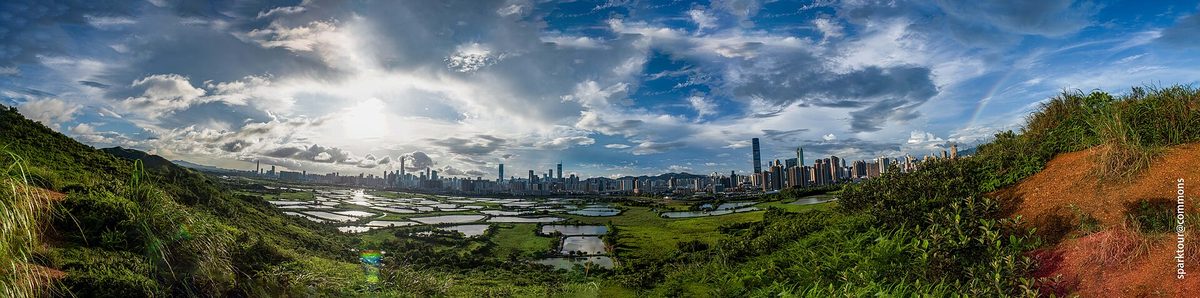
President Donald Trump landed in Shenzhen, China, on Wednesday for the APEC leaders' summit, where he is set to take part in the first-ever trilateral meeting with Chinese President Xi Jinping and Russian President Vladimir Putin. Xi greeted Trump on the tarmac at Shenzhen Bao'an International Airport, reciprocating the gesture Trump made at Joint Base Andrews when Xi visited Washington in September. The handshake between the two leaders became a hug as dancers waved flowers and flags on the runway.
Putin arrived in China earlier on Wednesday, but Xi did not greet him at the airport despite the two leaders' longstanding friendship, a contrast that underscored how much of the week's choreography is built around Trump's visit. The three leaders are scheduled to sit down together on Thursday on the sidelines of the APEC summit, a meeting with no modern precedent.
Trump said he plans to use the trilateral to discuss limiting nuclear weapons and ending the war in Ukraine, which began in 2022 with Russia's invasion. Analysts do not expect substantive breakthroughs from the session, and the last U.S.-Russia nuclear arms treaty lapsed earlier this year, leaving the world's two largest nuclear arsenals without a formal cap for the first time in decades.
Ukraine was not supposed to be on the agenda at all. Aides had told reporters the war would not be discussed, but Trump said on Tuesday that the deaths of tens of thousands of Russian troops every month had created an opening. "I think it's very close to getting it done," Trump said. "We're going to have a good meeting on that."
Trump also teased a private meeting with Putin and a separate sit-down with North Korean leader Kim Jong Un. Secretary of State Marco Rubio clarified on Wednesday that Trump was "serious" about meeting Kim, but that no meeting was currently scheduled for Thursday.
Xi and Putin held their own meeting on Wednesday, where both leaders used the moment to attack the West. Xi pledged that China would stand up against trade protectionism and support free and open trade, while Putin criticised Western sanctions, called Europe in "humiliating decline" and said sanctions were "incapable of halting growth". Looking ahead to the trilateral, Putin said, "I therefore expect big potential benefits from the upcoming trilateral meeting," The Kremlin dismissed comparisons to the Yalta Conference as "games of political scientists". In his opening address, Xi urged support for what he called "free and open trade", saying China would "firmly uphold the rules-based multilateral trading system with the World Trade Organization at its core".
Trump said he does not plan to bring up Taiwan in his talks with Xi, though he expects Xi to raise it. "I'm sure he'll raise it," Trump said. "I won't have to raise it." Taiwan is the leading manufacturer of advanced computer chips, and its status remains one of the most sensitive issues between Washington and Beijing. On trade, Trump's tariffs were intended to curb China's trade surplus, but for the second straight year China will have exported $1 trillion more in goods than it imported.
The trip has been overshadowed back home by a series of technology outages at Microsoft, the Federal Aviation Administration, JPMorgan Chase, and the National Security Agency's communications network. Rubio said on Wednesday there is "zero" evidence that the outages are connected or tied to rival nations, cyber hackers or criminals. "Sometimes when you are going in to fix your system because you've identified a vulnerability, it creates a short-term disruption," Rubio said. Trump, speaking in Manila on Tuesday, had called the outages "fine."
Trump stopped in Manila before flying to Shenzhen, where he had lunch with Philippine President Ferdinand Marcos Jr. and said the two nations reached a trade deal on Wednesday, though no details were given and the White House said only that Manila would buy more American energy and farm products. Trump had also said last year that an agreement had been reached. The U.S. goods trade deficit with the Philippines rose from $4.9 billion in 2024 to $12.8 billion in the first nine months of 2026, according to the Census Bureau. Trump also had a short reunion with Imelda Marcos, 97, who appeared to hand him a gift.
Trump and Putin shook hands ahead of the APEC welcome banquet on Wednesday evening, The Guardian reported. The trilateral meeting on Thursday will be the main event, and Trump and Xi are set to meet a fourth time in 2026 at the G20 summit in Miami in December, giving the two leaders a regular channel that neither Washington nor Beijing has had in years.
Why it matters: This is the first time the leaders of the United States, China, and Russia have ever sat down together, and the symbolism alone matters: it puts the three nuclear-armed powers in one room at a moment when the last formal cap on U.S. and Russian arsenals has lapsed and the war in Ukraine grinds on. Expectations for a breakthrough are low by design, since the meeting was only arranged days ago and aides had not even planned to discuss Ukraine, but the real test is whether Trump can turn a photo opportunity into a working channel with Xi and Putin that survives the summit. The trade numbers give him leverage and a problem at the same time: his tariffs have not dented China's $1 trillion surplus, so the summit will show whether personal diplomacy can do what tariffs have not.
Reporting: WKYU-FM · The Business Standard
Spot an error? Orbit News corrects articles promptly and notes the correction in the article. See our Editorial Policy, or flag an error by messaging us on Facebook, X, or Instagram.