Politics
Judge Orders Justice Department to Publish Withheld FBI Notes on Epstein Interviews by November 23
Senior Judge Emmet Sullivan issued three orders on November 9 in the lawsuit enforcing the Epstein files law, giving Attorney General Todd Blanche two weeks to post handwritten interview notes the department had kept out of its public library.
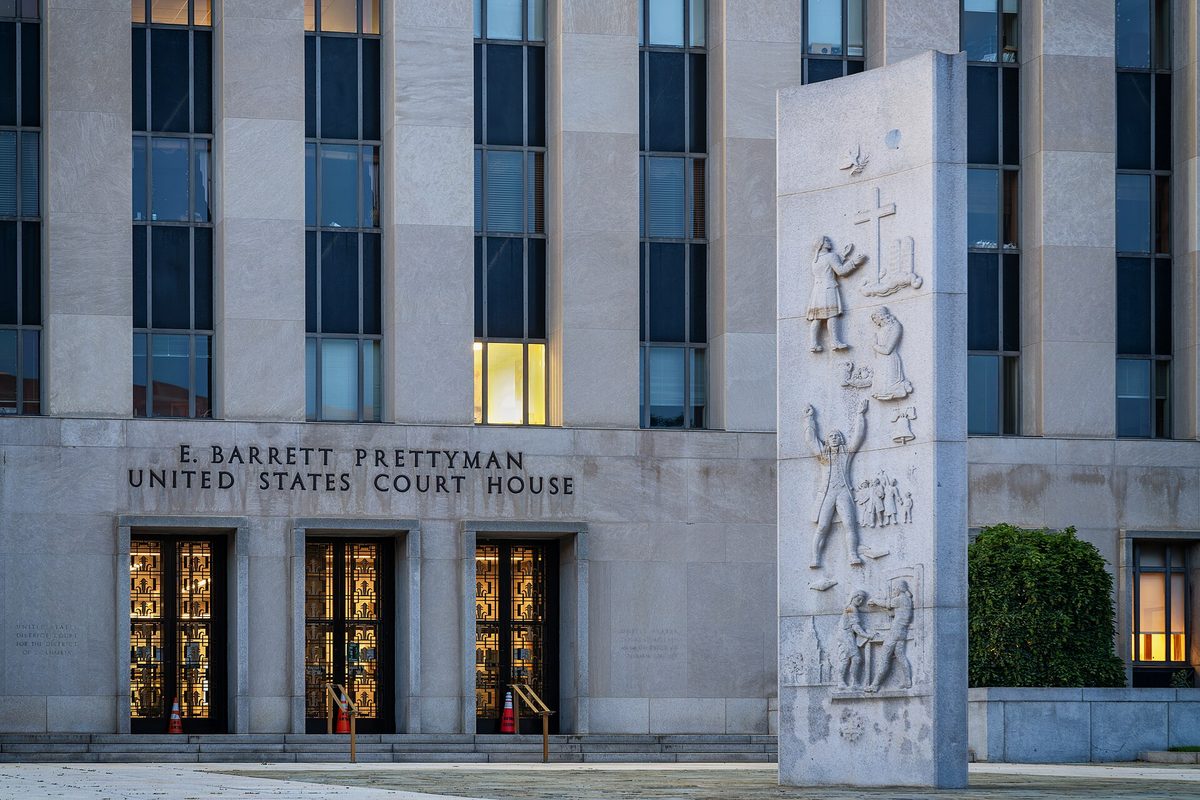
A federal judge has ordered Attorney General Todd Blanche to publish previously unpublished handwritten FBI interview notes involving allegations of sexual abuse against Donald Trump and Jeffrey Epstein, setting a November 23 deadline in the only lawsuit still moving to enforce the Epstein Files Transparency Act.
Senior United States District Judge Emmet G. Sullivan issued three orders on November 9 in Phang v. Blanche, the case brought by MeidasTouch host Katie Phang over the Trump administration's handling of the Epstein files. The most consequential of the three concerns handwritten FBI interview notes that have never been publicly released.
The notes were used to prepare three FBI Form 302 reports documenting interviews conducted in 2019 with a woman who alleges that Trump, Epstein, and others sexually abused and physically battered her when she was between 13 and 15 years old. Those allegations have not been adjudicated in this proceeding, and the order does not establish their truth. Trump denies every allegation, and no charges have been filed in connection with them.
Sullivan personally reviewed the underlying handwritten notes, including unredacted versions and proposed redactions submitted by the Justice Department, before determining that they must be published. In his three-page order, the judge directed Blanche to make the notes available in the Justice Department's online Epstein Library within 14 days, setting the November 23 deadline. Blanche must also file a notice of compliance with the court within 24 hours of publication.
The ruling followed a dispute over the department's justification for withholding the handwritten material. According to Phang, the Justice Department had argued that the notes were too difficult to redact because they were handwritten. Phang challenged that explanation, submitting examples of more than 100 handwritten documents that the department had already published with redactions in its own Epstein Library — a contradiction that raised an obvious question: if the department could redact and release those handwritten records, why could it not do the same with these FBI interview notes?
There is, however, an important qualification to the publication deadline. Sullivan temporarily stayed his order to give Blanche an opportunity to seek relief from the United States Court of Appeals for the D.C. Circuit before the 14-day window expires. That means the department may attempt to block or delay publication through another appellate challenge, and if it files in time, publication will be temporarily paused while the appeals court considers the request. The D.C. Circuit has already rejected a separate request by Blanche to halt the review of foreign-language Epstein documents, although that earlier ruling does not determine how the court will resolve any new request involving the handwritten notes.
The other two orders from November 9 go to the records behind the department's decisions. In a separate eight-page memorandum opinion and order, Sullivan rejected Blanche's attempt to postpone producing the administrative record — the documents and information the Justice Department had before it when deciding which Epstein files to release, redact, withhold or leave unreviewed. Blanche had asked to delay filing a certified list of that record until after the court ruled on his motion for judgment on the pleadings. Sullivan refused, finding that Blanche had provided no legal authority supporting the idea that the public availability of some department documents excused him from identifying the specific records on which he relied.
Sullivan set three deadlines: a certified list of the administrative record by November 17, the full record by December 1, and a sworn status report on the foreign-language Epstein files by December 10. The rulings represent another significant development in Phang's legal effort to force the Justice Department to comply with the Epstein Files Transparency Act, which required the attorney general to make covered unclassified department records public within 30 days of its enactment on November 19, 2025.
The Justice Department declared on January 30 that it had completed its production obligations. But Sullivan had already found that Phang was likely to prevail on key claims that the department unlawfully withheld or failed to review material required by the statute. Nearly a year after the law's original disclosure deadline, the judge is now demanding the records behind the government's decisions, an accounting from officials who actually know what has been done, and the publication of notes that have never been publicly produced.
For now, Sullivan has made his position clear: the FBI notes must be released, subject to any further appellate intervention. Whether they actually appear in the Epstein Library by November 23 depends on whether Blanche goes to the D.C. Circuit first — and on what that court decides.
Why it matters: This story matters because it is the court, not Congress, that is now forcing the Epstein files fight forward: the House vote on a second Epstein files bill is not expected until early December, but Sullivan's November 23 deadline arrives first, and it concerns notes that the public has never seen. The allegations in the notes are unproven and the judge's order makes no finding about them — what the order does establish is that the Justice Department cannot keep material out of the public library on the ground that it is handwritten when it has already published more than 100 handwritten documents with redactions. Orbit has covered the discharge petition and the Oversight report; this is the judicial track running alongside them, and the November 23 deadline is the next date to watch.
Reporting: Meidas News · Martin D. Vasquez
Spot an error? Orbit News corrects articles promptly and notes the correction in the article. See our Editorial Policy, or flag an error by messaging us on Facebook, X, or Instagram.
Related from Orbit News

China Confirms First-Ever Trump–Xi–Putin Meeting for Thursday in Shenzhen
Politics · Nov 16, 2026
Peltola's 50% Problem: Why a Lead of 11,213 Votes Has Not Settled Alaska's Senate Race
Politics · Nov 16, 2026