Politics
No Coronation: Van Hollen and Slotkin Refuse to Back Schumer for Senate Leader
At a post-election gathering, Chris Van Hollen and Elissa Slotkin refused to endorse Schumer for majority leader, and Slotkin would not rule out challenging him.
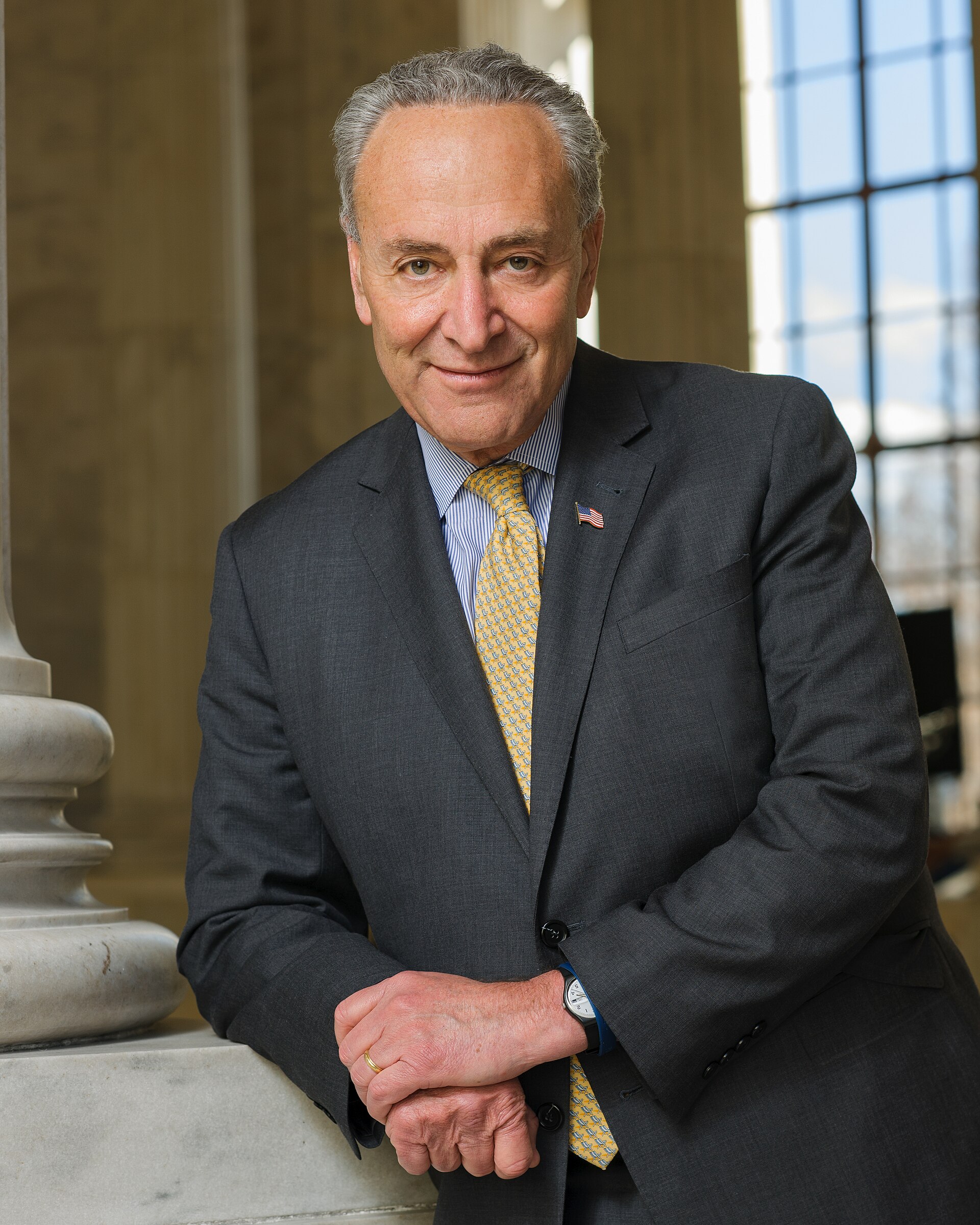
Senator Chuck Schumer's path to becoming Senate majority leader hit a public wall on Saturday, when two of his own colleagues refused to back him at a post-election gathering in Washington and one of them would not rule out running against him. The rebuff, delivered in front of a crowd of Democrats still celebrating Tuesday's midterm sweep, made clear that Schumer's return to the top job is not the formality he has described it as.
Democrats won control of the Senate on November 3, capturing at least 54 seats in a rout that also handed them the House. Schumer, the 75-year-old New Yorker who has led Senate Democrats since 2017, has said confidently that he expects to be elected majority leader when the new Congress is sworn in next January. But at a gathering of Democrats on Saturday, Senators Chris Van Hollen of Maryland and Elissa Slotkin of Michigan declined to endorse him, and Slotkin said she would not rule out a bid for the leadership herself.
'There should be no coronation of the next Democratic leader,' Van Hollen said at the event. 'I've said very clearly that we need to have a discussion in the Democratic caucus, we need to understand what the Democrats are going to do with this new responsibility and these new powers, and nobody should get a blank check without a full understanding of the caucus as to where we're going to go.' He said he has urged his colleagues to 'withhold commitments' until Schumer lays out his vision for using the majority.
Slotkin went further. She said Democrats should not give Schumer a quorum, the minimum attendance needed to conduct Senate business, until he answers their concerns about how he would lead. Her refusal to rule out a challenge of her own was the most direct threat yet to Schumer's hold on the job from inside his own party, and it came from a senator who has built a reputation as a pragmatic voice from a swing state.
Van Hollen, for his part, said running for leader was 'not my focus' and told reporters he is instead weighing a 2028 presidential campaign. He said he has not heard 'directly' from Schumer since the midterms but expected to speak to him in the coming week. At least one incoming freshman senator, Abdul El-Sayed of Michigan, has said he could support Van Hollen for the leadership post, a sign that the restless wing of the party has a preferred alternative even if Van Hollen himself is looking elsewhere.
The skepticism is not limited to two senators. At least seven incoming Democratic senators have publicly declined to commit to Schumer, and the party's narrow majority means a small number of defections could change the outcome when the caucus votes by secret ballot in the coming weeks. Schumer remains a heavy favorite: he has no declared opponent, he needs only majority support from Senate Democrats, and several senior Democrats argue he delivered the majority in the midterms and has earned another term. But the public refusals have stripped away the sense of inevitability that usually surrounds a leadership election after a big win.
The fight is about more than personalities. Democrats won the majority on a promise to use it, and the senators withholding their support want to know exactly how. The new majority will have to decide how aggressively to investigate the Trump administration, how to handle the war in Iran, whether to move on voting rights and other stalled legislation, and how to use the Senate's power with a Republican president who has already signaled he will use his veto. Van Hollen has been one of the Senate's most vocal critics of the administration's Iran war and has led efforts to force votes on war powers, and he has said the next leader must be prepared to use the majority's powers rather than simply hold them.
Schumer's record cuts both ways in that debate. His supporters point to a fundraising machine and a disciplined caucus that delivered the midterm sweep, and to his experience steering Democrats through years in the minority. His critics say the party's victories came despite its leadership, not because of it, and that the new majority needs a leader who will move faster and fight harder than Schumer has shown himself willing to do. The generational argument is never far away either: at 75, Schumer is part of an aging leadership team that younger Democrats say should make way.
What happens next is a quiet campaign inside the caucus. Schumer is expected to make his case to senators one by one in the coming weeks, while his skeptics press him for commitments on the agenda. The secret ballot, expected in December, will settle whether the public doubts translate into votes against him. For a leader who has held his caucus together for nearly a decade, the coming weeks will be the hardest test of that grip, and the first real consequence of a victory that was supposed to make his job easier.
Update (Nov. 11, 2026): This article has been updated to attribute the count of incoming senators declining to commit to Senator Schumer: Al Jazeera counted at least seven, including Adam Hamilton of Kansas, Troy Jackson of Maine, Abdul El-Sayed of Michigan and Peggy Flanagan of Minnesota. Other outlets counted fewer, depending on how a refusal to commit is defined.
Reporting: CNN
Spot an error? Orbit News corrects articles promptly and notes the correction in the article. See our Editorial Policy, or flag an error by messaging us on Facebook, X, or Instagram.
Related from Orbit News

Congress Returns to a Lame-Duck Sprint: Funding Deadline, Hegseth Fight and Epstein Files on the Agenda
Politics · Nov 9, 2026
Trump Says Dana White Press Secretary Offer Was 'Only Kidding'
Politics · Nov 9, 2026