World
A Bank Collapsed, a President Resigned, and Paraguay Is Still Waiting to Find Out Who Leads It
The failure of digital lender Ueno Bank froze the savings of about three million Paraguayans and brought down President Santiago Peña in a day. His resignation has not yet been accepted, and the Senate has opened an impeachment trial.
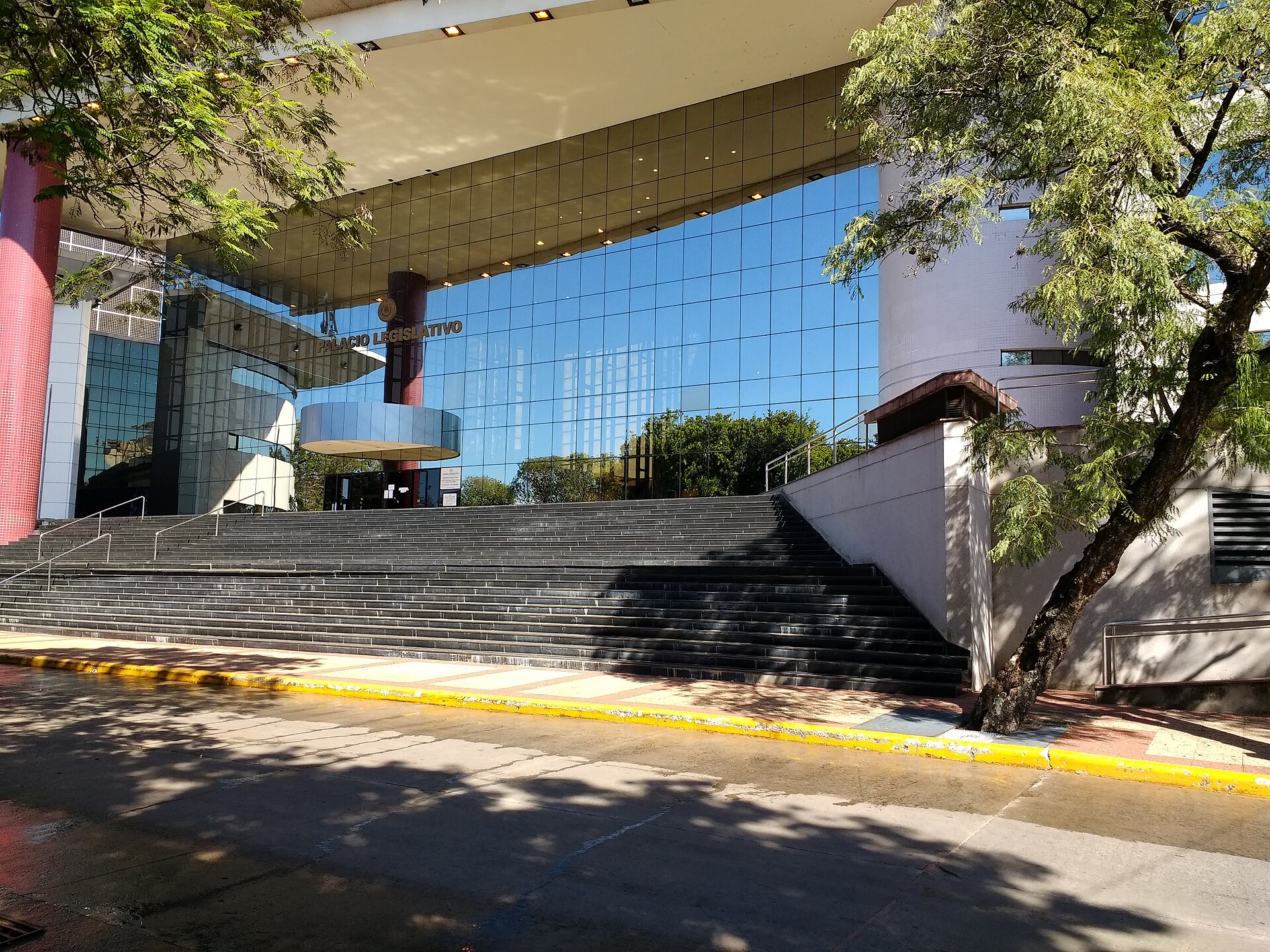
Paraguayan President Santiago Peña announced his resignation on Thursday after the collapse of digital lender Ueno Bank triggered widespread protests, froze millions of people's savings and cost him the support of his own party. Minutes after his announcement, the lower house of Congress voted 78-0 to impeach him.
In a video message, Peña said he was stepping down for the sake of the country's stability, social peace and democratic institutions. "I have made the decision to submit my resignation from the presidency of the republic," he said. "I do so thinking of the stability of our country, social peace, and the need to preserve our public institutions."
Ueno Bank had grown from an obscure finance company into a household name in less than five years, claiming around 3 million customers — more than 60 percent of Paraguay's adults — in a country of about 6.5 million people. The bank also held roughly 800 million dollars in public deposits, including money from the state pension and health funds and the operators of Paraguay's giant hydroelectric dams. For a country where much of the population had never had a bank account, Ueno was not just a bank. It was, for millions of people, the financial system itself.
Paraguay's central bank seized the lender on Tuesday after determining that its solvency ratio had fallen to 5.56 percent, less than half of the 12 percent regulatory minimum. The intervention immediately blocked Ueno's app, payment cards and transfer services, leaving customers unable to access their accounts. The central bank said it would transfer deposits to other banks and guarantee up to about 36,000 dollars per depositor. The Labour Ministry estimates the collapse has affected about 7,000 direct and indirect jobs.
Peña, a former International Monetary Fund economist elected in 2023, had faced mounting scrutiny over his past business ties to Grupo Vázquez, the conglomerate behind Ueno. He said he sold his stake in the group in March 2025 and has denied wrongdoing. Prosecutors said Thursday he is among those being investigated over the bank's failure. A judge ordered six Ueno executives jailed pending trial and two others placed under house arrest.
The political collapse was as fast as the financial one. Peña, an ally of US President Donald Trump, lost backing from members of his own conservative Colorado Party on Thursday as the opposition called an extraordinary session to begin impeachment proceedings and protesters demanded his resignation in Asunción. The Colorado Party has controlled the Paraguayan presidency almost continuously since 1948, and it was the loss of its support — not the opposition's — that made his position untenable.
But Peña's resignation has not taken effect, and Paraguay is now in a constitutional limbo. Congress must formally accept a president's resignation, and it has not yet done so. On Friday, Paraguay's Senate launched an extraordinary session as part of impeachment proceedings against Peña, deepening the uncertainty over the country's leadership. The president was summoned to appear before the Senate on Friday, and removal requires 30 of the Senate's 45 votes. By early Friday, Vice President Pedro Alliana — who is next in line for the presidency — had not yet been sworn in.
Alliana, a career politician also from the Colorado Party, is expected to assume the presidency and complete the term, which runs through August 2028. Lawmakers rejected a separate effort to impeach him, with the lower house voting 48 to 30 against the motion, preserving the constitutional line of succession. Alliana had been seeking the Colorado Party's nomination for the 2028 election, since presidents serve a single term. Once he takes office, lawmakers will choose a new vice president. Whether the Senate accepts Peña's resignation or convicts him in the impeachment trial, the outcome is the same for Alliana — but the process matters, because a resignation accepted by Congress ends the matter, while a conviction would be the first removal of a president by the Senate in Paraguay's democratic history.
For the millions of Ueno customers, the politics are secondary to a simpler question: when do they get their money back. As of Friday, no depositors had recovered money from the bank, despite the central bank's promises. The guarantee of up to about 36,000 dollars per depositor covers most small savers in full, but the transfer of deposits to other banks has not yet happened, and the app, the cards and the transfers remain blocked. For people whose wages, pensions and small businesses ran through Ueno, every day without access is a day without money for food, rent and medicine.
The crisis also raises questions that go beyond one bank. Ueno grew to hold the savings of more than half the country's adults in under five years, in a lightly regulated corner of the financial system, while holding public money from the pension and health funds. How a lender that large was allowed to fall to a solvency ratio of 5.56 percent — less than half the legal minimum — before the central bank acted is now the subject of criminal investigations, and the prosecutors' decision to include the president among those under investigation shows how far the inquiry reaches.
What happens next will be decided in the Senate, in the courts and at the central bank. The Senate must either accept Peña's resignation or vote on his removal. Alliana must be sworn in and a new vice president chosen. The criminal cases against the Ueno executives — and the investigation into Peña himself — must run their course. And the central bank must make good on its promise to move deposits to other banks and honor the guarantee. A digital bank that held the savings of half the country collapsed in days and took a president with it. Whether Paraguay's institutions can now hold — and whether its savers get their money back — is the test that comes next.
Reporting: Reuters
Spot an error? Orbit News corrects articles promptly and notes the correction in the article. See our Editorial Policy, or flag an error by messaging us on Facebook, X, or Instagram.
Related from Orbit News

Russell Brand: From Prime-Time Fame to a Guilty Verdict — the Case That Took Three Years to Reach Court
World · Nov 6, 2026
Paraguay's President Resigns as Bank Collapse Freezes the Savings of Three Million People
World · Nov 6, 2026