Business
Holiday Shopping Forecast Tops $1 Trillion for First Time as Black Friday Nears
With Black Friday a week away, forecasters expect Americans to spend more than $1 trillion this holiday season for the first time — but nearly half the growth is higher prices, not more shopping.
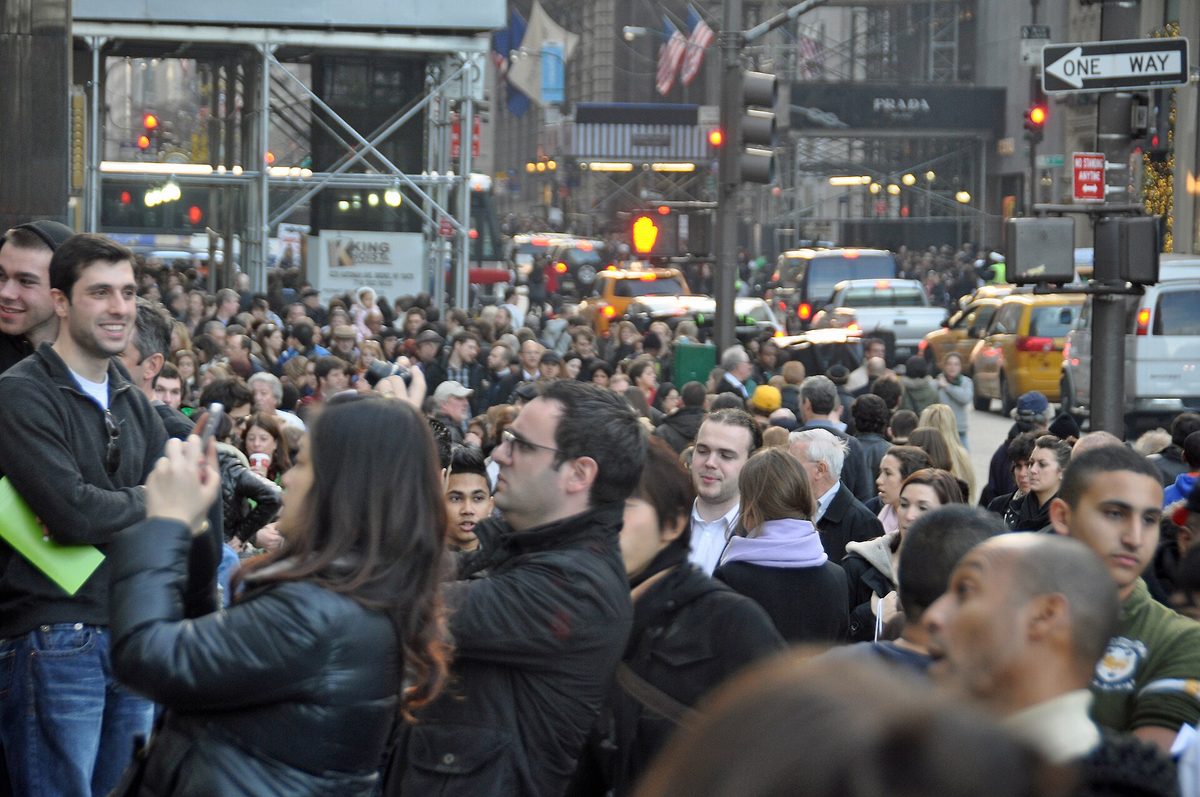
Black Friday falls on Friday, November 27, this year, and the forecasts point to a record holiday shopping season — the first in which Americans will spend more than $1 trillion in November and December. The National Retail Federation expects retail sales in the two months to grow 4.2 percent over 2025 to $1.013 trillion, up from $972 billion last year, when sales rose 3.1 percent. Adobe, which tracks online checkouts, projects $275.1 billion in U.S. online sales from November 1 to December 31, up 6.7 percent. The season is already under way: Amazon’s Black Friday Week runs from November 19 through November 30, and Walmart’s main Black Friday event starts online on November 23.
The NRF forecast, released on October 15, marks an acceleration from 2025 and the first time the holiday season has crossed $1 trillion on the federation’s count. “This year’s forecast reflects our confidence that consumers will prioritize the holiday season even as they remain mindful of their budgets,” NRF President and CEO Matthew Shay said. NRF Chief Economist Mark Mathews said nearly half of the 4.2 percent growth should come from real spending, with the rest driven by higher prices — meaning shoppers will spend more without buying much more. NRF expects retailers to hire between 325,000 and 375,000 seasonal workers, in line with last year’s estimated 356,000 seasonal jobs. The federation’s calculation excludes automobile dealers, gasoline stations and restaurants to focus on core retail, and it defines the holiday season as November 1 through December 31.
Adobe expects Cyber Monday, November 30, to stay the biggest online day of the year at $15.1 billion, up 6.2 percent, while Black Friday grows faster, up 9.2 percent to $12.9 billion in online spending. Thanksgiving Day itself, November 26, is forecast at $6.9 billion online, up 8.5 percent. The five days from Thanksgiving to Cyber Monday — the stretch retailers call Cyber Week — should bring in $47.5 billion in online sales alone, up 7.4 percent. Mobile will take 57.4 percent of online holiday spend, up from 56.4 percent last year. Adobe expects discounts to peak at 30 percent off list price on electronics during Cyber Week, with the best Black Friday deals on TVs, toys, apparel, appliances and furniture, and the deepest Cyber Monday cuts on electronics and computers.
Other forecasters are in the same range. Deloitte, which measures a longer season from November through January, forecasts total holiday retail sales of $1.70 trillion to $1.71 trillion, up 4.0 to 4.8 percent, with e-commerce rising 7.5 to 8.4 percent to between $316.1 billion and $318.9 billion. In Deloitte’s survey of 4,000 consumers, shoppers planned to spend an average of $1,654, up 4 percent from $1,595 in 2025. Bain & Company expects sales from Black Friday through Cyber Monday to top $85 billion, growing 8.75 percent, well ahead of its 4.5 percent forecast for the full season. Taken together, the forecasts describe a consumer who is still spending — just later, more online, and more carefully than in past years.
Retailers have stretched the season earlier than ever to capture that spending. Walmart ran early Black Friday deals from November 12 to 15, and its main Black Friday event runs November 23 to 29, with its Cyber Monday event from November 30 to December 2. Target’s early Black Friday sale ran November 5 to 7. Best Buy’s doorbusters began on November 19, and Kohl’s Black Friday Week starts on November 22. Deloitte found that 4 in 10 shoppers planned to buy during October sales events, and 28 percent of holiday budgets were likely to be spent by the end of October, the highest share in six years. The early start is a response to shoppers who have learned to hunt for value across weeks rather than wait for a single Friday.
The backdrop is less cheerful than the forecasts. The NRF expects core goods inflation to average 2.5 percent in 2026, up from 1.6 percent in 2025, and says higher diesel prices are raising shipping costs while AI investment is pushing up prices for electronics. The average 30-year fixed-rate mortgage was 7.33 percent in October, up from 6.86 percent in September and 6.25 percent a year ago, according to Freddie Mac. And the stock market has just had its worst week since April 2025, with the S&P 500 down 8.6 percent on the week and in correction territory. Whether the $1 trillion forecast survives contact with that reality will be decided at the tills over the next five weeks.
Massachusetts offers a reminder that the season still has local rules: the state’s holiday law keeps most stores closed on Thanksgiving Day, November 26, so the in-store rush there starts on Friday morning. Elsewhere, most major chains will open early on Black Friday, many from 5 a.m. to 7 a.m. The NRF’s final tally, usually published in January, will confirm whether the $1.013 trillion estimate held — or whether cautious consumers pulled back. For now, retailers are betting that the holiday, like the consumer, proves resilient one more time.
For shoppers, the practical advice from the forecasters is consistent: the deepest discounts land on different days for different goods. Adobe expects the best Black Friday deals on TVs, toys, apparel, appliances and furniture, with the deepest Cyber Monday cuts on electronics and computers, and discounts of up to 14 percent in early November rising to 21 percent just before Thanksgiving and 30 percent during Cyber Week. With 28 days between Black Friday and Christmas this year, retailers have a shorter window than usual to convert browsers into buyers — one more reason the early deals started in October and will run right through Cyber Monday on November 30.
Why it matters: A trillion-dollar holiday season sounds like a boom, but the details tell a more careful story: nearly half the growth is higher prices, not more shopping, and more than a quarter of holiday budgets were already spent by the end of October as shoppers chased early deals. That is a consumer managing a squeeze, not celebrating a windfall. The forecasts matter because they are the first real test of household resilience since the market’s worst week in 19 months — if Black Friday disappoints, it will confirm that the squeeze is biting; if it holds, it will show that the American consumer, squeezed by 7.33 percent mortgages and 2.5 percent goods inflation, is still the economy’s unsung hero, as the NRF’s chief executive put it.
Reporting: National Retail Federation · The Boston Report
Spot an error? Orbit News corrects articles promptly and notes the correction in the article. See our Editorial Policy, or flag an error by messaging us on Facebook, X, or Instagram.