U.S. News
FBI Claws Back $1.2 Billion From the Binance Hack and Exposes North Korea's FaceStealer Con
The Justice Department won court orders covering more than $1.2 billion stolen from the world's largest crypto exchange, and seized the cloud servers behind a fake video-call scheme that has taken more than $400 million.
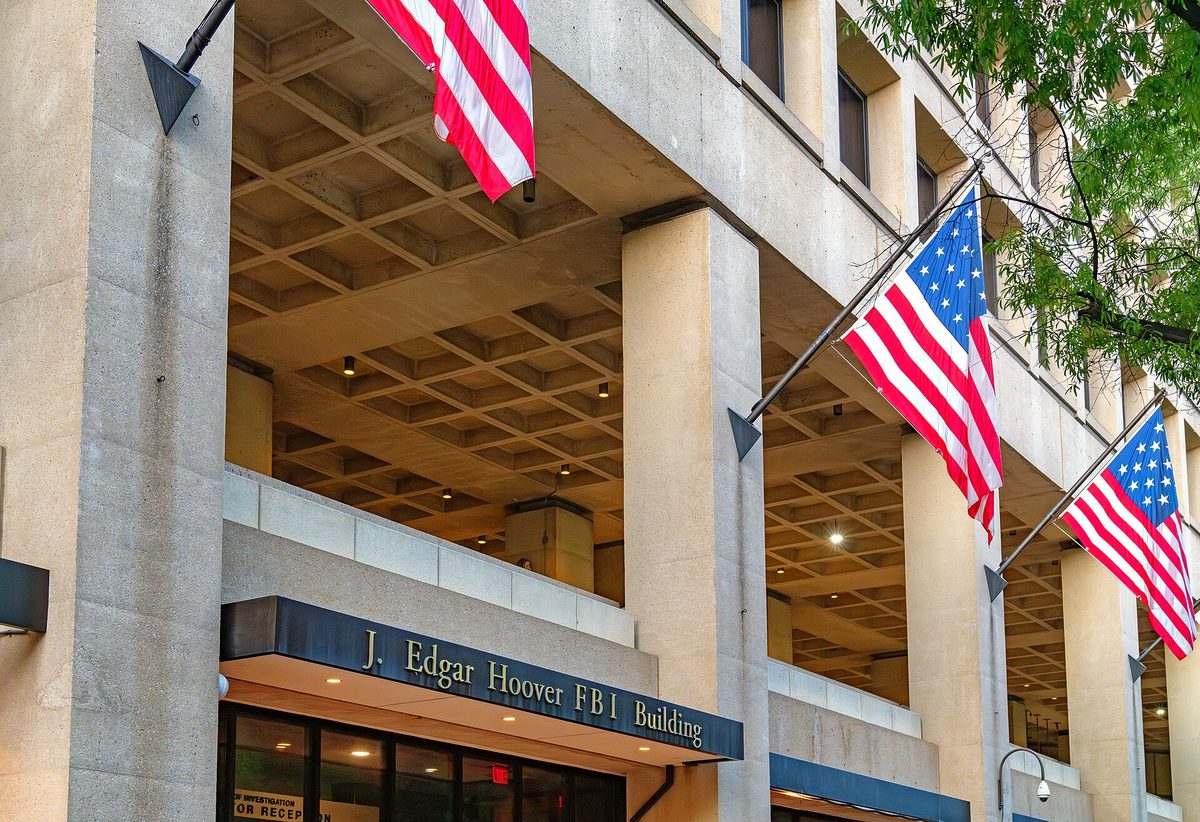
The Justice Department said on Thursday it has won court authorization to seize or restrain more than $1.2 billion in cryptocurrency stolen from Binance, the world's largest crypto exchange, in a hack the FBI blames on North Korea's military. In the same announcement, federal authorities said they had seized the cloud infrastructure behind a separate North Korean social-engineering scheme, dubbed FaceStealer, that has stolen more than $400 million over the past 18 months.
The Binance theft, carried out on or about October 29 by a North Korean military hacking unit the FBI calls TraderTraitor, took more than $6 billion in virtual assets, according to the Justice Department's announcement. Binance itself put the loss at about $6.34 billion. Blockchain intelligence firm TRM Labs has described it as the biggest cryptocurrency theft on record, surpassing the $1.5 billion Bybit hack of February 2025. According to the New York Post, the TraderTraitor hackers carried out the Binance theft in about 20 minutes, starting at 4:30 p.m. ET.
The $1.2 billion covered by Thursday's court orders is part of a larger pool of frozen funds, not money recovered on top of it. The department said collective efforts by the U.S. government and private-sector partners have frozen more than $2.7 billion of the stolen assets so far, and that it has court authorization to seize or restrain more than $1.2 billion of that amount, about a fifth of the total theft. The authorization is a seizure and restraint order, not a completed forfeiture, and the department said efforts to trace, freeze, seize and forfeit the remaining assets are continuing as the hackers move funds through cryptocurrency bridges, mixers and exchanges.
The FaceStealer operation was the more elaborate of the two actions. According to the department, hackers working under names including Sapphire Sleet, UNC1069, Dangerous Password, CryptoCore, APT38, BlueNoroff and Stardust Chollima lure targets with invitations to video meetings sent from accounts stolen from earlier victims. Once the target joins, the hackers secretly record the victim's webcam video and play a prerecorded video of a previous victim or a person the target knows, making it appear that trusted contacts are on the call.
The trap closes with a staged technical problem. The hackers claim the target cannot be heard, then send a link or prompt to fix the supposed audio error. The fix quietly installs malware on the target's computer, giving the attackers access to cryptocurrency wallets and, in some cases, to the victim's communications accounts, contact lists and social media. In several reported cases, the theft or the hijacking of accounts came months to more than a year after the initial infection, as the hackers worked through each new victim's contacts to find the next mark.
The scheme has also moved beyond individual crypto holders. The department said the hackers have increasingly targeted people who build and maintain open-source software, aiming to reach their devices and the software repository accounts they control, in what officials said appears calculated to enable software supply-chain attacks. Under a federal warrant, the FBI seized more than 900 webcam videos of FaceStealer victims, and the bureau published a report on the scheme and set up a dedicated resource hub at fbi.gov/facestealer.
Officials framed both actions as part of a campaign against a state that funds itself through cyber theft. Principal Deputy Assistant Attorney General for National Security M. Scott Proctor said North Korea's government bankrolls its rogue regime and illicit weapons program through cryptocurrency theft. FBI Cyber Branch Operations Director Brett Leatherman said North Korean actors have used FaceStealer to aggressively target people in the cryptocurrency and Web3 sectors, and Patrick Grandy, assistant director in charge of the FBI's Los Angeles Field Office, called it a highly effective scheme capable of deceiving even the most experienced and security-conscious computer user.
The disruption of FaceStealer was led by Assistant U.S. Attorney Khaldoun Shobaki for the Central District of California and the FBI's Los Angeles Field Office. The Binance recovery effort is being coordinated by the FBI's Los Angeles Field Office, its Cyber Division and its Virtual Asset Unit, working with the Secret Service and IRS Criminal Investigation. Last week, the FBI, the Secret Service and the IRS issued a cyber alert attributing the Binance theft to TraderTraitor and urging virtual asset service providers to block transactions linked to the addresses the hackers are using.
No individual has been named or charged in connection with the Binance theft in this announcement, and the department did not say how much of the frozen money has been returned to Binance or its customers. Binance said on October 31 that 98 percent of affected assets had been replenished. What the announcement does establish is the scale of the response: more than $2.7 billion frozen, more than $1.2 billion under court order, and one of North Korea's most productive theft operations taken offline, at least for now.
Why it matters: The two actions show how the U.S. government is now fighting North Korean cyber theft on two fronts at once: chasing the money from a single record-breaking heist, and dismantling the social-engineering machinery that keeps producing smaller ones. The Binance recovery is only partial, with most of the $6 billion still unaccounted for, and FaceStealer's methods — stolen accounts, deepfakes, a fake audio glitch — are cheap to rebuild. The lasting question is whether seizures and server takedowns can keep pace with a state actor that treats cryptocurrency theft as a revenue stream, and whether the crypto industry will adopt the FBI's warnings before the next scheme finds its targets.
Reporting: U.S. Department of Justice · New York Post
Primary source: U.S. Department of Justice
Spot an error? Orbit News corrects articles promptly and notes the correction in the article. See our Editorial Policy, or flag an error by messaging us on Facebook, X, or Instagram.
Related from Orbit News

ICE Deported a Record 483,200 People in Fiscal 2026 as Arrests Also Hit a High
U.S. News · Nov 13, 2026
Doctor Kills Building Manager in D.C. Gym, Wounds Four, Then Takes His Own Life
U.S. News · Nov 13, 2026