Politics
The Democrats Took Both Chambers. Here Is What the Midterms Decided — and What They Did Not
Democrats swept Congress in the biggest midterm win in a generation, but two Senate races are still uncalled, the new majority faces a president with a veto pen, and its own leader is already under pressure.
Democrats swept control of Congress on Tuesday in the biggest midterm victory in a generation, taking both the House and the Senate from President Donald Trump and redrawing the balance of power in Washington for the final two years of his presidency. As counting continued into Thursday, the Associated Press had called the Senate 54 seats for Democrats and 44 for Republicans, with two races still uncalled, and the House 235 to 146, with 54 districts still to be decided.
The scale of the win was historic by any measure. Democrats flipped seven Senate seats — in Texas, South Carolina, Kansas, Iowa, Ohio, Maine and North Carolina — and were projected to gain more than 30 House seats once counting finished, putting the House majority on course for levels not seen since the Obama era. In the governors' races, Democrats had 15 verified winners to 6 for Republicans out of the 36 seats contested, including Keisha Lance Bottoms in Georgia, who became the first Black woman elected governor in American history.
Yet for all the sweep's size, the results are not finished. Two Senate races remain too close to call, and neither will change which party controls the chamber, but both will decide the size of the new Democratic majority — and how much room it has to govern.
In Mississippi, Democratic challenger Scott Colom led Republican incumbent Senator Cindy Hyde-Smith by just over 1,800 votes late Thursday, with about 96 percent of ballots counted, according to the Associated Press. Colom had 466,775 votes to Hyde-Smith's 464,962. Several thousand provisional and mail-in ballots still need to be counted, and voters who cast affidavit ballots because they lacked photo identification have until November 10 to show it. Counties must submit certified results by November 13. Mississippi has no automatic recount provision, so the final certified count will be decisive.
In Alaska, former Representative Mary Peltola led Republican incumbent Senator Dan Sullivan by 637 votes, with roughly three-quarters of ballots counted. Peltola had 102,962 votes to Sullivan's 102,325. Alaska accepts mailed ballots for up to 10 days after Election Day, so the count is far from finished. If no candidate wins a majority, the state's ranked-choice tabulation is scheduled for November 18.
What voters said on Tuesday was, above all, about the cost of living and the war with Iran. An NBC News exit poll found 74 percent of voters said the war with Iran was a crucial or major factor in their vote, while only 37 percent said the United States made the right decision to take military action. An October Pew Research Center poll found 65 percent disapproved of the way Trump has handled the conflict. Vice President JD Vance, breaking his silence on Wednesday, blamed the war outright for the Republican defeat, writing that the president himself had said so the night before.
House Democrats are already planning how to use the majority. Incoming presumptive Speaker Hakeem Jeffries is preparing a legislative blitz for the new majority's first 100 hours, reviving the enhanced Obamacare subsidies that lapsed last year, rolling back roughly $1 trillion in Medicaid cuts enacted by Republicans, challenging Trump's tariffs and pressing for an end to the war in Iran. "We're going to fight to make sure that we make this country affordable for every single American," Jeffries said after the election. Expected House Majority Leader Katherine Clark said the agenda would reflect what voters made clear: "They voted to end the war. They voted to end the tariffs. They voted to end the catastrophic cuts to health care and they voted to end the corrupt pay-to-play." Senator Bernie Sanders, meanwhile, urged the new majority to go further, calling for the Medicare eligibility age to be lowered to 55 and for a pause on advanced artificial intelligence development.
But the blitz will run into hard limits. Bills that pass the House still have to clear the Senate, where a 60-vote filibuster applies, and then survive a president who has said he will become "Mr. Veto" if Democrats took Congress. What a veto cannot stop is investigation: Democrats plan to use their committee powers, with expected Oversight Chairman Robert Garcia vowing to probe the Trump family, corporate corruption and immigration enforcement.
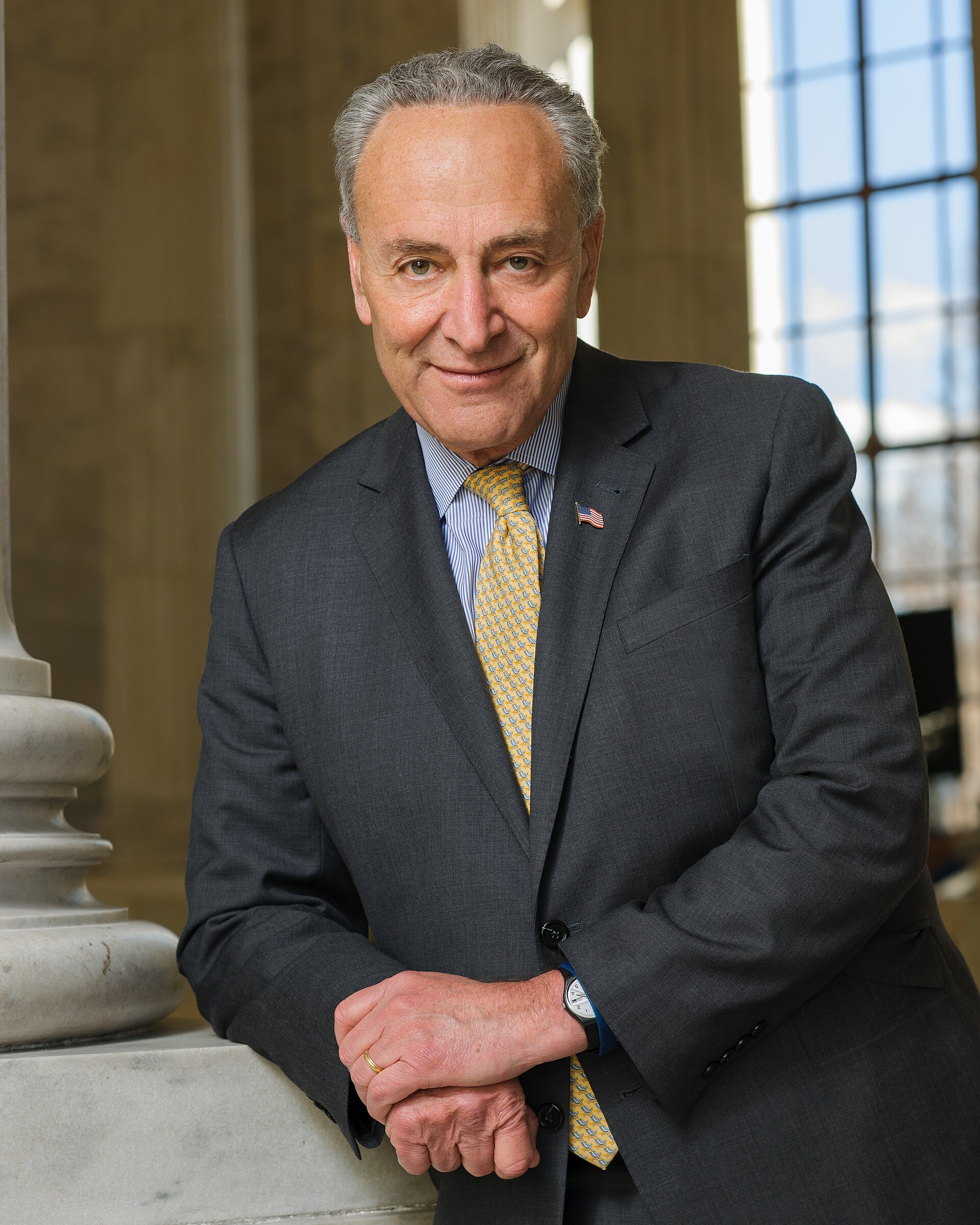
The new majority is also turning on its own leadership before it has even taken power. Senate Democratic leader Chuck Schumer won the biggest victory of his career on Tuesday, yet within days he faced open questions about whether he should keep the job. A string of newly elected Democrats have declined to commit to supporting him as majority leader when the new Congress convenes in January, including Senator-elect Adam Hamilton of Kansas, the first Democrat elected to the Senate from his state in nearly a century, and Senators-elect Troy Jackson of Maine, Julianna Stratton of Illinois, Abdul El-Sayed of Michigan and Peggy Flanagan of Minnesota. Comedian Jon Stewart used his podcast to call on Schumer to step aside, warning that the victory would mean nothing if it was squandered. "You have an opportunity to actually govern. Do it. Take it," he said. Schumer sounded confident when he addressed reporters on Wednesday. "The issue is not me," he said. "I'll be re-elected as majority leader, but the issue is focusing on the American people and what they want." The caucus is expected to hold its leadership election in early December.
Republicans, meanwhile, are picking through their own wreckage. House Speaker Mike Johnson told his staff on Wednesday that he will not seek to be minority leader in the next session, a day after the sweeping defeat. Johnson, a Louisiana Republican who rose to the speakership in October 2023, was re-elected to a sixth House term on Tuesday and is expected to remain in Congress as a rank-and-file member. The race to succeed him opened immediately, with House Majority Leader Steve Scalise of Louisiana and House Judiciary Chairman Jim Jordan of Ohio both announcing bids. House Republicans are scheduled to hold their leadership elections on November 10.
On foreign policy, the new Congress may find its power is limited. Trump will retain broad latitude as commander-in-chief, and analysts say a Democratic Congress has little ability to stop a president from exercising his war powers. "A Democratic Congress has the ability to stop Trump's domestic legislative agenda, but it doesn't have much ability to stop a president from exercising his powers as commander-in-chief," said William Wechsler of the Atlantic Council. Some experts warn a cornered Trump could escalate abroad, possibly targeting Cuba, which he has placed under an oil blockade. Democrats do plan to use their majority to revive support for Ukraine, where Trump has halted direct assistance, and to push back on his lifting of sanctions on Russian diesel exports.
When the new Congress convenes in January, Jeffries is in line to become speaker, leading one of the largest House majorities in decades. The first tests will come fast: the leadership elections in November and December, the lame-duck session, and then the 100-hours blitz. The two uncalled Senate races will settle the size of the majority. What the midterms decided is who holds power in Washington. What they did not decide is whether the winners will use it.
Reporting: Associated Press
Spot an error? Orbit News corrects articles promptly and notes the correction in the article. See our Editorial Policy, or flag an error by messaging us on Facebook, X, or Instagram.