World
ASEAN Summit Opens in Manila With Energy, South China Sea and Myanmar on the Agenda
Southeast Asian leaders opened the 49th ASEAN Summit on Sunday for three days of talks, with President Donald Trump due to arrive on Tuesday for meetings with the bloc and the Quad.
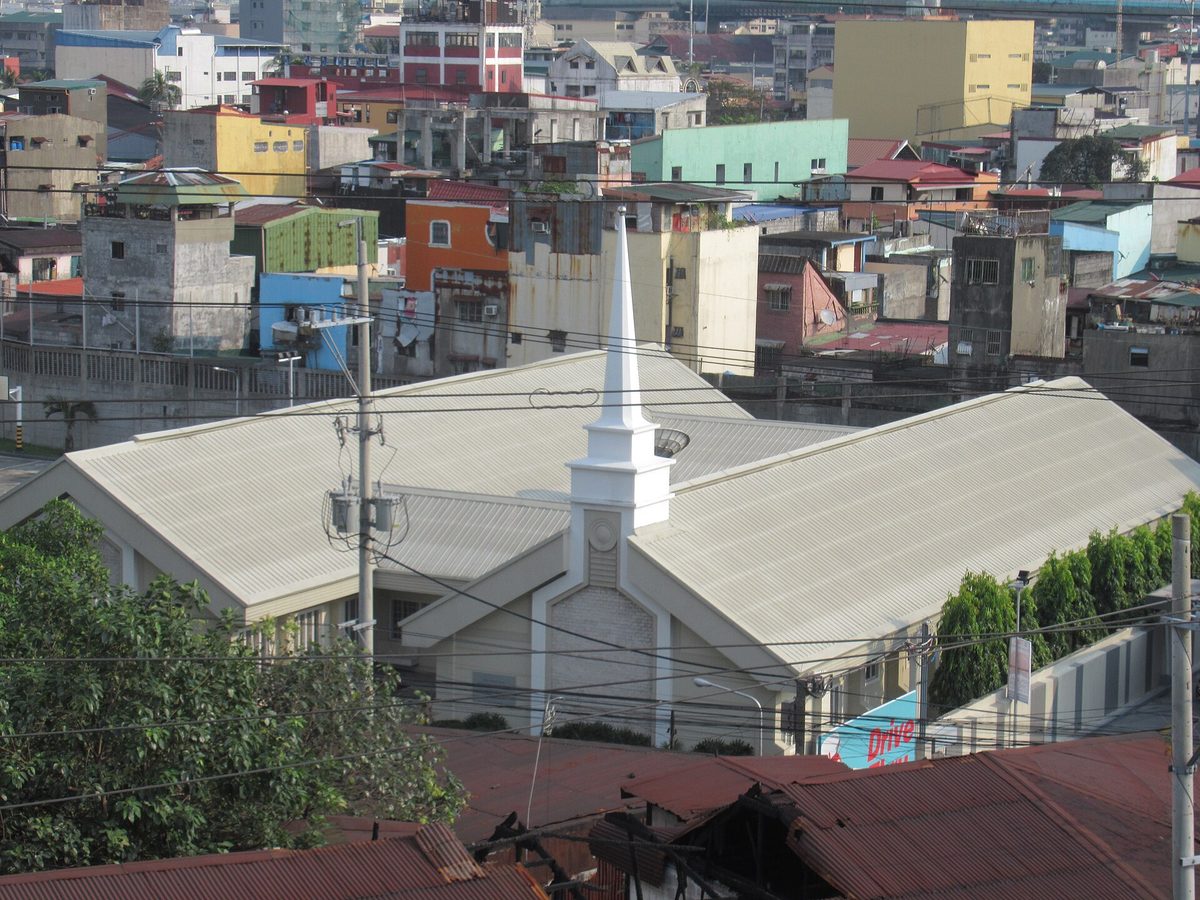
Southeast Asian leaders opened a three-day summit in Manila on Sunday to address an energy crisis triggered by the Middle East war, tensions in the South China Sea and Myanmar's prolonged civil conflict, with leaders from the United States, China, South Korea and other major economies joining the diplomatic gathering. The 49th Association of Southeast Asian Nations (ASEAN) Summit, hosted by Philippine President Ferdinand Marcos Jr., brings together leaders of the 11-member bloc and major dialogue partners.
The summit comes as Southeast Asian economies struggle with soaring fuel costs and supply disruptions linked to the Middle East conflict. ASEAN leaders are expected to discuss proposals for joint oil reserves and fuel-sharing arrangements to strengthen regional energy security. The gathering runs from November 15 to 17.
Among the dialogue partners attending are South Korean President Lee Jae Myung, Chinese Premier Li Qiang, Japanese Prime Minister Sanae Takaichi and Indian Prime Minister Narendra Modi. U.S. President Donald Trump is scheduled to arrive on Tuesday, the final day of the summit, for talks with ASEAN leaders and a meeting of the Quad security grouping comprising the United States, Japan, Australia and India. His visit is expected to focus on regional security and Washington's push to strengthen AI and semiconductor supply chains through its Pax Silica initiative, aimed at reducing dependence on China.
Another major issue is the long-delayed South China Sea Code of Conduct between ASEAN and China. Philippine Foreign Secretary Theresa Lazaro said on Saturday that negotiations were about 80 percent complete, but disagreements over key provisions have dimmed hopes of reaching an agreement this year. The Philippines has been broadening its network of security ties while complementing its long-standing alliance with the United States, in the face of what it describes as China's aggressive behaviour in the South China Sea, where countries have overlapping maritime claims.
On the sidelines of the summit, the Philippines and Australia signed a defence cooperation arrangement on Sunday that Manila said would lower bureaucratic hurdles to joint military activities, as the two countries further deepen security ties. Philippine Defence Secretary Gilberto Teodoro said the arrangement would streamline implementation of the bilateral Status of Visiting Forces Agreement, known as SOVFA, by simplifying coordination procedures. "Rather than 100 steps to do a single thing, it will just now take 10," Teodoro told reporters, describing the deal as an "anti-red tape measure" for implementing the agreement.
Teodoro said the arrangement would pave the way for closer cooperation involving maritime, air and land forces, as well as humanitarian and disaster response, and would bolster the Philippines' "credible deterrence posture" including in the South China Sea. Australian Prime Minister Anthony Albanese witnessed the signing in Manila and said the agreement would enhance maritime awareness and information sharing and increase strategic dialogue, training, interoperability and defence infrastructure development. Albanese also announced additional Australian investment in maritime domain awareness, including drone technology, equipment and training aimed at improving detection of maritime and cybersecurity threats.
Australia has consistently supported Manila's position on the strategic waterway, backing a 2016 ruling by an international arbitral tribunal that China's sweeping claims have no basis under international law, a decision Beijing rejects. Beijing maintains that its actions in the South China Sea have been lawful and professional, and it routinely opposes Manila's joint military activities with allied partners, saying such drills heighten tensions in the region.
Leaders will also review ASEAN's five-point peace plan for Myanmar, adopted after the 2021 military coup. The bloc has agreed to continue its "constructive and principled engagement" with Myanmar, Marcos said on Sunday, adding that he hoped the bloc could advance implementation of the five-point plan. Despite calls from some member states to restore high-level engagement with Myanmar's authorities, Manila has indicated that the bloc will maintain its restrictions until meaningful progress is made toward ending the violence.
The summit comes amid heightened geopolitical uncertainty, with the war in the Middle East pushing up fuel costs, the South China Sea dispute unresolved and Myanmar's civil conflict grinding on. For the Philippines, chairing the gathering is a chance to show that ASEAN can still bring the region's leaders - and its dialogue partners - into one room to work on shared problems.
The gathering will conclude on Tuesday, November 17, when leaders will have heard from Trump and the Quad partners, and will have had to decide whether the summit's declarations on energy, the South China Sea and Myanmar amount to more than words - and whether a bloc built on consensus can move fast enough for a region under pressure from war, rising fuel prices and great-power rivalry.
Why it matters: The Manila summit matters because it brings the leaders most affected by the Middle East war, the South China Sea dispute and Myanmar's civil conflict into one room at a moment when ASEAN's consensus model is under strain. The energy crisis has given the bloc a practical reason to cooperate on fuel reserves, while the South China Sea code of conduct and the Myanmar plan test whether it can still produce decisions. Trump's arrival on Tuesday will show whether Washington treats ASEAN as a partner or as a stop on the way to China.
Reporting: Reuters · AJU Press
Spot an error? Orbit News corrects articles promptly and notes the correction in the article. See our Editorial Policy, or flag an error by messaging us on Facebook, X, or Instagram.